 THE MARQUEE
Graceland has always been more than a mansion; it’s the high temple of the American Dream, a 13-acre fever dream where 1950s neon collides with the velvet-lined swagger of the 1970s. But this summer, the vibe at 3764 Elvis Presley Boulevard is shifting from kitsch to something far more profound. As the United States gears up for its massive 250th anniversary, the gatekeepers of the King’s legacy are cracking open the heavy-duty vaults to reveal a side of Elvis rarely seen in the spotlight. The result is “The American Spirit of Elvis Presley,” an electric, limited-run exhibition that frames the King not just as a rock and roll wildfire, but as a man whose very DNA was stitched into the red, white, and blue fabric of the nation.
From Memorial Day Weekend through the final smoke of the Fourth of July fireworks, Graceland is laying out a roadmap of the artifacts that defined Elvis’s personal brand of grit and glory. This isn’t a routine rotation of stage costumes; it is a curated, deep-tissue dive into the moments where the biggest star in the galaxy chose to be a citizen. From the concrete halls of the Pentagon to the hallowed, oil-slicked waters of Pearl Harbor, the exhibition traces a trajectory of service and civic pride. It’s the story of a kid from a two-room shack in Tupelo who chased the American Dream until he caught it, eventually turning the most famous address in Tennessee into a monument of self-made success.
The Purple Velvet Gambit: A Meeting of Two Icons
The crown jewel of this new display is arguably the most surreal garment in the history of the Republic: the purple velvet suit Elvis wore during his legendary, unannounced raid on the White House on December 21, 1970. Even now, the black-and-white photo of Elvis shaking hands with a baffled Richard Nixon remains the most requested image in the National Archives. Seeing the actual suit in the flesh—rich, heavy, and unapologetically bold—offers a visceral shock. Elvis didn’t wait for an invite. He simply showed up at the Northwest Gate with a handwritten letter scrawled on American Airlines stationery, expressing his desire to help the country and his burning ambition to secure a Bureau of Narcotics and Dangerous Drugs badge.
Angie Marchese, the Vice President of Archives and Exhibits at Graceland, has spent years chronicling how these relics serve as the heartbeat of a man who took his influence as seriously as his music. The display doesn’t just show the suit; it reconstructs the narrative of Elvis’s quest to become a “Federal Agent at Large.” Fans get to see the fine-grained details of the ensemble that stunned the Secret Service, serving as a permanent reminder that Elvis saw himself as a peer to the leaders of the free world. It was peak Elvis—impulsive, slightly chaotic, and deeply rooted in a yearning to serve his country on his own terms.
The digital chatter surrounding this specific display is already hitting a fever pitch. One fan on X (formerly Twitter) summed it up perfectly: “Seeing the Nixon suit in person is like touching a piece of a fever dream. It’s the ultimate ‘only in America’ story.” That’s exactly the resonance Graceland is aiming for as they sync the King’s timeline with the nation’s 250th milestone. By putting these items front and center, they are reminding us that before he was a global commodity, Elvis was a believer in the institutions of his country—even if he approached them with a rockstar’s signature swagger.
From Gold Lame to Army Fatigues: The Soldier and the Savior
If the Nixon suit captures Elvis the activist, the inclusion of the shimmering gold lame jacket highlights Elvis the philanthropist. Long before the era of the televised benefit concert, Elvis was the first to realize that fame could be a tool for national healing. In 1961, the fund for the USS Arizona Memorial in Hawaii had essentially run dry. The project was dead in the water until the King intervened. On March 25, 1961, Elvis took the stage at Bloch Arena in Honolulu for a benefit show that hauled in over $50,000—a staggering fortune at the time—which single-handedly jumpstarted the construction of the memorial we see today.
The gold lame jacket he wore that night is more than a piece of clothing; it’s a glowing relic of a man at the absolute zenith of his power. This was one of the last times he ever wore the full suit, as the legend goes the trousers were far too restrictive for his trademark, tectonic hip-swivels. Within the context of “The American Spirit of Elvis Presley,” the jacket acts as a bridge between his Hollywood glamour and his profound respect for the military. The exhibit meticulously details how that single night in Hawaii ensured the 1,177 sailors and Marines who perished on the USS Arizona would be honored for generations.
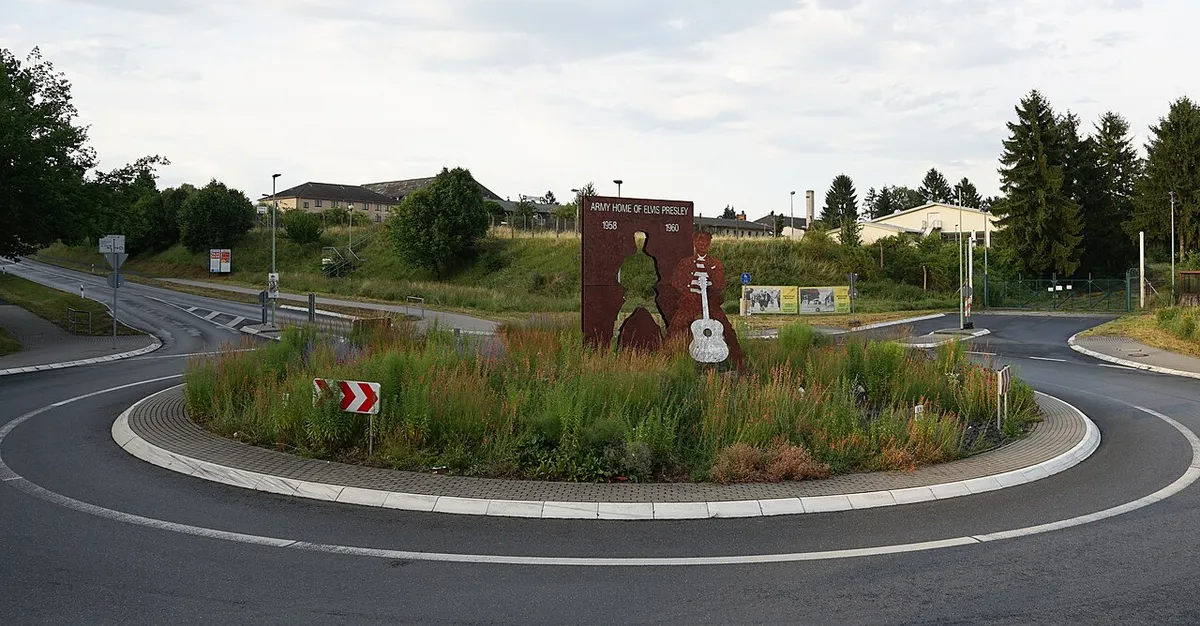
But the exhibition also dares to get gritty with the Private Presley tours, which pull back the curtain on his 1958 induction into the U.S. Army. At the time, Elvis was the most famous human being on the planet. He could have taken the easy road in Special Services, entertaining troops in luxury, but at the insistence of Colonel Tom Parker and his own internal compass, he chose the life of a regular GI. The exhibit displays his fatigues, his army serial number (US 53 310 761), and the cold, hard paperwork from his time in Friedberg, Germany. It’s a sobering, quiet contrast to the gold and velvet—a reminder of the two years he spent earning $78 a month, standing in the freezing German mud just like any other private.
A Midsummer Pilgrimage: July 4th at the Gates
The timing here is calculated and poetic. Launching on May 22, 2026, Graceland is positioning itself as the epicenter of the American Semiquincentennial. Now under the steady stewardship of Riley Keough, the sole trustee and Elvis’s granddaughter, the estate has enjoyed a massive cultural renaissance sparked by Baz Luhrmann’s 2022 technicolor biopic and Sofia Coppola’s Priscilla. This summer push is built to capture a wide-angle audience, from the “Blue Suede Shoes” originals to the Gen Z fans who discovered “Can’t Help Falling in Love” through their social feeds.
The “American Spirit” motif spills out far beyond the museum’s glass cases. Throughout the exhibition’s run, Graceland will be a hub of patriotic energy. The Private Presley tours are already the summer’s hot ticket, offering an intimate, behind-the-velvet-rope look at military artifacts that usually stay tucked away in climate-controlled dark rooms. There is a profound, hushed power in seeing the discharge papers of a man who had the world at his feet yet chose to stand in a mess hall line. It’s a story of humility that provides a necessary counterweight to the glitz of the Vegas years.
As the Fourth of July approaches, the Memphis humidity will be matched only by the electric atmosphere at the gates. Graceland remains the second most-visited home in the United States, trailing only the White House, and this exhibition reinforces why. It celebrates a man who mirrored the contradictions, the heart, and the triumphs of the American 20th century. Whether you’re drawn by the blinding glimmer of the gold jacket or the quiet dignity of the army olive-drabs, the takeaway is undeniable: Elvis Presley’s story is America’s story. The limited run vanishes on July 7, 2026, making this a fleeting chance to see the King’s most personal treasures before they return to the vaults. This summer, the Memphis air will ring with the echoes of “An American Trilogy,” and for a few weeks, the King and the country will feel more connected than ever.


