 THE MARQUEE
That first, cascading piano glissando isn’t just a melody; it’s a global call to arms. For nearly five decades, those few seconds of ABBA’s "Dancing Queen" have functioned as a Pavlovian trigger, a sonic signal that tells every person in the room—from bridesmaids in 2024 to retro-heads in London—that the floor is now theirs. This week, that universal magnetic pull hit a stratospheric new peak: "Dancing Queen" has officially surpassed 2 billion streams on Spotify. It is the first track by the Swedish pop architects to cross that monumental threshold, cementing their place in an elite pantheon of artists who haven't just survived the digital shift, but conquered it.
To grasp the gravity of 2 billion, look at the neighbors. The Spotify "Billions Club" is already a high-altitude zip code, but the 2-billion-stream tier is a VIP lounge with a much shorter guest list. Fewer than 300 songs in the history of the platform have ever touched this number. While the roster is heavy with modern titans like The Weeknd, Taylor Swift, and Ed Sheeran—artists whose entire careers were built on the back of the streaming boom—ABBA stands as one of the vanishingly few 20th-century acts keeping pace. They aren’t legacy acts being dusted off for a nostalgia trip; they are active, formidable competitors in the attention economy, out-streaming current Top 40 hits with a masterpiece that was tracked while Jimmy Carter was still packing his bags for the White House.
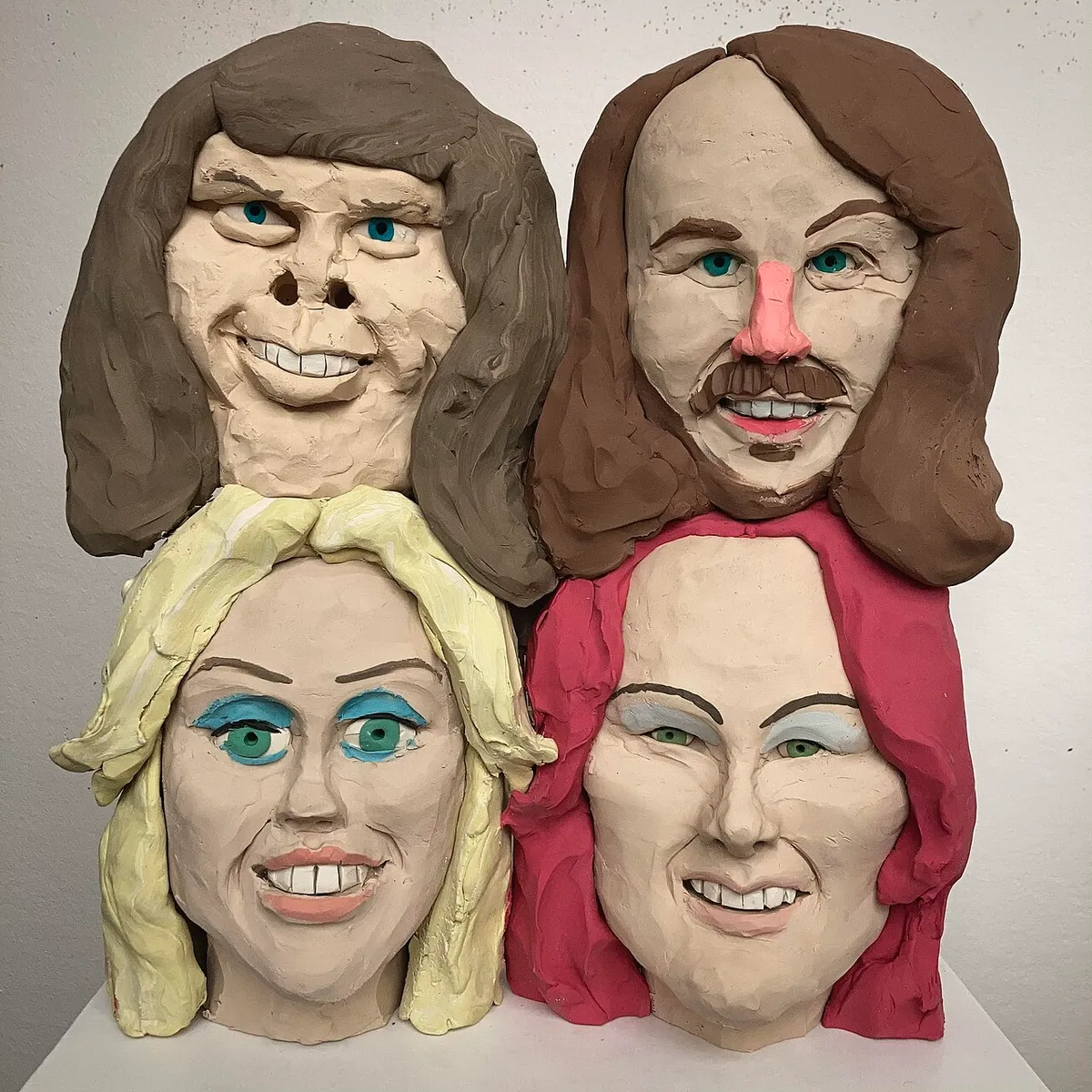
The Meticulous Architecture of a Masterpiece
The journey to 2 billion isn't merely a data point; it’s a validation of Benny Andersson and Björn Ulvaeus’ obsessive studio wizardry. When the single dropped in August 1976 as the spearhead for their fourth album, Arrival, it was the result of months of grueling perfectionism at Metronome Studios in Stockholm. Benny and Björn were chasing a specific lightning, drawing from the lush, symphonic weight of Phil Spector’s "Wall of Sound" and the surgical rhythmic precision of early disco like George McCrae’s "Rock Your Baby." The legend goes that when they finally played the finished mix for Agnetha Fältskog and Anni-Frid Lyngstad, Frida burst into tears. She knew immediately: they hadn't just made a hit; they had changed the DNA of pop music.
Long before it became a digital monolith, "Dancing Queen" was already a high-stakes diplomatic tool. In June 1976, months before the world heard the final record, ABBA performed it at a televised gala for King Carl XVI Gustaf of Sweden and his bride-to-be, Silvia Sommerlath. Dropping a disco anthem in front of royalty was a high-wire act, but it instantly framed the group as Sweden’s premier cultural export. By the time the single saturated the charts, it was a global fever, hitting No. 1 in over a dozen countries. In the United States, it would become their definitive statement—their only No. 1 hit on the Billboard Hot 100, though its shadow covers the entire pop landscape.
Scandinavian Gloom and the Mamma Mia! Renaissance
What gives the song its terrifyingly long shelf life is its emotional duality. It is, ostensibly, a shimmering ode to being "young and sweet, only seventeen," yet there is a distinct vein of Swedish melancholy running through the chords—a ghostly nostalgia for a moment that’s already slipping away even as the beat drops. It’s that "smiling through tears" quality that brings listeners back for a second, thousandth, and two-billionth time. Audiences often point to the way Agnetha and Frida’s voices fuse into a harmonic "third voice," a shimmering, ethereal texture that engineer Michael B. Tretow spent endless hours layering to achieve that specific, uncopyable glow.
While the song never truly left us, the 1990s and 2000s provided the fuel for its current streaming dominance. The 1992 compilation ABBA Gold became a cultural permanent fixture, but it was the Mamma Mia! explosion that truly weaponized the catalog for a new age. Between the stage juggernaut and the 2008 film featuring Meryl Streep and Pierce Brosnan, an entire generation was baptized in the glitter-soaked world of ABBA. That cinematic moment where Streep leads a sun-drenched parade through a Greek village to those iconic chords wasn't just a scene; it was a total cultural reclamation. Analysts point to that specific era as the catalyst for a massive, sustained spike in the band's catalog sales that has never truly leveled off.
The Digital Avatar and the Gen Z Hook
The sprint to 2 billion has been put into overdrive by the group’s futuristic second act. The ABBA Voyage residency in London—a high-tech marvel featuring digital "ABBAtars" backed by a live band—has been a runaway success since its 2022 debut. Witnessing a 1977-era version of the band recreated by Industrial Light & Magic has made ABBA feel more contemporary than artists half their age. With over a million tickets sold, the show’s climax is, inevitably, "Dancing Queen," a moment that transforms the arena into a viral TikTok engine every single night.
"It is truly incredible that a song we wrote in a small cabin in the Swedish archipelago could still be resonating like this," Björn Ulvaeus remarked during an interview marking the 50th anniversary of their Eurovision victory with "Waterloo." He admitted that while they felt they had a winner in 1976, the concept of people listening billions of times on handheld devices was "beyond science fiction." The data confirms his shock: Spotify’s reports show that ABBA’s primary engine isn't just Boomers chasing their youth; a massive percentage of their monthly listeners are under 25.
The social media footprint is undeniable. That "Young and Sweet" lyric has become a mandatory birthday caption for Gen Z, while the song remains a foundational queer anthem of liberation every June. When the 2 billion milestone hit, the band's feeds were swamped with fans articulating exactly why the song persists. "This song is the closest thing humanity has to a reset button for happiness," one fan wrote on X. Another summed up the generational handoff perfectly: "My grandma danced to this at her prom, and I danced to it at mine. 2 billion streams feels small for a song that literally everyone knows by heart."
In a music industry obsessed with the next fleeting trend, ABBA remains the ultimate proof that a perfectly engineered pop song is essentially indestructible. Joining the 2-billion-stream club isn't just about the brag; it's a verification of the song’s status as a load-bearing pillar of modern culture. As we approach the 50th anniversary of the Arrival album in 2026, the momentum is only building. For the four Swedes who conquered the world in satin jumpsuits, the dance is far from over.


