 THE MARQUEE
Nashville lost its north star yesterday, and the rest of the world lost its heartbeat. Dolly Parton, the Appalachian girl who turned a cardboard suitcase and a head full of rhymes into a global empire of empathy, passed away August 25 at Vanderbilt University Medical Center in Nashville, Tennessee, at the age of 80. The news, confirmed by her nephew in a statement that sent shockwaves through the industry, marks the end of an era for a woman who wasn't just a country singer—she was a secular saint in six-inch heels. As the twilight deepened over the Ryman Auditorium last night, a sea of fans began to congregate, their voices rising in a ragged, beautiful chorus of the songs that shaped their lives.
Dolly’s journey from a dirt-floor cabin in Locust Ridge to the undisputed peak of pop culture is the definitive American epic. She didn’t just break through Nashville’s notoriously thick glass ceiling; she shredded it with a bedazzled hammer and built a sprawling, multi-billion-dollar kingdom on the fragments. With more than 100 million records sold and a vault containing over 3,000 songs, her fingerprints are all over the DNA of modern music. Yet, for the millions who leaned on her vibrato like a crutch, Dolly was never a distant mogul. She was the cosmic aunt who whispered the truth, the savvy architect of her own image, and the poet laureate of the working class who could map the human heart with surgical precision.
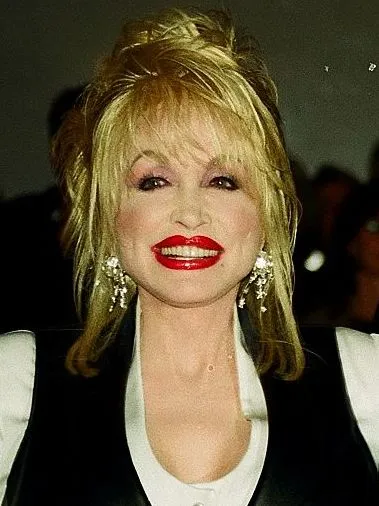
The Steel Magnolia Who Outmaneuvered the King
Dolly’s ascent wasn’t some lucky break—it was a calculated masterclass in raw tenacity. When she stepped off the bus in 1964, a day after her high school graduation, she had nothing but a guitar and a refusal to be ignored. After cutting her teeth as the "girl singer" on The Porter Wagoner Show, she realized she was outgrowing the shadow of her mentor. That friction birthed one of the most significant recordings in history: "I Will Always Love You." Written as a bittersweet resignation letter to Wagoner, the song famously caught the ear of Elvis Presley. But when the Colonel demanded half the publishing rights, Dolly did the unthinkable: she said no to the King. It was a legendary display of business grit that paid off a thousandfold when Whitney Houston’s 1992 rendition turned the track into a global monolith, securing Dolly’s financial legacy forever.
Her genius lay in the friction between her cartoonish, maximalist persona and her terrifyingly sharp intellect. "It takes a lot of money to look this cheap," she’d quip with a wink, but beneath the towering wigs and acrylic nails lived a songwriter of devastating depth. While tracks like "Coat of Many Colors" and "The Bargain Store" elevated the dignity of poverty into high art, her 1980 jump into Hollywood alongside Jane Fonda and Lily Tomlin in 9 to 5 cemented her as a bona fide icon. The film’s title track became the permanent anthem for the underpaid and overworked, a Grammy-winning lightning bolt that remains as potent today as it was nearly fifty years ago.
The tributes pouring in from her peers reflect the magnitude of the loss. Reba McEntire shared a candid photo of the two sharing a laugh backstage, writing: "Well, I just got the news that my buddy Dolly passed onto the higher and greater side. Your love, your music and you gave so much with your huge huge heart. There will never ever be another you." Even the political world paused; Tennessee Governor Bill Lee called her "the state’s greatest treasure," acknowledging that her cultural and economic footprint was simply incalculable.
A Billion-Dollar Legacy of Books and Betterment
While the hits made her a household name, Dolly’s radical kindness made her a legend. Her most enduring masterpiece wasn't a melody, but a child’s first book. Inspired by her father’s inability to read or write, she launched the Imagination Library in 1995. What began as a local initiative in Sevier County exploded into a global powerhouse, putting over 200 million books into the hands of children across the planet. She wasn't just writing checks; she was building an infrastructure for literacy. During the dark early days of the 2020 pandemic, her $1 million donation to Vanderbilt was a pivotal catalyst for the Moderna vaccine—a contribution she shrugged off with her signature humility, even as she filmed herself getting the "Dolly-shot."
Her business mind was just as formidable as her pen. Dollywood, her theme park in Pigeon Forge, became the beating heart of Appalachian tourism, generating thousands of jobs and pumping billions into the local economy. She treated her staff like kin, famously offering to cover full tuition for any employee chasing a degree. To Dolly, the wealth was always a tool to elevate the people who shared her roots. "I'm not going to limit myself just because people won't accept the fact that I can do something else," she once remarked. She spent every hour of her 80 years proving that she could do everything, and do it better than anyone else.
Today, the entrance to Dollywood has become a cathedral of grief and gratitude. Fans are piling flowers, butterfly balloons, and dog-eared memoirs against the gates. On digital platforms, the outpouring is relentless. One listener on Reddit captured the sentiment perfectly: "I saw her at the Glastonbury Festival in Somerset in 2014, and it was like watching a miracle happen in real-time. She had a record-breaking crowd of 180,000 people in the palm of her hand while playing multiple instruments, including the banjo, fiddle, and a rhinestone-studded saxophone. There will never be another."
The Last Notes of a Technicolor Symphony
Even as health challenges began to mount in late 2025, Dolly refused to go quietly. She remained a whirlwind of productivity, releasing her rock-and-roll pivot Rockstar and overseeing an endless stream of creative projects. Her nephew’s statement noted that she passed peacefully, surrounded by the family she adored. She was preceded in death by Carl Dean, her husband of nearly six decades, in March 2025. Dean, the invisible anchor to her high-flying kite, was the center of a private, enduring love story that served as her sanctuary away from the flashbulbs.
As the news traveled, the lights on the Las Vegas Strip and the Grand Ole Opry were dimmed—a symbolic gesture for a woman whose radiance could never truly be extinguished. A public memorial is being planned in Nashville for later this week, though the family has requested a private burial. The sheer volume of her life’s work—the films, the parks, the charities, the anthems—ensures that Dolly Parton will never truly leave us. She spent eighty years teaching us how to live with joy, how to work with purpose, and how to leave every room a little brighter than we found it.
The butterfly has finally flown home to the Smokies, but the trail of glitter she left behind will sparkle for generations to come.


