 THE MARQUEE
There is a specific kind of atmospheric pressure that only exists inside San Diego’s Hall H—a localized weather system of sweat, adrenaline, and pure anticipation. But on Saturday, July 25, 2026, the air didn’t just crackle; it shattered. Marvel Studios President Kevin Feige, leaning into the microphone with the practiced gravity of a man about to change the cultural weather, whispered a single word: “Family.” Then the lights cut to black, the drums of Wakanda began to thrum through the floorboards, and Ryan Coogler stepped into the spotlight to deliver the thunderbolt. David Jonsson, the British powerhouse who recently turned heads with his searing, soulful turns in Industry and Alien: Romulus, is officially the new Black Panther.
This isn’t some multiversal slight-of-hand or a rebooted timeline. Jonsson is stepping into the vibranium weave as Prince T’Challa II, the grown son of the late King T’Challa and Nakia. For the fans who have spent the last four years obsessing over that emotional gut-punch of a mid-credits scene in 2022’s Black Panther: Wakanda Forever—where we first met young Toussaint on a quiet beach in Haiti—this was the moment a decade-long promise finally came due. Coogler confirmed that Black Panther 3 will hit theaters on December 15, 2028, positioning it as the undisputed crown jewel of Marvel’s upcoming slate. The narrative is set to leapfrog the awkward teenage years, finding a young man forced to grapple with a throne he never saw his father occupy.
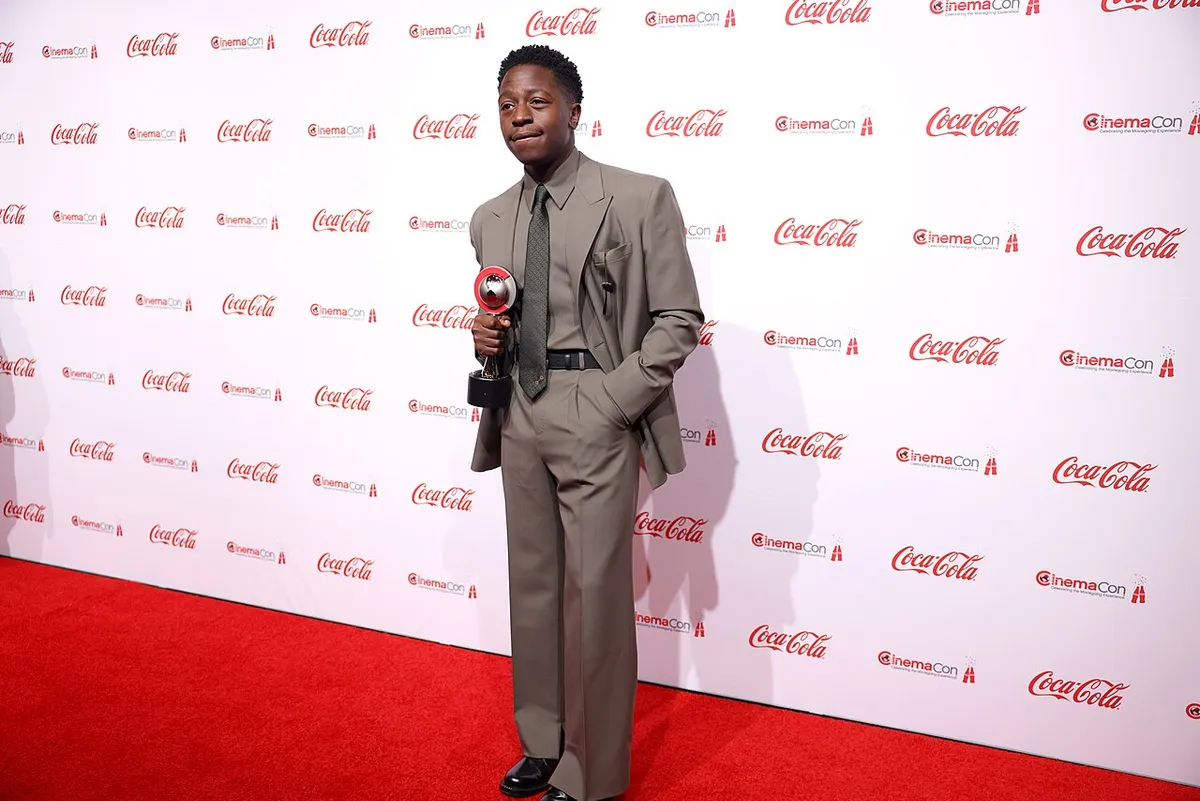
The Making of a Monarch: From the Trading Floor to the Golden City
Casting Jonsson is a masterstroke of talent-scouting that fits perfectly into Coogler’s history of minting prestige actors into global icons. Over the last few years, Jonsson has quietly become one of the most electric actors in the London-to-Hollywood pipeline. As Augustus "Gus" Sackey in the HBO/BBC hit Industry, he proved he could navigate high-stakes shark tanks with a mask of cool composure. In Alien: Romulus, he showed he could carry the physical and emotional weight of a massive studio tentpole without breaking a sweat. Standing on the Hall H stage, Jonsson looked visibly moved, clearly feeling the massive gravitational pull of the mantle he was inheriting.
“I don’t take this lightly,” Jonsson told the screaming crowd, his voice steadying as he looked out over a sea of crossed arms. “I’m standing on the shoulders of a giant, and I’m guided by the incredible family that kept Wakanda’s heart beating when it felt like the world had stopped.” That family is coming back in full force. Letitia Wright is set to return as Shuri, the aunt and mentor who held the line, while Winston Duke reprises his role as M’Baku. The chemistry between these titans is where the real friction lies. While Shuri became the Panther to survive a war with Namor, the third installment looks to deconstruct the transition of power as the true heir reaches maturity. Early word from the presentation suggests that M’Baku, who was last seen eyeing the throne at the end of the second film, will play a pivotal role in mentoring—or perhaps rigorously testing—the young prince’s mettle.
A Legacy Forged in Vibranium and Shadow
The digital landscape went into a full-tilt meltdown the second the casting was confirmed. On X, the hashtag #TChallaII trended worldwide before Jonsson even finished his speech. “David Jonsson has that exact mix of regal grace and internal conflict that made Chadwick so special,” one fan posted, racking up 50,000 likes in the blink of an eye. Another user captured the poetic weight of the moment: “We saw Toussaint as a child when we were all grieving. Now we get to see him as a man when we’re ready to celebrate.” The consensus is clear: the audience isn't just ready for more Wakanda; they are ready for a lineage that feels earned, not rushed.
Coogler, returning to both write and direct, has always treated the Black Panther franchise as a deep-tissue meditation on legacy and identity. During the Saturday panel, he hinted that the script dives deep into the hidden history Nakia kept from the world while raising her son in Haiti. It’s a story about the tension between the peace T’Challa II knew as a child and the heavy, metallic responsibility of the Panther habit. “It’s a story about a son finding his father’s shadow and realizing he doesn't have to live in it—he can cast his own,” Coogler explained, the room hanging on every syllable.
Production is rumored to kick off in early 2027, with Marvel Studios returning to its roots of massive, location-based spectacle. While Wakanda Forever explored the crushing depths of the ocean, the third film is whispered to expand the borders of Wakanda even further, tackling the international fallout of the nation’s decision to share its world-altering tech. With a plum December 2028 release date, Disney is betting on the film to dominate the holiday box office with the same iron grip as the Avatar sequels. The long runway suggests a production of staggering scale, likely involving the kind of intricate world-building that won Ruth E. Carter two Academy Awards.
Winston Duke’s presence on stage also signaled a more complex political chessboard. M’Baku has evolved from a rival chieftain to a central pillar of the state, and his dynamic with Jonsson’s T’Challa II promises to be a series highlight. Duke joked with the crowd about “watching the kid grow up,” but the underlying gravity was undeniable. Letitia Wright’s inclusion ensures that the continuity of the mantle remains the heartbeat of the story; she isn't just passing a suit, she's ensuring the survival of a culture. As the presentation closed with a traditional Wakandan salute from the entire cast, it was obvious that while the face under the mask has changed, the spirit remains as indestructible as vibranium itself. The road to 2028 is long, but the era of T’Challa II has already become the most vital narrative in the MCU. The King has returned, and Wakanda is ready for the next chapter.

