 THE MARQUEE
The horn didn’t just play; it interrogated the heavens. Sonny Rollins, the indomitable “Saxophone Colossus” whose improvisational fire and relentless searching defined the very architecture of modern jazz, passed away peacefully on Monday, May 25, 2026, at the age of 95. His publicist confirmed the news, noting that the man who once famously dueled with subway trains on the Williamsburg Bridge took his final breath at his home in Woodstock, New York, surrounded by the quiet beauty of the Hudson Valley—a landscape that served as the final sanctuary for a man who spent his life chasing the infinite.
To call Rollins a musician is like calling the Atlantic a swimming hole; he was a force of nature, a volcanic improviser who became the last surviving pillar of an era that saw jazz evolve from the frantic sweat of bebop into a high art form capable of expressing the deepest complexities of the human condition. While his peers often burned out in a flash of tragic brilliance or settled into the comfortable grooves of legacy, Rollins was a perpetual seeker. He was a man who famously walked away from global fame at the absolute height of his powers just to practice in the solitude of a bridge at midnight, proving that for him, the music was never about the applause—it was about the truth.
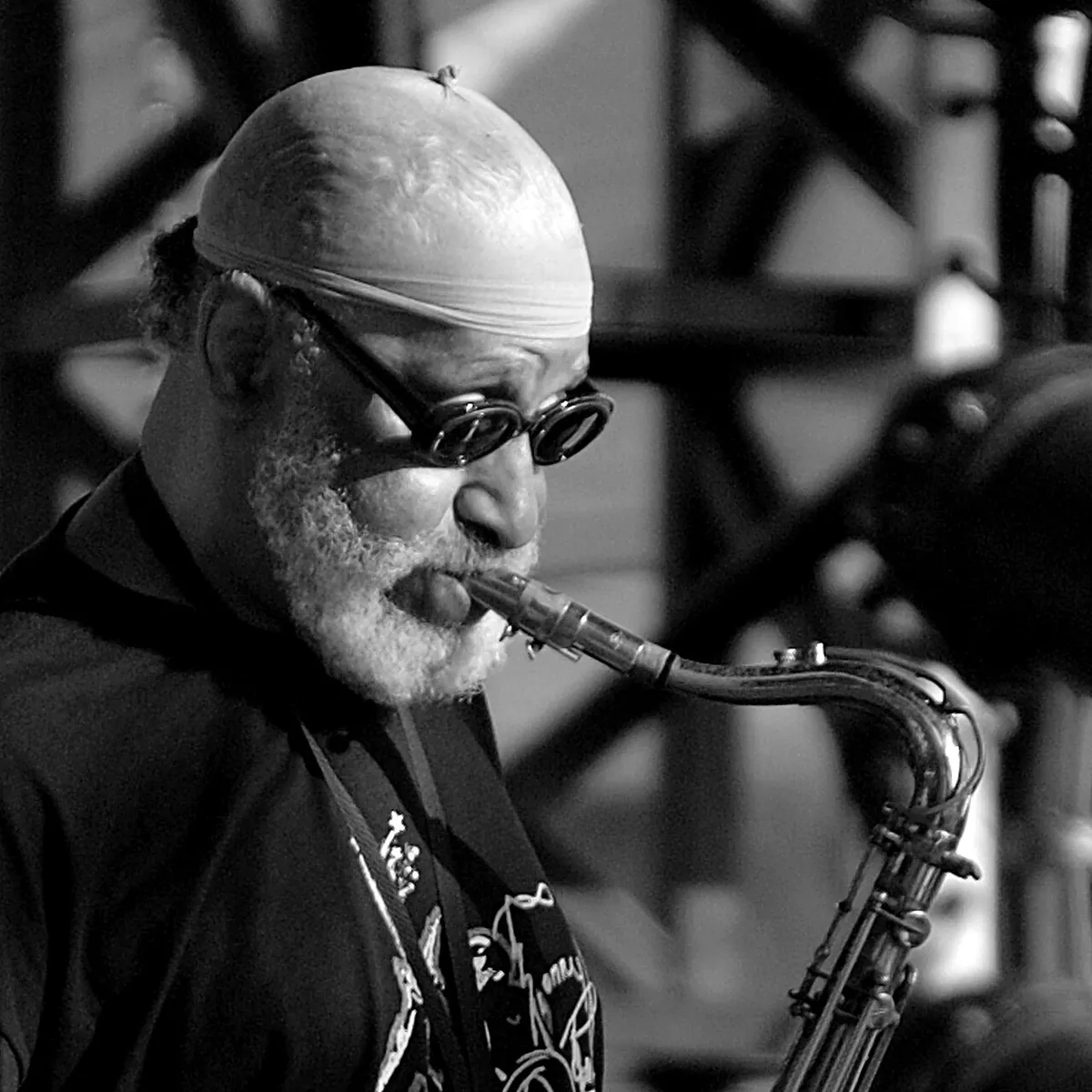
The shockwaves of his departure rippled instantly across the global music community, leaving a silence that felt heavy and permanent. On social media, tributes from modern jazz luminaries like Wynton Marsalis and Kamasi Washington flooded the feeds of fans worldwide. Blue Note Records, the label that served as the sanctuary for many of his most essential recordings, joined the chorus of those honoring the legacy of a man whose work remains a foundational pillar of the genre.
The Harlem Prodigy and the Birth of the Thematic Titan
Born Walter Theodore Rollins on September 7, 1930, in New York City, Sonny grew up in a Harlem that was vibrating with the radioactive energy of the Jazz Age. He wasn’t merely a witness to history; he was born into its epicenter. His neighborhood was a revolving door of legends, a place where the sidewalks hummed with the genius of giants. By the time he was a teenager, he was already rubbing shoulders with the likes of Thelonious Monk and Jackie McLean. His first instrument was the alto sax, inspired by the jump-blues of Louis Jordan, but once he heard the deep, muscular, earth-shaking rumble of Coleman Hawkins, he surrendered to the tenor, and the trajectory of American music shifted on its axis.
By his early twenties, Rollins was the undisputed “it” player in Manhattan, a young lion with a tone like a freight train and a mind like a master architect. He was recording with Miles Davis on the seminal 1954 sessions for Bags' Groove and Miles Davis and the Modern Jazz Giants, holding his own against the most formidable stylists in the world. It was during this period that his peerless ability to take a simple melody and deconstruct it—tearing it down to the studs and rebuilding it into something massive and structural—became his trademark. Unlike the flashy speed-demons of the era, Rollins pioneered a “thematic improvisation” style. He would take a tiny fragment of a tune, perhaps a nursery rhyme or a throwaway show tune, and worry it, flip it, and expand upon it until it sounded like a symphony of his own making.
The year 1956 remains one of the most miraculous stretches of creativity in the history of the recorded medium. In that single calendar year, Rollins released Saxophone Colossus for Prestige Records. Featuring the calypso-infused “St. Thomas”—a rhythmic tribute to his mother’s Virgin Islands roots—and the haunting, cerebral “Blue 7,” the album established him as the premier tenor voice of his generation. This was followed by the groundbreaking Way Out West in 1957, where he famously appeared on the cover dressed as an avant-garde cowboy in the California desert. Recorded for Contemporary Records with only a bassist (Ray Brown) and a drummer (Shelly Manne), the album was a masterclass in harmonic independence, proving Rollins didn’t need a piano to hold down the harmony; his horn was the entire orchestra.
The Midnight Vigil and the Sound of Freedom
Even as he stood at the absolute pinnacle of his profession, Rollins was haunted by a profound sense of self-doubt and a hunger for a level of mastery that most musicians couldn't even conceptualize. In 1959, he made a move that shocked the industry to its core: he vanished. He didn’t flee to Europe or hide in a high-end studio. Instead, he took his saxophone to the pedestrian walkway of the Williamsburg Bridge. For two years, often in the dead of winter or under the scorching summer sun, he practiced for up to 16 hours a day, his notes competing with the roar of the subway trains and the wind whipping off the East River.
“I was living on the Lower East Side, and I didn't want to disturb my neighbors,” Rollins once told an interviewer for The Guardian. “The bridge was private. It was majestic. It was where I found my own voice again.” This sabbatical became the stuff of urban legend, a symbol of the artist’s uncompromising dedication to their craft. When he finally returned to the scene in 1962 with the aptly titled The Bridge on RCA Victor, he wasn’t just better; he was transcendent. He had incorporated the grit of the city and the openness of the sky into his phrasing, turning his instrument into a vessel for the elements themselves.
This period of his life also saw Rollins emerge as a powerful, unflinching voice for social justice. His 1958 work, The Freedom Suite, was one of the first explicitly political statements in the jazz canon. Clocking in at nearly 20 minutes, the title track was a protest against racial inequality and a thunderous celebration of Black identity. In an era when many musicians played it safe to protect their bookings, Rollins used his liner notes to issue a searing manifesto: “America is deeply rooted in Negro culture: its colloquialisms, its humor, its music. How ironic that the Negro, who more than any other can claim any right to be a proud American, is being rewarded with inhumanity.”
A Legacy Written in Bronze and Blue Note
As the decades rolled on, Rollins transitioned into the role of the genre’s elder statesman, though he never lost the edge that made him dangerous. He collected multiple Grammy Awards, including a Lifetime Achievement Award in 2004, and was awarded the National Medal of Arts by President Barack Obama in 2010. Even as he aged, his performances remained legendary for their sheer physical intensity. Fans would flock to the Village Vanguard or Carnegie Hall to witness “the Rollins workout,” where he would occasionally wander through the audience while soloing, his cordless mic capturing every jagged, joyful, and unpredictable note.
Eventually, the physical toll of a lifetime spent blowing fire finally caught up with him. In 2012, Rollins was diagnosed with pulmonary fibrosis, a respiratory condition that forced him to lay down the saxophone for good. “I'm still a musician, even if I'm not playing,” he told The New York Times in a 2020 profile. “I'm still hearing the music. I'm still trying to solve the problems in my head.” He spent his final decade living a quiet, philosophical life in Woodstock, engaging with his global fanbase through his website and remaining a sharp-witted, deeply spiritual observer of the music he helped build from the ground up.
His passing marks the end of a specific, holy lineage—the era of the titans who walked with giants and survived to tell the tale. From his early sessions with Max Roach and Clifford Brown to his later, experimental forays into funk and world music, Rollins never stood still. He was a man who believed that the next note could always be better, the next phrase more honest, the next silence more profound. His death at 95 isn't just a loss of a man; it's the closing of a chapter on a century where the saxophone, in the right hands, could sound like the voice of God. While the Woodstock air might be a little thinner today, the echoes of those midnight practices on the Williamsburg Bridge will resonate as long as there is a horn to be played and a soul to be stirred.


