 THE MARQUEE
Clive Davis didn’t just hear the future; he willed it into existence. The man with the most expensive ears in the history of the recording industry—the titan who plucked Whitney Houston from a gospel choir and turned Janis Joplin into a counterculture firebrand—has died at 94. His family confirmed that the legendary mogul passed away peacefully of age-related causes at his Manhattan home on June 22, 2026. He was surrounded by the quiet elegance of the city he spent six decades defining as the center of the musical universe.
Davis didn’t merely sign artists; he sculpted eras. From the moment he stepped onto the grounds of the Monterey Pop Festival in 1967 as a Harvard-educated lawyer who knew more about contracts than chords, he displayed an uncanny, almost supernatural ability to hear a hit before a single note was recorded. While the rest of the industry saw a rowdy, whiskey-soaked blues singer in San Francisco, Davis saw a generational icon in Janis Joplin. While others saw a shy teenager in a New Jersey church, Davis saw the greatest voice of all time in Whitney Houston. His life wasn’t just a career; it was the definitive syllabus for how to turn raw talent into global immortality.
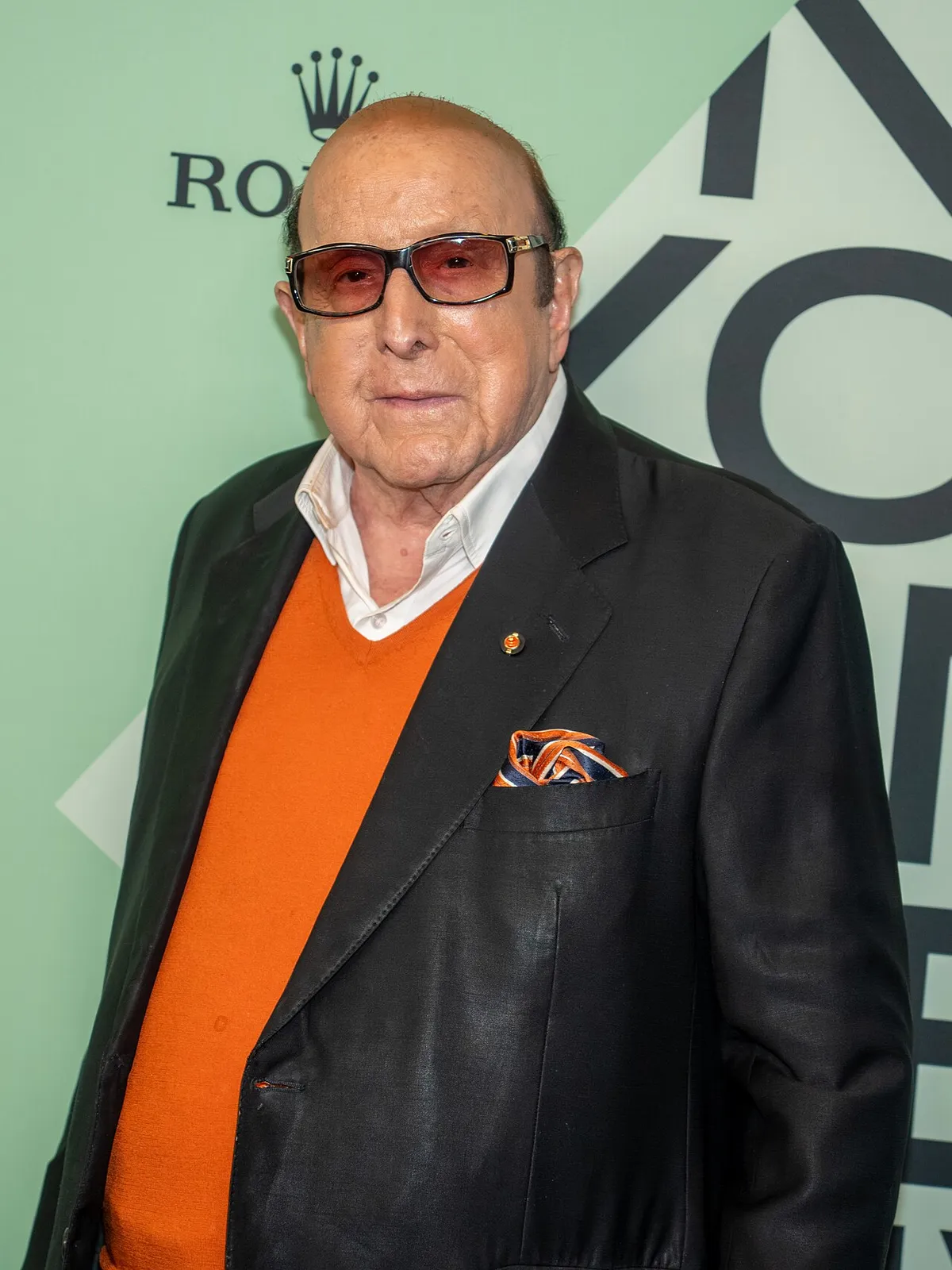
The Suit Who Found the Soul: From Columbia to Monterey
To understand the magnitude of Clive Davis, you have to look back at the mid-1960s, a time when Columbia Records was a stodgy bastion of show tunes and jazz. Davis, who joined the company as an assistant counsel in 1960, was the ultimate outsider—a Brooklyn-born scholarship student who had lost both parents during his teenage years. He was driven by a relentless work ethic and a sharp legal mind, and when he was named president of Columbia in 1967, he was essentially a suit in a room full of tie-dye.
Everything changed under the California sun at Monterey Pop. Sitting in the audience, watching Janis Joplin tear through "Ball and Chain" with Big Brother and the Holding Company, Davis experienced what he often described as a spiritual awakening. He realized that the musical landscape was shifting beneath his feet, and he moved with terrifying speed to capture it. He signed Joplin on the spot, followed by Santana, Chicago, and Blood, Sweat & Tears. He didn't just modernize Columbia; he weaponized it for the rock age.
His tenure at Columbia was a masterclass in diversification. He championed the experimental jazz-fusion of Miles Davis’s Bitches Brew and signed a scruffy young folk-rocker from Jersey named Bruce Springsteen. Yet, despite his massive success, Davis was ousted from Columbia in 1973 amid a cloud of corporate controversy. Most men would have taken their golden parachute and retired to the Hamptons to write their memoirs. Clive Davis simply started over, founding Arista Records in 1974 and proving that his success wasn't tied to a corporate logo, but to his own infallible intuition.
The Whitney Whisperer and the Architecture of the Hit
If Monterey was Davis’s introduction to the world, Arista was his empire. It was here that he perfected his most famous—and sometimes most controversial—trait: his obsession with the "perfect song." Davis was the ultimate hands-on architect, often personally selecting the singles, the producers, and even the track sequencing for his stars. This philosophy found its ultimate vessel in 1983, when Davis walked into Sweetwater’s, a Manhattan nightclub, to see a 19-year-old Whitney Houston performing with her mother, Cissy.
"To hear this young girl breathe such fire into a song, with that purity of tone... I knew immediately," Davis told Rolling Stone in a retrospective interview. He spent two years meticulously preparing her debut album, a move that frustrated the impatient but resulted in a string of seven consecutive number-one hits—a feat that remains unrivaled in the annals of pop. Their partnership became the gold standard for the artist-mentor relationship, a bond so tight that Houston famously called him her "industry father."
But Davis was never a one-trick pony. While he was building a pop queen with Houston, he was resurrecting the career of Aretha Franklin, giving the Queen of Soul her 1980s renaissance with hits like "Freeway of Love." He took Barry Manilow, a songwriter who didn't want to be a singer, and convinced him to record "Mandy," a song Manilow initially hated but which became a global smash. Davis understood the psychology of fame as well as he understood the mechanics of a melody. He knew when to push, when to pivot, and exactly when to double down on a hook.
The Second Act: Santana’s Supernatural Comeback and J Records
The music business treats veterans like yesterday’s liner notes, but Clive Davis refused to be archived. In 2000, after being forced out of Arista by BMG executives who felt he was too old to lead the charge into the new millennium, Davis did the unthinkable. At age 68, he founded J Records and immediately signed a teenager named Alicia Keys. Her debut, Songs in A Minor, went on to sell over 12 million copies and win five Grammys, proving that Davis’s ears were as sharp as they had been in 1967.
Perhaps his most stunning achievement during this period was the comeback of Carlos Santana. In 1999, Davis reunited with the guitarist he had signed three decades earlier to produce Supernatural. He paired the veteran rocker with contemporary stars like Rob Thomas and Lauryn Hill, creating a cultural juggernaut that won eight Grammys in a single night and stayed at number one for 12 weeks. It was a victory lap that silenced every critic who suggested he had lost his touch.
Beyond the records, Davis became the industry's ultimate social arbiter through his annual Pre-Grammy Gala. Known simply as "Clive’s Party," it was the most exclusive invite in Hollywood—a room where Jay-Z sat next to Joni Mitchell and world leaders rubbed elbows with teenage TikTok sensations. To be invited was to be validated; to be asked to perform was to be anointed. Even in his 90s, Davis would stand on that stage for hours, introducing his "discoveries" with the same boyish enthusiasm he had for Joplin nearly sixty years prior.
In his final years as Chief Creative Officer at Sony Music Entertainment, Davis focused on his legacy, establishing the Clive Davis Institute of Recorded Music at NYU’s Tisch School of the Arts. He wanted to ensure that the art of the A&R—the search for the song and the soul—wouldn't be lost to the cold logic of algorithms. Social media has erupted since the news broke on Monday afternoon. Jennifer Hudson, whom Davis mentored after American Idol, posted a photo of the two with the caption: "You believed in me when the world was still guessing. My heart is broken, but my voice is your legacy."
Clive Davis leaves behind four children and a catalog of music that serves as the DNA of modern pop. He was a man who worked until the very end, still listening to demos and still searching for that elusive, perfect hook. The industry has lost its most discerning listener, but the songs he found will keep playing long after the final curtain falls.


