 THE MARQUEE
The gilded, gold-leafed corridors of Mar-a-Lago have hosted plenty of world-altering summits, but the Palm Beach set had never seen anything quite like the arrival of the Harajuku Barbie. When Nicki Minaj stepped into the frame, she wasn’t just doing a photo op; she was setting fire to the traditional celebrity playbook and dancing in the smoke.
Ditching the sanitized, focus-grouped PR maneuvers that define the modern A-list, the most influential female rapper of her generation spent a recent afternoon navigating Donald Trump’s private club for a candid interview that effectively ended her transition from pop-culture provocateur to a central figure in the MAGA movement. This wasn’t a tentative toe-dip into the political swamp. Following her incendiary declaration at a U.S. Treasury event in January 2026—where she stunned the beltway by calling herself Donald Trump’s “number one fan”—this Mar-a-Lago sit-down served as a definitive manifesto. Minaj leaned into the cameras, her signature poise sharper than ever, explaining that her pivot wasn’t born from a sudden fascination with policy white papers, but from a bone-deep disillusionment with an establishment she believes has abandoned her and her community for decades.
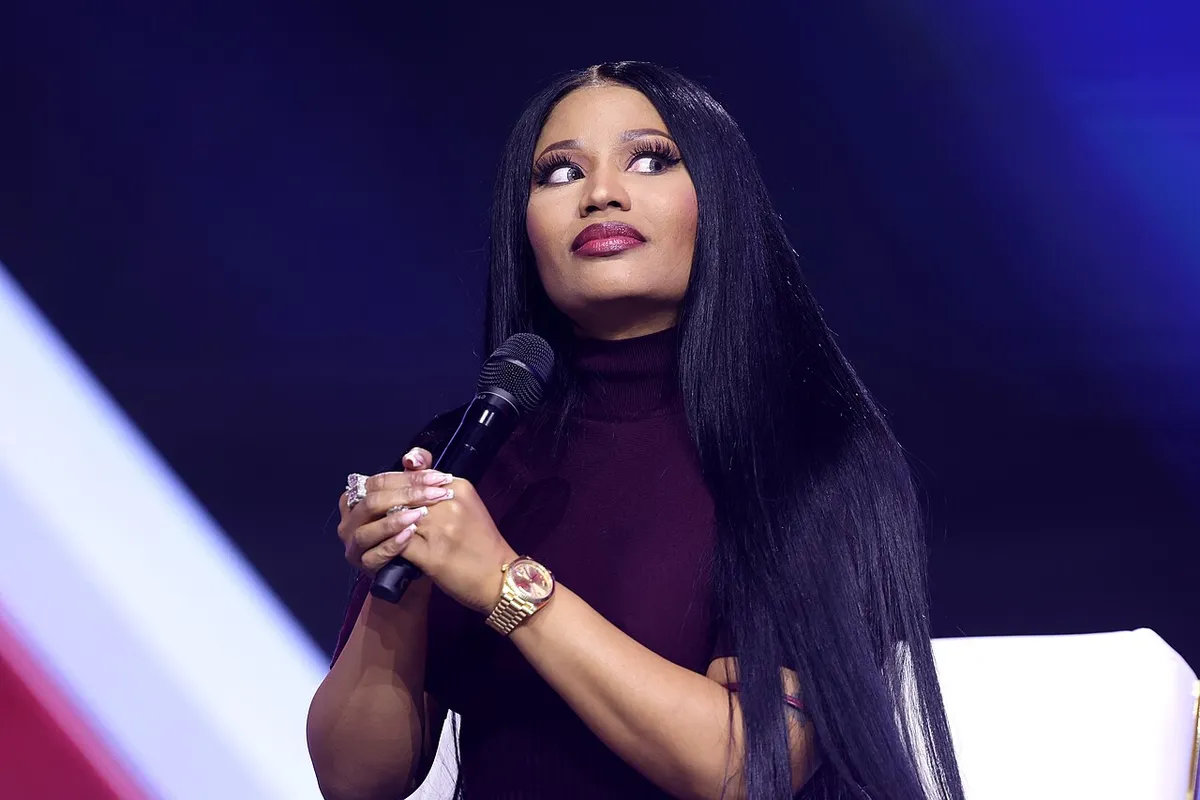
The AmericaFest Spark and the Treasury Declaration
To trace the origin of this ideological collision, you have to look back at the trail of breadcrumbs Minaj has been scattering for months. The first tectonic shift occurred in December 2025, when she appeared at AmericaFest, the massive conservative gathering hosted by Turning Point USA. While other artists of her stature might have played it safe with a neutral setlist and a quick exit, Nicki leaned into the furnace. Seeing the woman who gave the world “Super Bass” and “Starships” commanding a stage usually reserved for right-wing firebrands sent social media into an absolute tailspin. Fans were left wondering if this was a piece of high-concept performance art or a genuine, ground-up transformation.
The answer arrived with startling, neon-lit clarity just weeks later. In January 2026, during a high-profile U.S. Treasury event, Minaj bypassed the expected talking points about financial literacy to deliver a full-throated, unapologetic endorsement of the sitting president. “I saw things happening in real time,” she told the gathered officials, adding that she “just got tired of being pushed around,” in a moment captured by C-SPAN and widely reported by The Guardian. By crowning herself Trump’s top supporter, she didn’t just pick a side; she declared war on the industry’s rigid expectations for Black female artists. Capital B News recently analyzed how this move shatters the long-standing assumption that the Black voting bloc—and its most visible cultural titans—is a monolith that will naturally gravitate toward the Democratic party.
During her Mar-a-Lago conversation, Minaj doubled down on this rebellion. She spoke passionately about the “freedom of thought” she feels has been suffocated by a “controlled” media environment. Her rhetoric echoed the skepticism she first voiced back in 2021 regarding vaccine mandates—a moment that many observers now view as the origin story of her political radicalization. She told her interviewers she is finished being a “vessel for someone else’s agenda,” a sentiment that resonates with a segment of her audience that feels similarly alienated by modern social discourse.
A Kingdom Divided: Can the Barbz Survive the Red Wave?
The reaction from the Barbz—Minaj’s fiercely loyal, highly organized digital infantry—has been nothing short of explosive. Across X and TikTok, the fracture is deep and jagged. Some fans are adopting the “Queen Radio” mantra that Nicki is always five steps ahead of her critics, no matter how controversial the move. “If the Queen says it’s time to look at things differently, we look at them differently,” one viral post read, racking up thousands of likes from the MAGA-aligned wing of the fandom. To them, she is a brave truth-teller risking her “it-girl” status to speak an uncomfortable truth.
Yet, a massive contingent of the fanbase is struggling to square the Nicki they grew up with—the champion of female empowerment and marginalized voices—with the rhetoric of the Trump campaign. Pundits like Robby Soave and Lindsey Granger have highlighted this tension, noting that Minaj’s shift isn’t just a political choice; it’s a brand-shifting event that could permanently rewrite her legacy. Longtime supporters have expressed genuine heartbreak in the comments sections of her latest videos, with some organizing “digital burnings” of her discography. The New Republic and PBS have both framed this as more than just a music story—it is a cultural case study in how the fractured nature of modern politics can rip through even the most tight-knit fanbases.
Despite the backlash, Minaj seems to be thriving on the conflict. There is a perceptible, razor-sharp edge to her recent public statements, a sense that she relishes the role of the ultimate disruptor. By aligning with figures who are frequently targeted by the mainstream entertainment press, she has built a new kind of insulation. Every criticism from a liberal outlet becomes a badge of honor, proof that she is hitting a nerve. It is a strategy ripped directly from the Trump playbook: turn the opposition’s outrage into high-octane fuel for the base.
While the cultural debate rages, the business side of the Minaj empire is holding its breath. Major labels and blue-chip brand partners have historically fled from such polarizing stances, fearing the loss of broad-market appeal. Yet, Minaj’s numbers remain formidable. Her ability to drive engagement, even when radioactive, is a currency the industry finds impossible to ignore. The question is whether this political pivot will alienate the corporate entities she has spent years courting, or if she will successfully build a parallel economy with conservative-leaning brands and platforms.
Her Mar-a-Lago appearance also raises the stakes for the 2026 election cycle. With her massive reach among younger voters and minority communities, she is a high-value asset for any campaign. If she continues this trajectory, we could see Minaj as a central surrogate, perhaps even headlining major political conventions or performing at massive rallies. The Irish Star recently noted that her influence extends far beyond U.S. borders, making her a global face for this new brand of celebrity populism. As the interview wrapped up, Minaj didn’t look like a woman worried about her chart positions. She looked like someone who had found a new stage and a new script. The girl from Queens who conquered the charts is now looking to conquer a much different kind of territory, and if her track record is any indication, she won’t be doing it quietly. The music world is watching, and for the first time in years, nobody is quite sure what the Queen of Rap will do when the beat finally drops.

