 THE MARQUEE
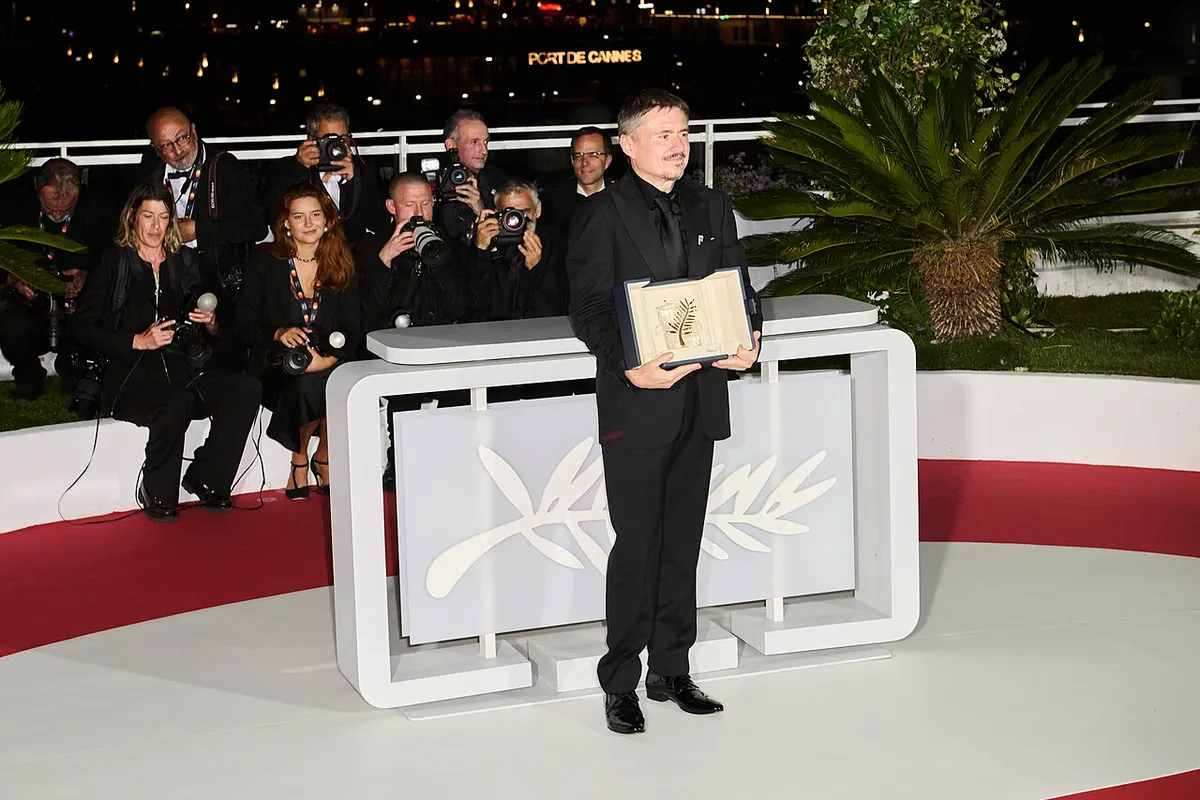
Forget the polite golf clap. When the 79th Cannes Film Festival reached its crescendo on Saturday night, the atmosphere inside the Grand Théâtre Lumière felt less like an awards ceremony and more like a coronation—one soundtracked by the frantic, percussive rhythm of a thousand camera shutters. As the jury president stepped to the mic, the tuxedoed crowd held its collective breath until a single word shattered the silence: Fjord. The roar that followed was a primal release, the sound of a festival realizing it hadn’t just seen a winner, but a certified masterpiece. For director Cristian Mungiu, the moment was a ticket into the most exclusive club in cinema; as he bounded onto the stage to hoist his second Palme d’Or, he joined the pantheon of titans like Francis Ford Coppola, Ken Loach, and the Dardenne brothers.
The Bureaucratic Nightmare That Stole the Croisette
Fjord isn’t the kind of movie that asks for your attention; it seizes your soul and refuses to let go. Set against the deceptively tranquil, icy majesty of the Norwegian wilderness, Mungiu’s latest is a high-stakes, claustrophobic descent into hell, tracing a family’s ruinous collision with the Barnevernet—Norway’s notoriously uncompromising child protective services. It is a haunting exploration of cultural friction and the terrifying, cold-blooded power of the state, delivered with the same clinical, unflinching precision that defined Mungiu’s 2007 breakthrough, 4 Months, 3 Weeks and 2 Days.
Sebastian Stan provides the film’s beating, bruised heart. Trading the vibranium shield of the Marvel Cinematic Universe for the weathered jacket of a father pushed past his breaking point, Stan delivers a performance so raw and grounded it feels like a career-defining pivot. Opposite him, Renate Reinsve proves why she is the festival’s reigning muse. Returning to the Croisette after her star-making turn in The Worst Person in the World, Reinsve is a force of nature, her chemistry with Stan a jagged, desperate thing as they navigate a system that feels engineered to dismantle their lives piece by piece.
“We will have to see how the film stands the test of time,” Mungiu told a standing-room-only press room shortly after the win, his fingers tightly gripped around the gold-leaf trophy. He spoke about the pressure of political correctness and his reflections on the “abusive” nature of institutional standards. The reaction during the premiere was nothing short of visceral. Social media was instantly flooded with reports of audible gasps and a raucous standing ovation, while The Guardian’s Peter Bradshaw gave the film a 2/5 star rating, describing the “anticlimactic” and “underpowered” work as a “misstep” for the director.
Seven-Peat: The Neon Dynasty and the Kingmaker of Cannes
While Mungiu and his stars were the heroes of the night, the industry chatter echoing through the high-end bars along the Croisette centered on a different kind of dominance: the Neon streak. With Fjord taking the top prize, the boutique distributor has officially defied the laws of cinematic gravity, securing its seventh consecutive Palme d’Or. In the volatile, high-stakes world of indie acquisitions, this isn’t just a lucky run; it’s a statistical impossibility. The dynasty began with Bong Joon-ho’s Parasite in 2019 and has marched through a gauntlet of winners including Titane, Triangle of Sadness, Anatomy of a Fall, Anora, and last year’s unannounced heavyweight.
At the center of it all is CEO Tom Quinn, a man who has effectively become the Kingmaker of Cannes. His strategy of aggressive, intuitive, early acquisitions has turned Neon into the ultimate destination for global auteurs who want more than just a North American release—they want a legacy. Rivals are left scrambling as Quinn consistently identifies the winner before the first reel even spins for the jury. “Neon has a sixth sense for what is going to resonate with a jury and the zeitgeist simultaneously,” noted one veteran producer at the Hotel du Cap-Eden-Roc. “They don’t just buy movies; they buy the conversation.”
The internet exploded as the news broke, with film geeks marveling at the sheer statistical absurdity of the distributor’s run. “At this point, just give Tom Quinn the keys to the Palais,” one viral tweet joked, while others pointed out that Stan’s move from blockbuster hero to Palme d’Or winner is the kind of prestige glow-up that actors spend decades chasing. The victory also signals a clear shift in the festival’s identity, leaning into socially relevant, hard-hitting dramas that mirror the anxieties of a fractured, modern Europe.
A New Peak for the Romanian New Wave
The gravity of Mungiu’s win is hard to overstate. By claiming a second Palme d’Or, he solidifies his place as the undisputed architect of the Romanian New Wave. Fjord proves that his austere, meticulously researched style still possesses the power to shock and move audiences nearly twenty years after his first major splash. The film managed to edge out massive competition from the likes of Wes Anderson and Pedro Almodóvar, suggesting this year’s jury was hungry for something with a sharper, more provocative edge.
Beyond the leads, Screen Daily praised the “quietly devastating” performances from the local Norwegian supporting cast who play the Barnevernet officials with a terrifying, polite iciness. By avoiding the easy tropes of “good vs. evil,” Mungiu finds the true horror in mundane paperwork and the civil tone of a government hearing. This nuanced approach was exactly what lured Sebastian Stan to the project. The actor, usually seen in the middle of big-budget spectacles, looked visibly moved standing by Mungiu’s side on the red carpet.
As the party migrates from the Palais to the sand for beach-side celebrations, the industry is already looking toward the fall. Neon is expected to mount a massive awards campaign for Fjord, with analysts already marking Stan and Reinsve as the ones to beat in the Best Actor and Best Actress categories this winter. The film’s journey is only just beginning, but for one night on the French Riviera, it was the undeniable king of the world. With seven wins in a row, Neon isn’t just attending the festival anymore—they are defining the gold standard of global cinema. The lights on the Croisette are dimming, but the noise around Fjord is only getting louder, setting the stage for a theatrical release that promises to be the cinematic event of the year.


