 THE MARQUEE
Garret Anderson never needed to scream to be heard; he let a liquid left-handed swing do the talking for fifteen years, turning the batter’s box into a sanctuary of surgical precision. Today, that swing belongs to the ages, and the Big A feels impossibly small. The Los Angeles Angels confirmed the shattering news Friday, April 17, 2026: the three-time All-Star and heartbeat of the 2002 championship squad passed away at his Newport Beach home following a sudden medical emergency. He was 53 years old.
To the generations of fans who grew up under the neon glow of the Anaheim halo, Anderson—forever known as **“G.A.”**—was the constant. While the era’s louder stars chased tabloid headlines or engaged in performative dugout theatrics, Anderson simply showed up and dismantled pitching staffs with the cold efficiency of a master craftsman. He was the metronome of the Angels' lineup, a player whose consistency was so absolute it was almost taken for granted. Only now, with the silence he cultivated turning permanent, does the true weight of his absence begin to sink in.
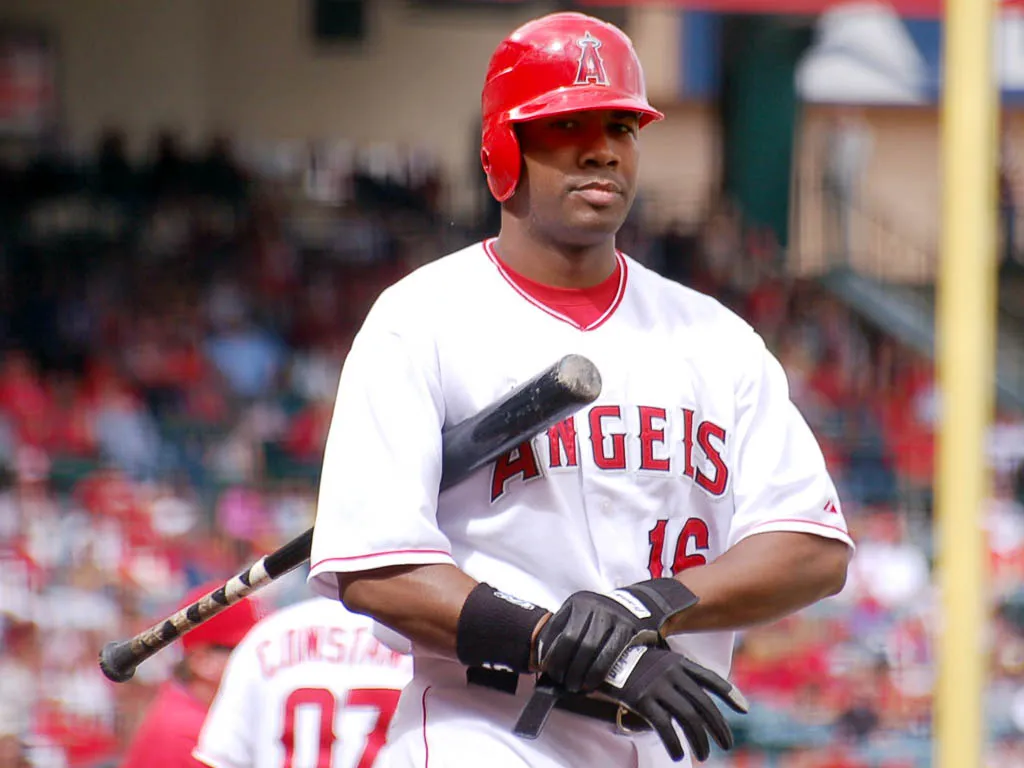
“The Angels organization is heartbroken,” the team said in a formal statement released shortly after the news broke. “Garret was more than just a Hall of Fame player; he was the heartbeat of our 2002 championship team and a pillar of this community. Our thoughts are with his wife, kids, and everyone who had the honor of calling him a teammate.”
The Left-Handed Maestro of the OC
If you close your eyes and picture the Halos of the late ‘90s, you see that stroke. It was effortless, a piece of kinetic poetry that sent line drives screaming into the gaps of Anaheim Stadium with a sound like a whip cracking. Arriving in 1994, Anderson nearly snatched the Rookie of the Year honors in 1995, finishing a razor-thin second to Marty Cordova. From that moment on, he wasn’t just a player; he was the franchise’s gold standard. He wasn't the guy holding the megaphone in the locker room, but his bat made enough noise to fill the entire Southland.
The statistical mountain he left behind is nothing short of staggering. Anderson walked away from the game as the franchise leader in virtually every category that matters: games played (2,013), hits (2,368), total bases (3,743), doubles (489), and RBIs (1,292). He was a doubles machine, a man who treated second base like a second home, leading the league twice in that category. And then there were the nights when G.A. went rogue, like in 2007, when he drove in 10 runs in a single game against the New York Yankees—a glitch-in-the-matrix performance that remains one of the most dominant displays in baseball history.
The digital world has been flooded with tributes from teammates who are visibly rocked. Tim Salmon, Anderson’s longtime partner in the grass and a fellow franchise icon, shared a raw message on Instagram. “GA was the guy you wanted at the plate when the game was on the line,” Salmon wrote. “He didn’t say much, but he didn’t have to. He was the ultimate professional. My heart is heavy today.” Mike Trout echoed the reverence, posting: “A true legend of the game and a man who paved the way for all of us in Anaheim. Rest in peace, GA.”
October Immortality and the All-Star Takeover
While the record books tell one story, Anderson’s legacy is eternally anchored to the lightning-in-a-bottle magic of 2002. That year, the “Thunder Sticks” were rattling the foundations of the stadium, and the Angels clawed their way into a gritty World Series showdown with the San Francisco Giants. In Game 7, with the championship hanging in the balance, it was Anderson who delivered the knockout blow. His three-run double off Livan Hernandez in the third inning didn’t just clear the bases; it cleared the path for a lead they would never surrender.
That 4-1 victory delivered the first and only World Series title to the city of Anaheim. In the delirium of the dogpile, as teammates were weeping and leaping into each other’s arms, Anderson remained his typical, composed self—smiling wide, yes, but already looking like he was calculating the next pitch. He didn't play for the cameras or the highlight reel; he played for the trophy.
By 2003, the rest of the country finally realized what Orange County already knew. During that year’s All-Star Week at U.S. Cellular Field, Anderson didn’t just participate; he colonized the event. He took home the Home Run Derby crown and followed it up by snagging the All-Star Game MVP trophy. It was a rare, shimmering moment where the national spotlight finally caught up to a man who usually preferred to work in the shadows. He was a pure, old-school hitter in an era of giants, relying on preternatural hand-eye coordination to put the barrel on the ball.
Former manager Mike Scioscia, the architect of that 2002 run, spoke Friday afternoon with a voice thick with grief. “Garret was the most underrated player in baseball for a decade,” Scioscia said. “He was the centerpiece. He never rattled. He never changed. Whether it was a Tuesday in April or the seventh game of the World Series, you knew exactly what you were getting from him. This is a devastating loss for the baseball family.”
The Stoic Exit
Following his departure from Anaheim in 2008, Anderson took his talents to the Atlanta Braves and the Los Angeles Dodgers before officially hanging it up in 2011. But he never really left. He was a frequent, welcome ghost at Angel Stadium, often seen hovering in the broadcast booth or mentoring the next generation during the hazy days of Spring Training. When he was inducted into the Angels Hall of Fame in 2016, the standing ovation felt like it might never end—a rare, loud moment of public love for a man who famously avoided the noise.
Off the field, Anderson was a man of quiet depths and fierce devotion to his family. In the coastal peace of Newport Beach, he traded the roar of 45,000 fans for a life of privacy. Neighbors knew him as a kind, low-key neighbor who was more interested in discussing his children's school projects than his two Silver Slugger awards. While the family has requested space as they navigate the specifics of the medical emergency, the ripple effects of his passing are being felt from the dugout to the upper deck.
MLB Commissioner Rob Manfred issued a statement calling Anderson “one of the premier hitters of his generation” and “a model of consistency and class.” The Angels are expected to announce a formal memorial service at the stadium soon, offering fans one final chance to tip their caps to the man who defined their most golden era.
Tonight, as the sun dips behind the palm trees in Anaheim, the scoreboard will likely hold steady on that iconic number 16. It won't be enough to fill the void, but for a player who always preferred to let the game speak for itself, perhaps a moment of silence is the most fitting tribute of all. G.A. has moved on, but the echoes of that 2002 double will ring out at the Big A as long as the lights stay on in the OC.


