 THE MARQUEE
For decades, Tom Kane’s voice didn’t just fill our living rooms; it defined the very frequency of our imagination. If you spent a single Saturday morning in front of a television or a late night gripped by a game controller over the last thirty years, you didn’t just hear him—you lived within the worlds he helped build.
He was the booming, urgent staccato of the Star Wars: The Clone Wars newsreels, the measured, paternal warmth of Professor Utonium in The Powerpuff Girls, and the gravel-etched wisdom of Master Yoda. For fans of animation and gaming, Kane wasn’t merely a performer. He was the sonic architect of a dozen different childhoods, a man who could conjure an entire galaxy with nothing more than a microphone and a deep breath.
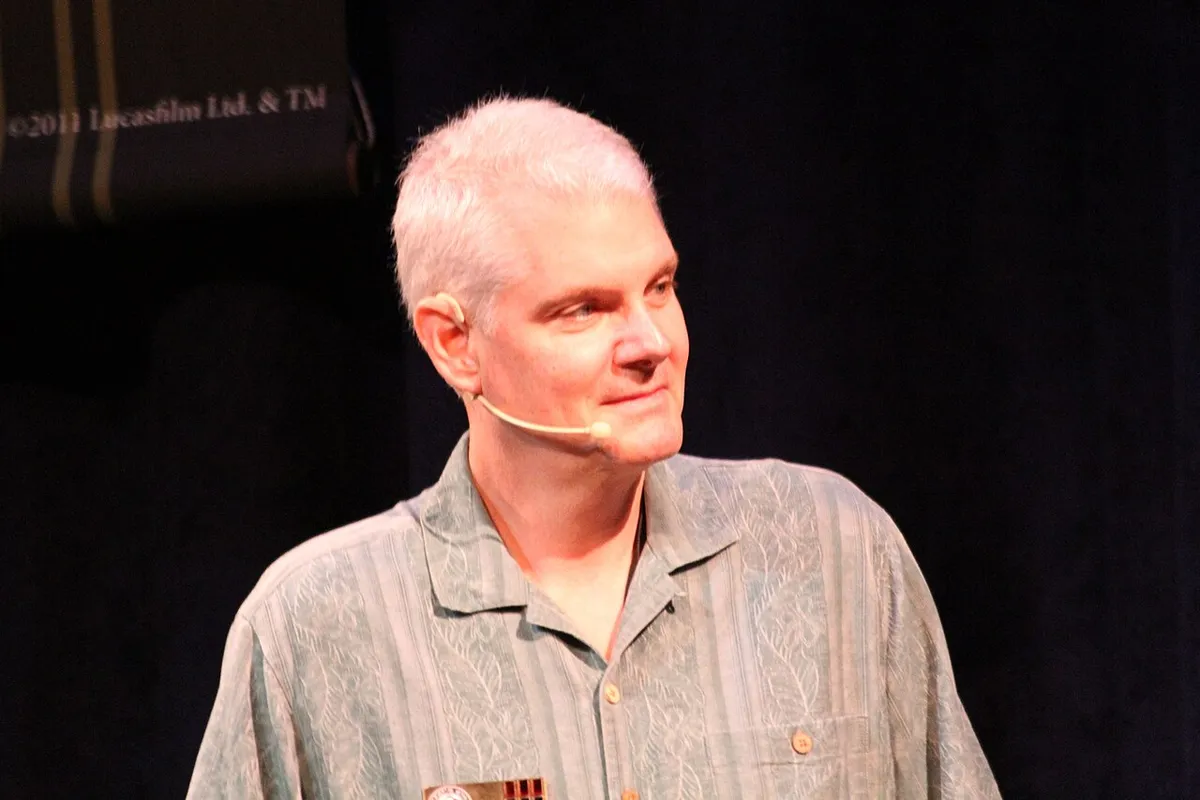
On May 18, 2026, that legendary voice went silent. Kane passed away at a hospital in Kansas City at the age of 64, surrounded by the family that had stood as his bedrock through a grueling final chapter. His representative confirmed the news following an initial report by TMZ, citing complications from the devastating stroke he suffered in late 2020. It is a profound, echoing loss for the entertainment industry, marking the end of a career that spanned nearly four decades and touched every corner of the pop culture zeitgeist, from the high-glitz stage of the Academy Awards to the muddy, zombie-infested trenches of Call of Duty.
The Galactic Glue: Yoda, Ackbar, and the Art of the Narrator
While many actors spend a lifetime chasing one iconic role, Kane managed to inhabit an entire ecosystem within a single franchise. To the Star Wars faithful, he was the essential connective tissue of the prequel era. When Frank Oz wasn’t available to voice Yoda, Lucasfilm turned to Kane, who delivered far more than a simple parody. He brought a soulful, weary gravitas to the Jedi Master across seven seasons of The Clone Wars and countless titles like Star Wars: Battlefront. He understood the assignment: Yoda wasn’t just about backward syntax; he was about the crushing weight of eight hundred years of history.
But his contribution to the galaxy far, far away was a deep-dive endeavor. Kane stepped into the massive shoes of the late Erik Bauersfeld to voice the Mon Calamari leader Admiral Ackbar in 2017’s Star Wars: Episode VIII – The Last Jedi. Perhaps most importantly, he provided the heartbeat of The Clone Wars series as its narrator. That role required a specific, 1940s-style newsreel energy—a call to arms that signaled to millions of fans that it was time to leave reality behind for thirty minutes of intergalactic high stakes. Whether he was mimicking the fussy perfectionism of C-3PO or populating the background with a dozen distinct aliens, Kane’s versatility was the secret weapon of the Lucasfilm sound department.
The outpouring of grief from the Star Wars community was immediate and visceral. On social media, fans began sharing clips of his most poignant lines, noting that the series simply wouldn't have felt like Star Wars without that introductory narration setting the stage. His colleagues, who often referred to him as one of the industry's most reliable “one-take wonders,” remembered a man who could pivot from a sinister villain to a comedic sidekick without a hint of friction.
The Silent Battle: A Cruel Irony in Kansas City
The tragedy of Kane’s final years held a sharp, cruel irony that resonated painfully within the voice-acting community. In October 2020, Kane suffered a severe stroke that caused significant damage to the right side of his brain. The most devastating symptom was aphasia—a condition that effectively robbed him of his ability to speak, read, and write. For a man whose entire existence and livelihood were built on the surgical precision of language and vocal performance, the diagnosis was a heartbreak of the highest order.
His daughter, Sam, became her father’s voice during this period, providing regular, raw updates to his fans. She chronicled the grueling physical therapy sessions and the small, hard-won victories in his recovery. However, in 2021, the family made the difficult announcement that Kane would be officially retiring from the booth. While he could still communicate with his inner circle and felt the wave of love from his global fanbase, the lightning-fast wit and effortless vocal gymnastics that defined his career were no longer accessible to him.
Even in that enforced silence, Kane’s legacy remained deafening. His retirement prompted a surge of tributes from industry titans like Disney and Cartoon Network. He eventually returned to his Midwestern roots, spending his final years in the Kansas City area. There is a small, quiet measure of peace in the fact that he was surrounded by family at the end—a comfort to a fandom that had spent years rooting for a miracle. He fought the complications of that stroke for over five years, showing a quiet resilience that mirrored the heroes he once portrayed on screen.
From Saturday Mornings to the Oscars Stage
Beyond the lightsabers and starships, Kane was a cornerstone of the 1990s and 2000s animation gold rush. As Professor Utonium in Craig McCracken’s The Powerpuff Girls, he provided the perfect straight-man foil to the neon-colored chaos of Blossom, Bubbles, and Buttercup. He played the Professor as a man who was simultaneously a brilliant scientist and a hopelessly devoted, slightly dorky father. It was a grounded performance that gave a surreal show about superpowered kindergarteners its emotional core.
Kane’s range also earned him a cult following in the gaming world that rivaled his television fame. For players of the Call of Duty: Zombies franchise, he was the voice of the stoic Takeo Masaki. For over a decade, Kane voiced multiple versions of the character, delivering thousands of lines of dialogue that veered from grim samurai philosophy to hilarious, fourth-wall-breaking meta-commentary. To the Zombies community, he was one of the “Core Four” actors who transformed a bonus game mode into a global phenomenon.
His resume was an embarrassment of riches: he was Magneto in Wolverine and the X-Men, the sophisticated Darwin in The Wild Thornberrys, and even Gandalf in various Lord of the Rings titles. His reach was so broad that he was frequently tapped to be the “voice of God” for the Academy Awards, announcing the Oscars multiple times, including the 80th, 83rd, 84th, and 90th ceremonies. It remains a testament to his singular talent that he could be the voice of a Saturday morning cartoon one hour and the voice of Hollywood’s most prestigious night the next.
As the industry processes the loss of one of its most distinctive instruments, the work Tom Kane left behind ensures he will never truly be gone. Every time a new generation of fans clicks “play” on an old episode of The Clone Wars or boots up a classic round of Zombies, his voice will be there—guiding, teaching, and entertaining with that unmistakable Kane magic. He didn't just play characters; he gave them a soul that resonated through the speakers and into the hearts of everyone listening.


