 THE MARQUEE
The air in the Manhattan courtroom didn’t just go cold; it vanished. It was the kind of suffocating, oxygen-deprived quiet that only follows the total disintegration of a years-long legal crusade. After three days of deliberation and a flurry of notes that read like a slow-motion car crash, the jury in Harvey Weinstein’s high-stakes New York retrial finally admitted they were staring at a wall they couldn’t scale. On Friday afternoon, Judge Curtis Farber was forced to call it: a mistrial on the single remaining charge of third-degree rape. It was a staggering, messy end to a chapter that was supposed to provide the industry with a sense of finality.
This was meant to be the definitive coda—the final, crushing punctuation mark on the case that effectively ignited the global #MeToo movement. For Manhattan District Attorney Alvin Bragg’s office, the retrial was a chance to prove that the first conviction wasn't just a fluke of a different era. Instead, the twelve jurors found themselves hopelessly deadlocked over the allegations of Jessica Mann. The former aspiring actress has now spent years of her life reliving a 2013 encounter at a Midtown hotel for two separate juries, only to watch both groups fail to reach a consensus. In the brutal theater of high-profile litigation, justice often proves to be a ghost that refuses to be cornered.
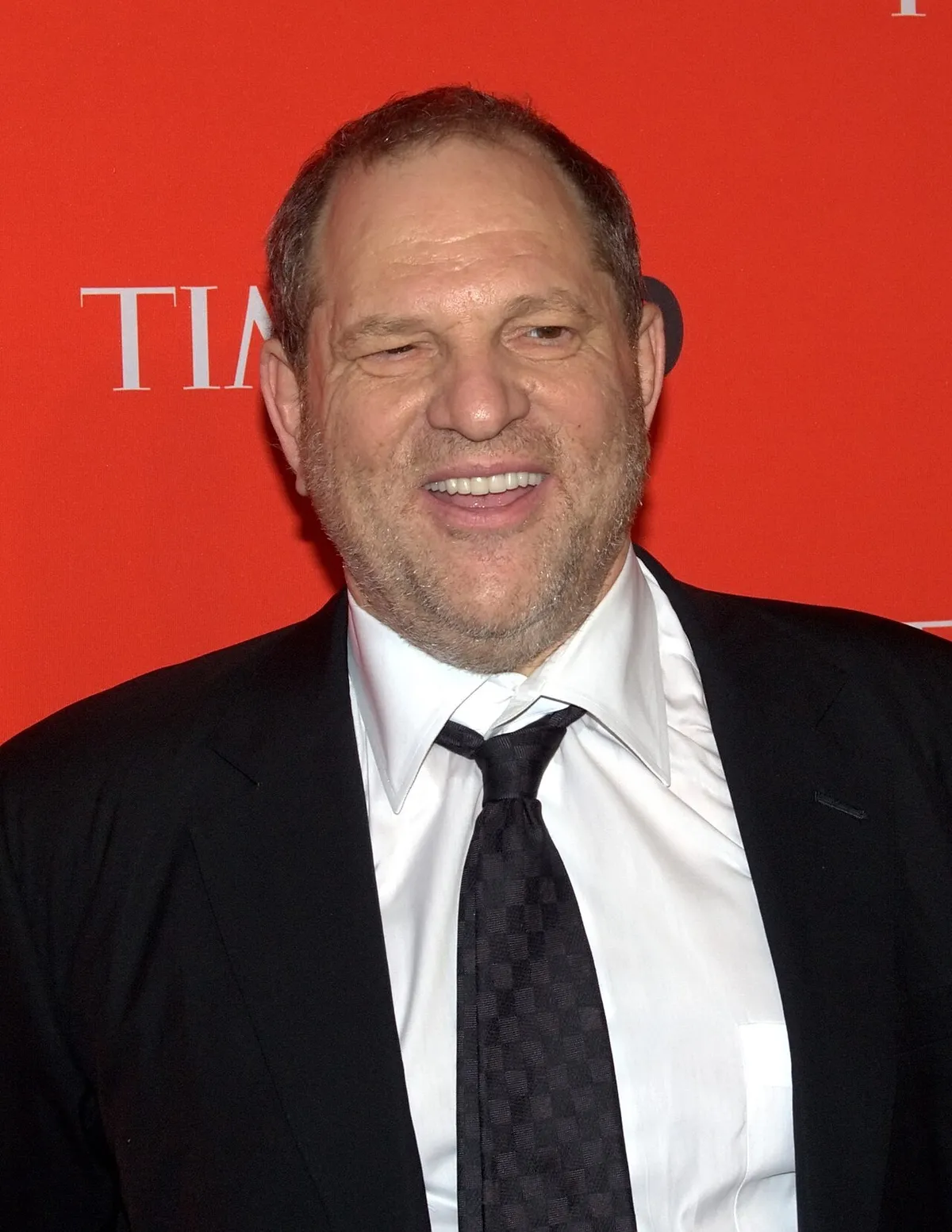
Weinstein, now 74 and appearing more like a ghost himself, sat stoically as the collapse became official. Clad in a dark suit that seemed several sizes too large for his diminished, wheelchair-bound frame, the man who once ruled the Oscars with a terrifying, iron-fisted grip showed no flicker of triumph. But out in the hallway, the vibe was pure adrenaline. His lead defense attorney, Marc Agnifilo—a man who treats the courtroom like a Broadway stage and favors suits sharp enough to draw blood—beamed at the gathered press. For the defense, this wasn't just a procedural hiccup; it was a total validation of their campaign to paint these encounters not as crimes, but as the complicated, messy trade-offs of a bygone Hollywood era.
The Stalling of the Moral Arc: A Jury at an Impasse
The deadlock wasn’t a sudden break; it was a slow, painful curdling of the process. This diverse cross-section of New Yorkers started their deliberations with the weight of history on their shoulders, but by Friday, the energy had shifted from purpose to exhaustion. Judge Farber, desperate to avoid a repeat of the legal catastrophe that led to this retrial in the first place, pushed them to the brink. He issued an Allen charge—the judicial version of a ‘hail Mary’ intended to squeeze a verdict out of a fractured room—but the needle wouldn't budge. The collective ‘we’ of the jury had splintered into an unfixable ‘them.’
The battlefield was the charge of third-degree rape. While first-degree rape requires the proof of physical force, third-degree rape is a psychological chess match centered entirely on the absence of consent. Prosecutors Nicole Blumberg and her team leaned hard into the idea of institutional betrayal, arguing that Weinstein used his massive, industry-defining shadow to trap Mann in a world where ‘no’ didn't exist in the vocabulary. They presented a man who treated young talent like disposable currency. Conversely, Agnifilo and co-counsel Diana Fabi-Samson hammered a different rhythm: a story of a transactional, if uncomfortable, relationship between two adults where the lines were perpetually blurred by ambition and proximity.
Mann’s time on the stand was a masterclass in endurance. She weathered a cross-examination that felt less like a legal inquiry and more like a forensic dissection of every ‘friendly’ email and text she sent in the years following the alleged assault. The defense pointed to these digital crumbs as proof of a consensual affair. Mann, however, never wavered, explaining the ‘fawn’ response—the terrifying survival instinct that keeps a victim tethered to their predator. "I didn't have the tools to say no to someone who held my entire future in his hands," she told the court, her voice thin but remarkably steady. For at least a portion of the jury, however, that psychological reality couldn't bridge the gap to a criminal conviction.
The Ghost of the Overturned Past
To understand the sheer frustration of this moment, you have to look at the seismic wreckage of April 2024. That was when the New York Court of Appeals—the state’s highest legal authority—blew up Weinstein’s original 2020 conviction in a 4-3 ruling that felt like a gut punch to the movement. The court decided that the original trial judge, James Burke, had colored outside the lines by allowing ‘Molineux’ witnesses—women whose stories of assault weren't part of the actual charges—to testify. The appellate judges argued those stories only proved Weinstein was a ‘bad guy,’ not that he committed those specific crimes. It was a technicality that felt like a betrayal to survivors, but it set the stage for this stripped-back, skeletal retrial.
This time, the prosecution was fighting with one hand tied behind its back. They were stripped of the chorus of voices that had bolstered the 2020 case, left only with Mann’s testimony to carry the entire moral weight of the prosecution. Without that corroborating wall of sound, the case devolved into a classic ‘he said, she said’ street fight—a legal vacuum where doubt thrives. Throughout the weeks of testimony, Weinstein’s physical decline served as a grim, recurring subplot. His legal team frequently reminded the court of his cardiac issues and the ravages of diabetes, painting him as a man being hounded to his grave. To the prosecution, the wheelchair was a prop; to the jury, it was another layer of complexity in an already exhausting narrative.
The June Deadline and the Life Sentence That Remains
Despite the mistrial being a high-profile sting for DA Alvin Bragg, the reality is that the man once known as ‘The Punisher’ isn’t walking out of a prison cell anytime soon. Weinstein remains a ward of the state, largely because of a 2022 conviction in Los Angeles. In that California trial, a jury found him guilty of the 2013 rape of a woman known as Jane Doe 1, landing him a 16-year sentence. Even if Manhattan never secures another guilty verdict, the math of his age and health suggests he will spend the rest of his life behind bars.
Now, the industry’s eyes are locked on June 24. That is the date Judge Farber has circled on the calendar for a hearing that will determine if the state has the stomach for a fourth trial. It is a grueling, expensive prospect. Relitigating these traumas for a fourth time—counting New York and L.A.—would put Jessica Mann back into the meat grinder and cost the city millions. Bragg is now caught in a vice between legal pragmatism and the immense pressure of advocacy groups who are already screaming for a retry. On the other side, Agnifilo is already sharpening his motions to have the charges tossed for good, arguing that two hung juries are proof enough that there is no case to be found. As the sun dipped below the skyline of Lower Manhattan on Friday, there was no cheering—only the heavy, tired realization that the definitive end of the Weinstein era is still just out of reach.


