 THE MARQUEE
Forget the techno-thump nostalgia and the quarter-eating arcade cabinets of the nineties; the fatalities in Mortal Kombat 2 are hitting with the force of a cinematic sledgehammer. On October 24, 2025, theaters across the country didn’t just play a movie—they hosted a blood-soaked coronation. If the 2021 reboot was a calculated opening gambit, director Simon McQuoid has returned with a sequel that feels like it’s been injected with a double dose of Outworld adrenaline and a heavy hit of pure, uncut swagger. This isn’t a mere adaptation; it’s a high-octane love letter to the generation that spent their childhoods mastering the rhythmic gore of a Fatality input on a Sega Genesis controller.
The atmosphere inside theaters on opening day was less like a film screening and more like a gladiatorial rally. Fans draped in the blue and yellow of Sub-Zero and Scorpion stood shoulder-to-shoulder, the bass from the iconic theme vibrating through the floorboards. The consensus among the front-row faithful was unanimous: they came for the spine-rips and the fireballs, but they stayed for the ego-driven icon who was glaringly absent from the first chapter. Finally, the cage door has opened.
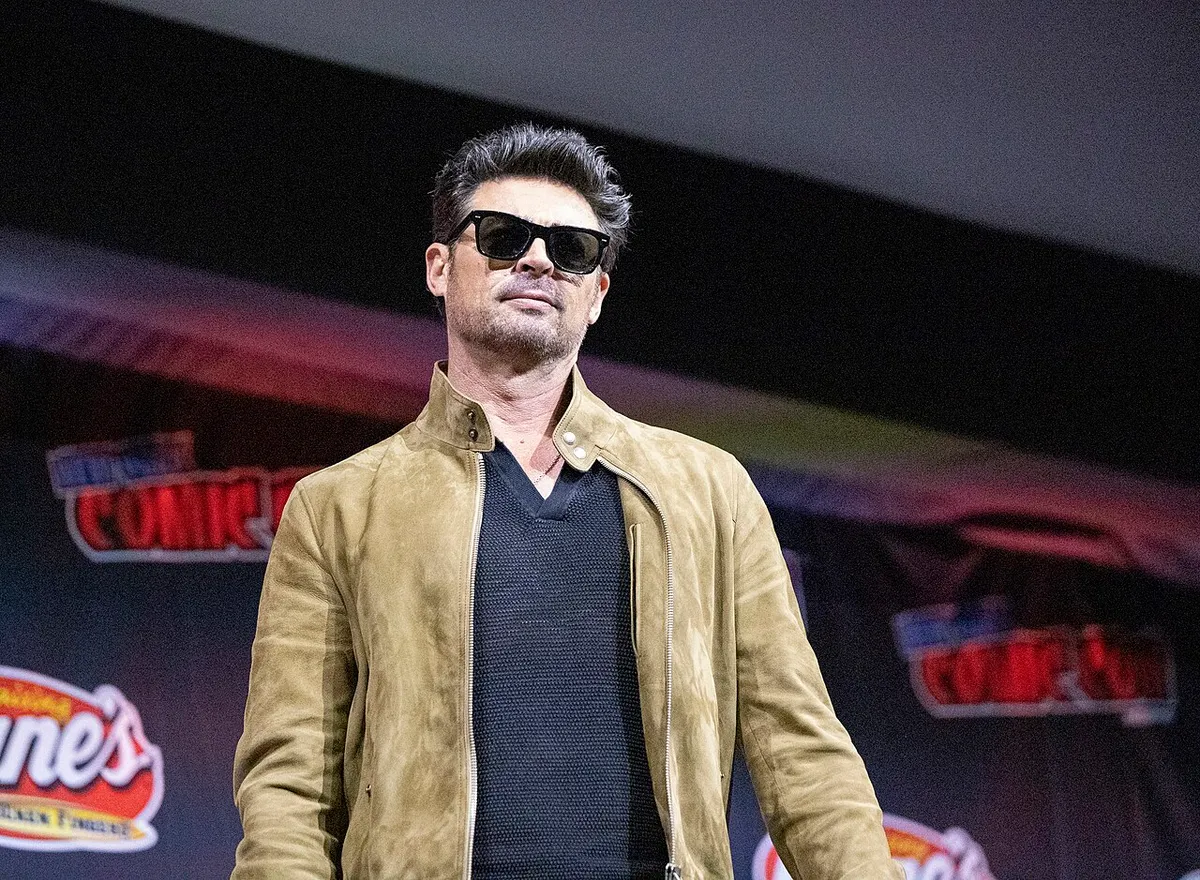
The Ego Has Landed: Karl Urban’s Meta-Masterclass
Let’s address the five-hundred-pound gorilla in the room—or more accurately, the action star in the $5,000 loafers. When the 2021 credits teased a poster for a Johnny Cage flick, the digital landscape devolved into a speculative meltdown. Karl Urban proves he wasn’t just a safe choice; he was the only choice. The 53-year-old actor, still radiating the jagged energy of his legendary run as Billy Butcher in The Boys, brings a weathered, arrogant, and undeniably magnetic charm to the role of Hollywood’s most punchable martial artist. Urban doesn’t just play Cage; he weaponizes the character’s vanity, portraying a man who genuinely worries about his lighting while his jugular is being targeted by a four-armed monster.
It is the friction between Urban and the returning cast that provides the film’s narrative heartbeat. His early exchanges with Lewis Tan’s Cole Young offer a necessary comedic relief to the grim stakes of the tournament. While Tan plays the grounded, soulful anchor, Urban’s Cage is the wild card who treats a deathmatch like a tedious press junket. During a recent Warner Bros. press event, Urban confessed his desire to capture the "pure, unadulterated vanity" of the character without sacrificing the character’s lethal combat prowess. He walks that tightrope with the grace of a veteran. On X (formerly Twitter), the verdict is already in, with one fan noting, "Karl Urban as Johnny Cage is the casting of the decade. I haven't laughed this hard or cheered this much at a screen in years."
The sequel also thrives under the sharp pen of Jeremy Slater, fresh off his success with Moon Knight. Slater possesses a surgeon’s understanding of the lore, and it shows in every frame. Gone is the sluggish exposition that occasionally bogged down the previous installment. Mortal Kombat 2 hits the floor running at a full sprint, picking up the pieces immediately after Earthrealm’s defenders survived their first brush with Chin Han’s treacherous Shang Tsung. The stakes aren’t just about survival anymore; it’s a full-scale territorial war.
Expanded Realms and the Art of the Kill
While Urban might be the face on the marquee, the sheer scope of the world-building is where this sequel truly flexes its muscles. The production trekked back to the Gold Coast of Queensland, Australia, to manifest an Outworld that feels tactile, ancient, and terrifyingly vast. We have moved beyond dusty arenas into the royal courts of Edenia and the obsidian pits where Shao Kahn holds court. The introduction of Martyn Ford as the towering Emperor is a visual masterstroke. Ford is a real-life physical anomaly, a bodybuilding giant who brings a level of raw, physical intimidation to the screen that no amount of CGI could ever simulate. When he walks, you feel it in your teeth.
The roster expansion doesn’t stop at the villains. Adeline Rudolph makes a regal, lethal debut as Kitana, while Tati Gabrielle joins the fray as the deadly Jade. Their presence isn’t mere fan service; it injects a layer of Shakespearean political intrigue and genuine emotional weight that the franchise has historically lacked. Rudolph’s Kitana is a whirlwind of fierce elegance, turning her signature steel fans into instruments of a violent, choreographed dance. Early audiences are already highlighting a mid-film duel between Jade and Jessica McNamee’s Sonya Blade as a masterclass in hand-to-hand cinema—a brutal, high-stakes exchange that prioritizes practical stunts over digital wizardry.
Of course, a Mortal Kombat film is only as good as its gore, and this sequel wears its R-rating like a badge of honor. Fandango reported a massive spike in ticket sales following a final red-band trailer that teased the franchise’s most creative finishers. Without veering into spoiler territory, let’s just say Joe Taslim, returning as the resurrected Bi-Han, utilizes his powers in ways that will make the most desensitized horror junkies wince. The practical effects team has clearly been let off the leash, blending old-school prosthetic carnage with seamless digital touch-ups to ensure every bone-snap and decapitation has a sickening, visceral impact.
Naturally, this level of sensory assault has sparked a bit of a civil war between critics and the core fanbase. Outlets like Film Threat have noted that the film’s breakneck velocity leaves precious little room for quiet contemplation, occasionally feeling like a relentless gauntlet of boss battles. With a roster featuring Damon Herriman’s sinister Quan Chi and Ana Thu Nguyen’s Queen Sindel, the narrative is undeniably crowded. Yet, for the "konsole generation," that density is the point. Moviegoers leaving early screenings shared that the energy was electric. "It’s exactly what a sequel should be," one fan noted. "Bigger, bloodier, and more Johnny Cage. I don't need a monologue when Scorpion is tearing the house down."
The box office performance proved healthy. Major theater chains reported high occupancy for IMAX and Dolby Cinema screenings, as Warner Bros. positioned this as a definitive theatrical blockbuster. Unlike the 2021 film, which struggled under the weight of a day-and-date streaming release, the tournament was a strictly theatrical phenomenon, and the gamble paid off. As the credits roll—and you definitely want to stay for the post-credits tease involving the Netherrealm—there’s a palpable sense of joy on screen. Whether it’s Josh Lawson’s Kano providing his trademark filth or the neon-drenched carnage of the Outworld coliseum, the movie knows exactly what it is. As Urban’s Cage might say while adjusting his shades over a fallen foe, the show must go on—and if this sequel is the benchmark, the party is just getting started.


