 THE MARQUEE

Macklemore isn’t just shaking up the charts anymore; he’s taking a sledgehammer to the touring industry’s front doors. On a Friday morning that felt more like a call to arms than a standard press update, the Seattle-born independent powerhouse took to Instagram on November 6, 2026, to drop a bombshell that has the music world buzzing. The "Thrift Shop" artist claims that nine major U.S. arenas have effectively blacklisted his planned 'Free Palestine' charity tour, alleging a coordinated bait-and-switch where available dates suddenly evaporated the moment venue execs realized where the ticket proceeds were headed.
Looking directly into the camera with the weary but defiant energy of a man who has spent the last year fighting an uphill battle against the industry establishment, Macklemore laid it all out. He described a process where his booking team had secured holds at massive venues across the country—the kind of high-capacity rooms he’s headlined for over a decade. But according to the rapper, the vibe shifted instantly once the tour's purpose was formalized. The mission was simple: 100% of the tour's proceeds were earmarked for humanitarian aid in Gaza. According to Macklemore, the moment that detail hit the table, the "available" dates were retracted, citing vague scheduling conflicts that hadn't existed forty-eight hours prior.
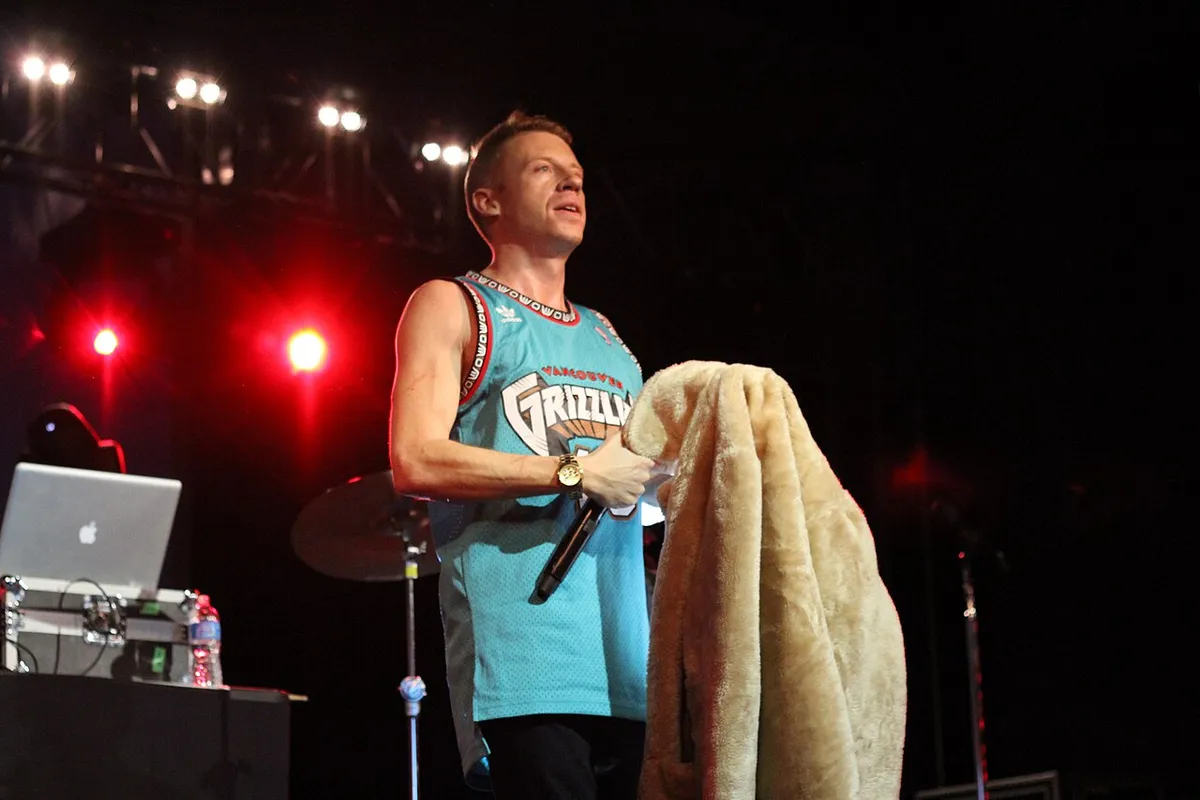
The Instagram Bombshell That Shook the Touring World
This isn't just a scheduling snafu; it’s a full-blown ideological standoff. Macklemore told his millions of followers that the resistance he’s facing in the States stands in stark contrast to his recent run through Europe. Across the Atlantic, the 'Free Palestine' shows were not just allowed; they were massive successes, drawing tens of thousands of fans who showed up for both the music and the message. The disparity between his European reception and the American "radio silence" is what prompted the rapper to go public. He isn't naming the specific nine arenas just yet, but the implication is clear: the gatekeepers of the American live music circuit are terrified of the optics.
Social media erupted within minutes of the post. On X (formerly Twitter), fans began tagging major venue operators like Live Nation and AEG, demanding transparency on how these decisions are made. "Ben [Haggerty] has always been about the message, whether you like it or not," one fan wrote, referencing the rapper’s real name. "Seeing him get shut out of rooms he’s sold out three times over is wild." Meanwhile, critics on the platform argued that private venues have the right to avoid politically charged events that might alienate other parts of their customer base or corporate sponsors. It’s a polarizing debate that Macklemore seems more than willing to lead, even if it costs him the massive paydays that come with a standard arena run.
The rapper’s frustration stems from what he describes as a "cowardice" within the corporate infrastructure of American entertainment. He noted that in the early stages of planning, everything was "green lights and excitement." It was only when the paperwork started reflecting the charitable beneficiary—specifically aid for Palestinian civilians—that the doors began to slam shut. This wasn't a case of low ticket sales or lack of interest; this was about the name on the marquee and the cause in the fine print.
From 'HIND'S HALL' to the Blacklist: The High Cost of Political Activism
To understand why this is happening now, you have to look back at the trajectory Macklemore has taken over the last year. He has moved far beyond the pop-rap sensibilities that made him a household name during the The Heist era. The catalyst for this current friction was undoubtedly "HIND'S HALL," his searing protest track released in early 2024. The song, which supported the student-led encampments at universities like Columbia and UCLA, became a viral anthem of the pro-Palestinian movement. While it earned him a new wave of respect from activists, it also seemed to burn several significant bridges in the industry.
The most public of these bridges was his relationship with pop titan Ed Sheeran. Earlier this year, reports surfaced that Macklemore had been removed from the lineup of Sheeran’s high-profile tour. While official statements at the time were carefully worded, sources close to the production suggested that Macklemore’s increasingly vocal pro-Palestinian stance—and the potential for protest at the shows—was a primary factor in the decision. Being dropped from one of the year's biggest tours was a massive blow, but instead of retreating, Macklemore leaned in harder, doubling down on his commitment to use his platform for Gaza.
This history of exclusion makes the current arena blockade feel less like an isolated incident and more like a pattern. The industry is watching a four-time Grammy winner become a persona non grata in real-time, all because he refuses to separate his art from his activism. For a man who built an empire on being independent, the current situation is the ultimate test of that autonomy. He isn't just fighting for a tour; he's fighting to prove that an artist can survive in the U.S. without bowing to the political comfort zones of arena owners.
The Sound of Silence: When Arenas Pull the Plug on a Sold-Out Vision
The financial stakes here are staggering. A nine-city arena tour can easily gross tens of millions of dollars. By attempting to turn that revenue into a massive donation for Palestinian relief, Macklemore was attempting one of the largest single-artist charitable efforts in recent memory. By blocking the dates, the arenas aren't just stopping a concert; they are effectively cutting off a massive stream of humanitarian funding. The rapper alluded to this in his video, asking his audience to consider why a charity event for children and families in a conflict zone is considered "too controversial" for a public assembly space.
Industry insiders have pointed out that arenas often have "morality clauses" or "radius clauses" in their contracts, but rarely are they used to preemptively shut down a charity event before a single ticket is sold. The nine venues in question appear to be playing a game of chicken, hoping the controversy fades before they have to explain their reasoning to the public. But if Macklemore’s track record is any indication, he won't let this slide into the background. He’s already signaled that he is looking for "alternative spaces"—warehouses, parks, and independent venues—to make the tour happen anyway.
What happens next could redefine the boundaries for activist artists in the mainstream. If Macklemore manages to pull off a successful "guerrilla" tour of the U.S., bypassing the arena gatekeepers entirely, it could provide a roadmap for other artists who feel stifled by corporate interests. For now, the rapper remains undeterred, ending his Friday address with a message to his fans: the music is coming, the aid is coming, and no amount of locked doors can stop a movement that’s already found its voice. The spotlight is now firmly on the American arena circuit, waiting for a response that might never come.
Macklemore is already pivoting his strategy, reaching out to local communities and smaller promoters to see if a grassroots U.S. run can replicate the lightning-in-a-bottle success he just saw in Europe.


