 THE MARQUEE
Ed Sheeran is used to being completely drowned out by the thunderous roar of 60,000 screaming fans, but this morning at Gillette Stadium, the only sound echoing through the empty Foxborough stands was the ominous, violent howl of an autumn gale. By Friday dawn, local news choppers were hovering over a surreal, frantic rescue mission as road crews worked in overdrive to rip down a massive, multi-million-dollar stage before Mother Nature could do it for them. The British pop titan's highly anticipated, back-to-back sold-out weekend on September 25 and 26, 2026, is officially dead. The corporate autopsy blames a brutal, early-season nor'easter tearing up the New England coastline with torrential downpours, severe coastal flooding, and vicious wind gusts peaking at 55 miles per hour. Tour promoter Messina Touring, huddled in emergency war rooms with local public safety officials and stadium brass, finally pulled the plug just hours before the gates were set to swing open, citing the absolute safety of fans, crew, and personnel. Ticketmaster dropped a swift confirmation that full, automatic refunds will hit accounts soon, putting a rain-soaked, unceremonious punctuation mark on what was supposed to be a triumphant stadium coronation.
But anyone paying attention to the dizzying, hyper-dramatic wreckage of Sheeran’s current LOOP Tour over the last two weeks knows this storm wasn't the root cause—it was just the final, literal act of God to strike a stadium stand that was already burning to the ground. Long before the first heavy raindrops battered Norfolk County, the Massachusetts dates were trapped inside a blinding vortex of political crossfire, high-stakes corporate strong-arming from an NFL billionaire, a historic mass mutiny of opening acts, and an unprecedented consumer-rights ambush by the state government. The severe weather alert offered a clean logistical exit, but the internal temperature of the tour had already reached a boiling point days before the barometer began its steep decline.
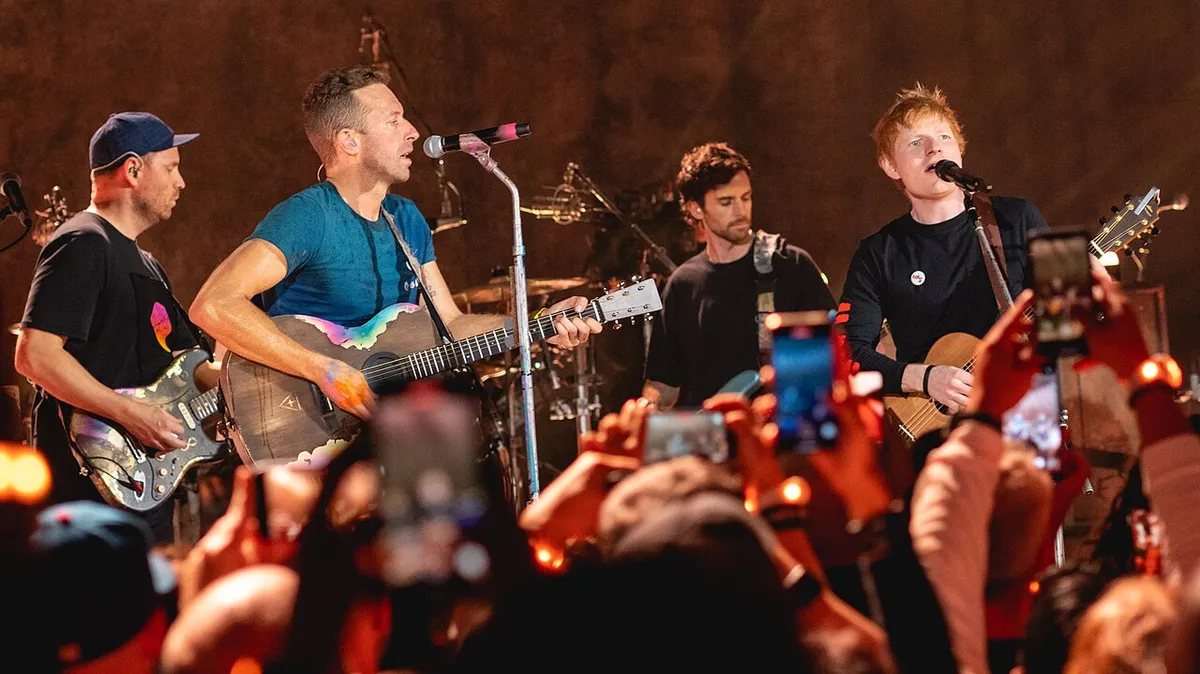
Billionaire Politics and the Opening Act Exodus
The intricate, slow-motion car crash of this New England stadium run began weeks ago under the blinding lights of a performance in New Jersey. Opening act Macklemore, the Grammy-winning rapper known for using his platform as a political megaphone, delivered a fiery, unfiltered onstage speech addressing the bloody conflict in the Middle East, capping his remarks by screaming "Free Palestine" to an exploding crowd. The moment exploded across TikTok and X, instantly igniting a fierce culture-war firestorm that landed right on the desk of one of the NFL's most ruthless power players: New England Patriots owner Robert Kraft, whose company owns and operates Gillette Stadium. Kraft, a prominent billionaire philanthropist who has poured millions of dollars into fighting discrimination through his Foundation to Combat Antisemitism, took immense issue with Macklemore headlining his venue, pointing aggressively to what he characterized as the rapper's broader history of antisemitic rhetoric. In a tense, high-stakes phone call, Kraft delivered an uncompromising ultimatum directly to Sheeran's inner circle: Macklemore would under no circumstances step foot on the stage at Gillette Stadium.
Faced with total corporate exile from the venue, Messina Touring blinked, abruptly announcing that Macklemore had been dropped from the remaining dates of the American leg. The fallout was instantaneous, dropping Sheeran squarely into a public relations nightmare, trapped uncomfortably between the rigid logistical realities of billionaire stadium owners and his own progressive artistic community. During his subsequent tour stop at Philadelphia's Lincoln Financial Field on September 19, Sheeran took the stage completely alone, ditching the usual pop pomp to address the brewing civil war with raw transparency right at the top of his set. Speaking directly to the breathless Pennsylvania crowd, the British singer-songwriter acknowledged the situation in Gaza as "catastrophic and unjustifiable," but implored his audience to view his concerts as a sanctuary dedicated to shared humanity and pop escapism rather than a polarizing political battlefield. He explained to the crowd that the ultimate decision to alter the lineup rested with the tour promoters under heavy venue pressure, but his earnest explanations did absolutely nothing to calm the rebellion brewing behind the scenes.
The Instagram Mutiny and the Ticketmaster Meltdown
Instead of steadying the ship, the forced ouster of Macklemore triggered an astonishing, fast-moving domino effect across the entire eclectic roster of the LOOP Tour. Within mere hours of Sheeran's social media post attributing the lineup adjustment to his promoters, a coordinated wave of artistic resistance swept through Instagram. Irish folk-pop outfit Beoga, who famously co-wrote Sheeran's global chart-topper "Galway Girl" and were a foundational element of his nightly live set, stunned fans by announcing they were walking away from the tour entirely to show unwavering solidarity with Macklemore. The artistic exodus snowballed with breathtaking speed. Danish pop-soul sensations Lukas Graham and independent singer-songwriter Aaron Rowe—both of whom had been hastily tapped as replacements to patch up the vacant opening slots for the remaining United States stadium dates—published their own matching statements on Instagram, announcing that they, too, were stepping down from the tour.
The most devastating blow to the tour's long-term infrastructure came when Finneas, the multi-Oscar-winning producer, solo artist, and brilliant musical architect behind his sister Billie Eilish's global pop empire, posted his own departure notice, withdrawing from his scheduled slot on the upcoming South American leg of the tour. Suddenly, a massive stadium production meticulously engineered around high-energy collaboration and multi-artist showcases was stripped down to an absolute skeleton crew. By the time the tour trucks rolled into Foxborough, Sheeran was staring down the daunting prospect of performing entirely solo for four hours to a combined 120,000 fans over two nights, without a single opening act, a backing band, or his trusted traditional musical collaborators to anchor the middle of his sprawling setlist.
As the supporting lineup completely dissolved into thin air, the collective frustration among New England music consumers boiled over into outright fury. Ticketmaster initially held its traditional, rigid corporate line: corporate policy states that refunds are strictly prohibited for changes made to supporting acts, provided the main headliner still takes the stage. This hardline stance provoked an immediate, intense backlash from everyday fans who had shelled out hundreds or even thousands of dollars for a premium, multi-artist stadium festival experience, only to find out they were holding tickets to a radically scaled-back, completely solo acoustic gig. After receiving nearly 200 formal consumer complaints in a matter of hours, Massachusetts Attorney General Andrea Campbell launched an aggressive, rapid-response legal intervention.
On Thursday, September 24, Campbell dispatched an official warning letter directly to Ticketmaster executives, demanding that the ticketing powerhouse instantly create a clear pathway for consumer refunds. Campbell argued forcefully that changing nearly all of the scheduled performers simultaneously constituted such a dramatic and fundamental alteration of the advertised service that relying on standard fine-print purchase policies violated the Massachusetts Consumer Protection Act. Faced with the threat of severe state-level legal action, Ticketmaster relented, opening up a strict, short-lived window for fans to request their money back. Simultaneously, the widespread panic among ticketholders caused the secondary ticket resale market to experience an absolute bloodbath. Resale ticket platforms watched in real-time as pristine floor seats, which had previously commanded astronomical prices, cratered to well under $150 as desperate concertgoers tried to salvage whatever cash they could before the weekend arrived.
The frantic legal battles over consumer refunds and the free-falling market values became entirely academic by Friday morning when nature took over the narrative. Local meteorologists throughout New England issued dire warnings regarding the intensifying fall nor'easter, predicting days of relentless, soaking rain, dangerous coastal erosion, and high winds capable of causing structural damage—making an open-air stadium gathering of 60,000 people a physical impossibility. While the sudden weather cancellation brings a deeply disappointing, anti-climactic end to a week defined by intense backstage friction, it also provides Sheeran and his shell-shocked production team with a much-needed logistical breathing room to reset, regroup, and completely re-engineer the rest of their American stadium run. The LOOP Tour is currently scheduled to resume its journey on October 3 at Atlanta's Mercedes-Benz Stadium, where the global music community will be watching with bated breath to see how pop’s ultimate solo craftsman navigates the fallout and rebuilds his massive live show from the ground up.


