 THE MARQUEE
Forget the dust, the heat, and the $20 spicy pies; on Saturday night, the Coachella Stage was the only place in the universe that mattered. After a grueling four-year hiatus defined by high-stakes health battles and the quiet mourning of a cancelled world tour, Justin Bieber didn't just step back into the spotlight—he ignited it with the force of a supernova. Saturday, April 18th, 2026, won't just go down as another headlining set in the Indio desert; it was a highly controversial lo-fi and minimalist performance for a man who has spent the better part of a decade being the industry’s favorite protagonist, antagonist, and survivor.
The roar that greeted him was a sonic boom that likely rattled the windmills of the Coachella Valley. While Weekend 1 is often dismissed as the frantic playground of the influencer class, Weekend 2 has always belonged to the purists—the fans who want the sweat, the deep cuts, and the surprises that actually feel earned. Bieber leaned into that legacy, curating a setlist that served as a living, breathing blueprint of the last decade of pop dominance. But the music was only the foundation. The real story was the sheer, undeniable gravity Bieber still exerts, pulling in a roster of guests that made the evening feel less like a festival set and more like a private coronation at the Grammys.
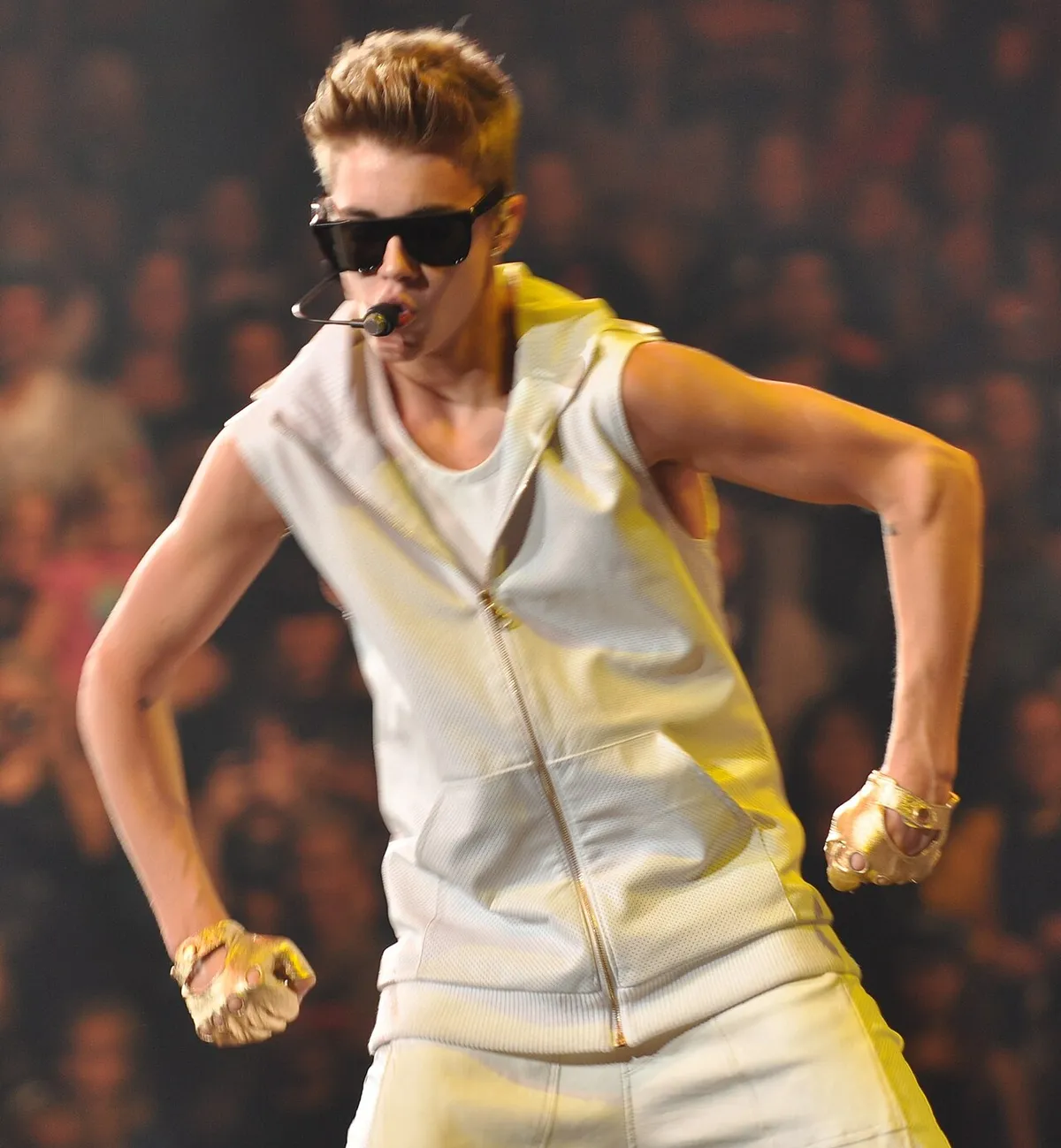
The Billie Eilish Prophecy: A Full-Circle Masterclass
If there was a single moment that threatened to tilt the Earth on its axis, it was the arrival of Billie Eilish. The lore between these two is the stuff of digital mythology—the childhood bedroom covered in posters, the tearful first meeting at this very festival years ago, the transition from idol to peer. When the opening chords of 2009’s "One Less Lonely Girl" shimmered through the desert air, the nostalgia was so thick you could taste it. Then Billie emerged from the wings, looking every bit the global titan she has become, yet still vibrating with that unmistakable spark of the super-fan she once was.
They didn't just sing the track; they deconstructed it with a self-aware wink to their shared history. Bieber, the consummate showman, played into the "OLLG" tradition, but instead of pulling a trembling teenager from the barricade, he serenaded the biggest artist on the planet as she sat on a stool. Social media didn't just react; it imploded. One fan on X captured the mood perfectly: "I just watched my childhood and my adulthood collide in the desert and I am not okay." The vocal chemistry was breathtaking—Bieber’s seasoned, honey-thick R&B runs anchored by Eilish’s ethereal, breathy harmonies. It was a sophisticated, modern polish on a teen-pop relic, a meta-commentary on fame and the wild journey of growing up in public.
As the sugar rush of the Eilish cameo faded, the energy took a sharp turn toward the intimate. The stage lights dipped into a hazy, candle-lit amber, stripping away the stadium-sized pyrotechnics to reveal Bieber’s pure musicality. He find his perfect foil in SZA. Together, they delivered an acoustic rendition of her smash hit "Snooze" that felt like eavesdropping on a late-night jam session in a Laurel Canyon living room. Their chemistry was electric and effortless, a nod to the chart-topping remix that proved their voices were made for each other. For a few minutes, 125,000 people fell into a stunned, hushed silence, captivated by two of the era’s finest vocalists trading vulnerabilities under the desert stars.
The High-Voltage Pivot: From Detroit to 'Pound Town'
Just as the crowd settled into the soul-searching groove, Bieber flipped the switch. The acoustic guitars were buried under a mountain of earth-shaking bass as Big Sean stormed the stage. The two share a creative shorthand that stretches back to 2012’s "As Long As You Love Me," and they brought that veteran swagger to the forefront. They tore through a high-octane medley of their hits, with Sean commanding the stage and reminding everyone why he’s a perennial heavyweight. It was a seamless transition, pivoting from the soulful depths of the SZA duet into a rowdy, high-energy celebration of the hip-hop DNA that has long fueled Bieber’s sound.
But the night’s true sonic grenade was Sexyy Redd. The "Pound Town" firebrand brought a burst of unfiltered, chaotic energy that felt perfectly in sync with the lawless spirit of Coachella Saturday. Bieber looked like he was having the time of his life, playing the ultimate hype man while Redd shredded through her viral catalog. It was a gutsy, provocative choice that signaled exactly where Bieber’s head is at: he isn't interested in just being a legacy act; he’s obsessed with the pulse of the streets and the bleeding edge of the charts. The reaction was polarized, messy, and loud—the exact kind of conversation-starting moment that defines a legendary Coachella headliner.
The surprises continued to roll out with Dijon, the indie-soul darling and a longtime fixture on Bieber’s personal playlists. Their version of "Devotion" was a revelation, reinvented with experimental, groove-heavy textures that showcased Bieber’s "artist’s artist" sensibilities. It was a testament to his range—he can move from the viral chaos of Sexyy Redd to the technical mastery of the indie world without missing a beat. By the time the set hit its climax, it was clear this wasn't just a concert; it was a curated exhibition of the man’s entire musical identity.
Reclaiming the Narrative: The 'Justice' Redemption
To truly understand the stakes of this performance, you have to remember the silence that preceded it. After the Justice World Tour was cut short by his battle with Ramsay Hunt syndrome, the industry whispers were loud: Could he still do it? Would he ever be the same? On Saturday night, Bieber silenced the skeptics with a thunderous exclamation point. His voice was more disciplined and powerful than ever, piercing through the night air with a clarity that suggested his time away was spent in grueling vocal restoration.
The production was a lo-fi and minimalist performance, where Bieber sat at a laptop and browsed YouTube on a stripped-back stage. But for all the lack of traditional tech, the human at the center was the draw. Bieber looked healthy, present, and genuinely thrilled to be there—a far cry from the haunted, exhausted performer fans saw at the tail end of his last run. He spent the final moments of the night at the edge of the stage, locking eyes with fans and high-fiving the front row, soaking in the redemption.
As the final, euphoric notes of "Daisies" echoed off the mountains and a massive fireworks display painted the Indio sky gold, the sense of triumph was absolute. Bieber didn't just survive his Coachella comeback; he used it to remind the world that he is a permanent fixture in the firmament, a survivor in an industry that usually eats its young. With rumors of a new studio album reaching a fever pitch and a world tour announcement likely imminent, this set wasn't just a closing act—it was a homecoming. The Prince is back, and the throne is still his.


