 THE MARQUEE
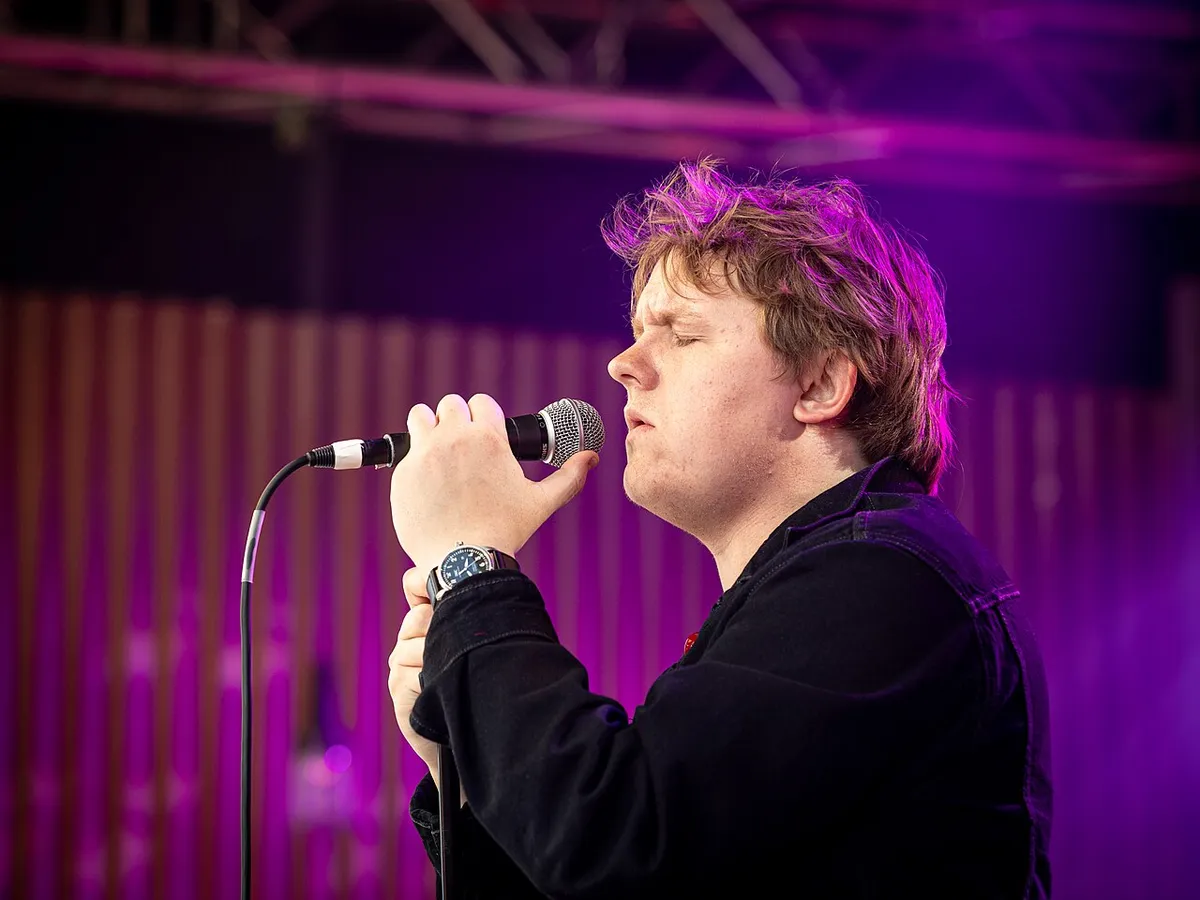
The air inside Madison Square Garden doesn’t usually go still; it vibrates with the ghosts of legendary hockey fights and the tectonic thrum of legacy acts. But on April 16, 2026, Lewis Capaldi sucked the oxygen right out of the room. Standing alone under a single, bruising amber spotlight, the Scottish singer-songwriter didn't just deliver a setlist—he performed a shared exorcism. The world’s most famous arena was transformed into a hushed, intimate cathedral as Capaldi solved a weeks-long global musical mystery and shattered a few thousand hearts with the debut of his latest single, “Stay Love.”
For weeks, the “Capaldi Crusaders” had been operating like a decentralized intelligence agency. The hype began with a whisper: strange, unlabeled white-label vinyl records appearing in the dusty bins of indie institutions from Rough Trade in London to Amoeba Music in Los Angeles. These mysterious discs, devoid of cover art or liner notes, featured nothing but a scrawled “L.C.” and a haunting, skeletal piano melody. When Capaldi finally sat down at his piano at the Garden and struck those same opening chords, the collective gasp from the floor to the nosebleeds was loud enough to rattle the rafters. “I think some of you might have found this one already,” he joked, flashing that trademark self-deprecating wit that makes him feel like your funniest, messiest friend, before launching into a performance that instantly felt like a career-defining pivot.
The Mystery in the Crate: Decoding the 'Survive' Strategy
The arrival of “Stay Love” marks the fifth pillar in his Survive EP project, a body of work defined by a slow-burn release strategy that feels like a radical act of patience in an era of instant-gratification data dumps. While the rest of the industry tends to throw a dozen tracks at a wall and pray for a viral moment, Capaldi has treated Survive like a living, breathing diary. This isn't just marketing; it’s a love letter to the tactile, analog experience of being a fan. Those who tracked down the rare pressings were holding a fragment of a larger puzzle, a lo-fi sketch that found its full, cinematic realization on the MSG stage.
The digital reaction was a tidal wave. Within minutes of the first chorus, “#StayLove” and “Lewis at MSG” were trending globally, a digital wildfire sparked by 20,000 people simultaneously reaching for their phones. For those stuck at home, the night became a frantic search for grainy cell phone footage. One fan on X, @CapaldiCentral, summed up the devastation: “He just played a new song called Stay Love at MSG and I am officially a puddle of tears on the floor of Section 102. The vocals? The lyrics? Lewis is back and he’s coming for every award in existence.”
Sonically, the track is a masterclass in the “Capaldi Formula”—raw, blood-raw lyrics delivered with a vocal grit that sounds like it’s been dragged over gravel and dipped in honey. It’s a stripped-back ballad that avoids the clutter of modern percussion, opting instead for a resonant piano line and a swell of cinematic strings that hit during the second chorus like a punch to the gut. The song dissects the terrifying fragility of a long-term relationship, offering a desperate plea for a partner to stay love even when the romance feels like it’s fraying at the seams. It is a private conversation shouted into an arena, making 20,000 people feel like they’re the only ones eavesdropping.
The Architects of Heartbreak and the Road to Recovery
While the emotional heavy lifting belongs solely to Capaldi, the surgical precision of “Stay Love” comes from some of the industry’s most formidable architects. The track was produced by The Monsters & Strangerz—the powerhouse duo of Jordan and Stefan Johnson—alongside the prolific Michael Pollack. This is the same hit-making engine that has fueled the charts for Miley Cyrus and Justin Bieber. Their presence here is a signal: while the song feels like a whisper, it is engineered to roar at the top of the Billboard charts.
Pollack, a songwriter with a supernatural ability to find the “human” element in massive pop productions, clearly understood the assignment. He leaned into Capaldi’s natural magnetism, leaving no vocal effects to hide behind. Every crack in Lewis’s voice, every sharp intake of breath between lines, is preserved as a badge of authenticity. The Monsters & Strangerz provide an atmospheric depth that ensures the song doesn't just sound like a demo, but a polished monument that stands tall alongside “Before You Go” or “Someone You Loved.”
The visual storytelling at the Garden was just as intentional. As the song built toward its final, soaring crescendo, the massive LED screens went pitch black, leaving nothing but Lewis and his piano. It was a stark, jarring contrast to the high-energy pyrotechnics and neon flashes that had fueled “Forget Me” earlier in the night. The transition highlighted the duality that makes Capaldi a unicorn in the pop landscape: he is the class clown who can turn on a dime and deliver a performance of devastating emotional weight.
We cannot talk about this release without talking about the journey to get here. The Survive EP is more than just a collection of songs; it’s a triumphant return after a high-profile hiatus that saw Capaldi step back from the spotlight to focus on his mental health and Tourette’s diagnosis. Seeing him command the MSG stage, sounding more powerful and resonant than ever, felt like a victory lap for anyone who has ever had to hit the pause button on their own life. The title Survive has transitioned from a goal into a mantra for his fanbase.
Throughout the night, Capaldi took moments to bridge the gap with the crowd, acknowledging the gravity of the room. “I wasn't sure if I'd be back on this stage a couple of years ago,” he told the audience, his voice thick with genuine, unscripted emotion. “But being here with you lot, playing a new song that means the world to me... it’s alright, isn't it?” The response was a deafening three-minute standing ovation that forced a pause in the set. It was a testament to the deep, empathetic bond he has forged—a bond that “Stay Love” only cements.
As the final notes of the song faded into the rafters, the anticipation for what follows was palpable. With five tracks now out in the wild, the rumor mill is spinning: is a full-length album imminent, or will Capaldi keep us on our toes with this track-by-track rollout? One thing is certain: “Stay Love” is a career-defining moment, a song that captures the universal fear of losing what matters most. Whether you found the mystery vinyl in a dusty crate or heard it for the first time in a packed arena, the message is clear: Lewis Capaldi is back, and the king of the broken heart has never sounded more vital.


