 THE MARQUEE
The refresh button never stood a prayer. At 10:00 a.m. sharp, the digital box office didn’t just open—it vaporized under the collective weight of a global audience waiting to see if Macklemore’s radical shift from pop-rap royalty to protest firebrand would actually translate to ticket stubs.
For Ben Haggerty, the Seattle-bred artist the world knows as Macklemore, the launch of his newly minted 'Free Palestine Tour' wasn't merely a commercial victory; it was a thunderous, undeniable proof of concept. While much of the music industry has spent the last year tiptoeing through a minefield of political speech, opting for the safety of silence or the ambiguity of carefully vetted statements, Haggerty chose to scream into the wind. And the fans, it turns out, were ready to scream right back.
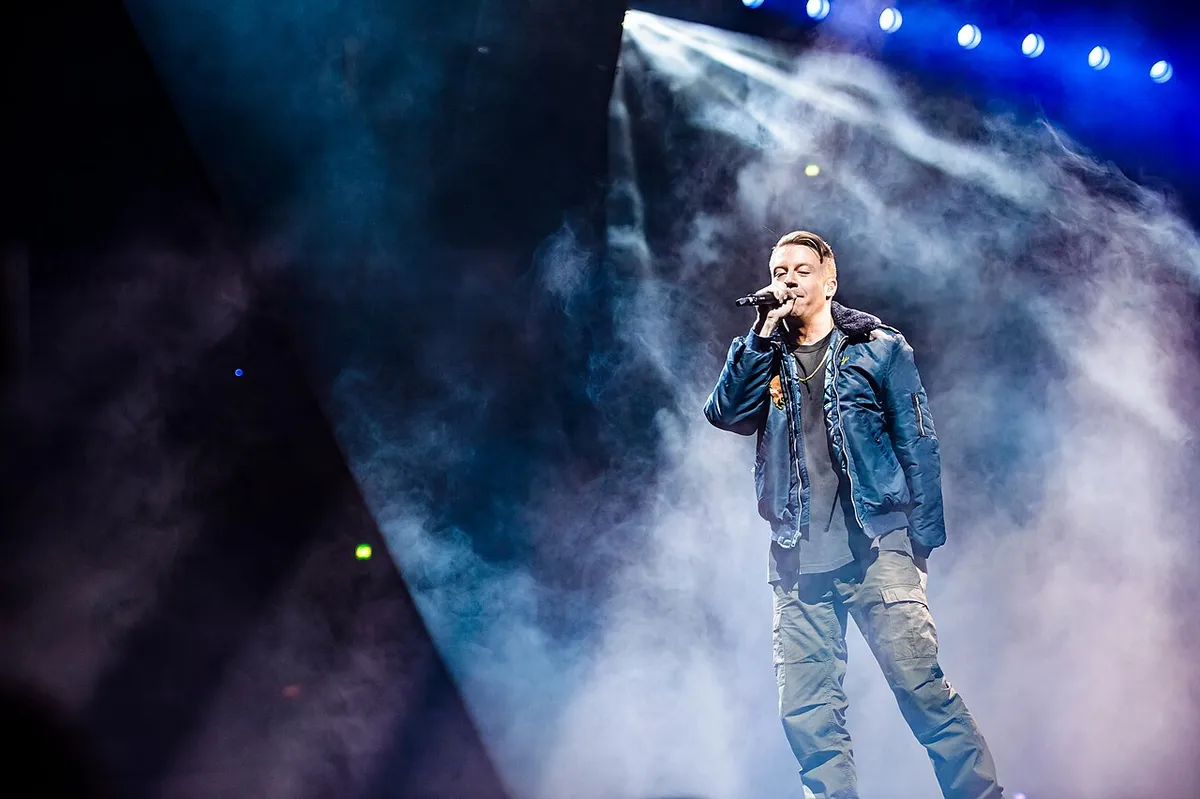
Within the time it takes to brew a morning coffee, the entire three-city European run was gone. Dublin’s Vicar Street, London’s O2 Shepherd’s Bush Empire, and the Bataclan in Paris—a room that carries its own heavy, sacred history of resilience—flipped their statuses to "Sold Out" before the adrenaline even had a chance to wear off. Taking to social media shortly after the sweep, a visibly rattled Haggerty struggled to find the words for the sheer velocity of the response. "I am speechless," he shared, his voice a mix of raw shock and renewed purpose. "I didn't know what to expect. I just knew I wanted to show up."
From Thrift Shop Antics to the Fury of 'Hind’s Hall'
To grasp the gravity of this moment, you have to look at the scorched-earth transformation Haggerty has undergone over the last six months. This isn't the neon-soaked Macklemore who was popping tags in thrift shops or cruising through the colorful, campy luxury of "Downtown." The Haggerty of 2024 has undergone a total artistic pivot, re-centering his entire platform on the humanitarian crisis in Gaza. The catalyst for this shift was "Hind’s Hall," a jagged, blistering protest track released in May. Named after the building at Columbia University that student protesters occupied to honor Hind Rajab—a six-year-old girl killed in Gaza—the song didn't just go viral; it drew a permanent line in the sand.
The track racked up millions of streams and won over activist circles, but the industry response was a different story altogether. The blowback was swift, quiet, and surgical. Reports soon leaked that Macklemore was being scrubbed from high-profile lineups, most notably losing his headline show at the Coca-Cola Arena in Dubai, which he canceled himself in protest of the UAE’s role in the Sudan conflict. In the traditional music business playbook, losing a massive international platform like the Dubai arena is the beginning of the end. It’s supposed to be a death knell for momentum. Instead, Haggerty leaned further into the fray, dropping "Hind’s Hall 2," a sequel featuring Palestinian-American voices like Amer Zahr and MC Abdul, effectively cementing his status as the most visible major American artist demanding a ceasefire.
Tactical Intimacy and a Different Kind of Profit
The energy surrounding these upcoming European dates feels less like a typical tour and more like a series of high-stakes town hall meetings fueled by heavy 808s and unfiltered lyricism. Fans across Bluesky and X were quick to note the irony: the harder the industry tried to pull the plug, the louder the signal became. "They tried to de-platform him, and all it did was build him a bigger platform," one fan remarked as the London queue hit its capacity. In Dublin, the demand was so overwhelming that thousands remained stuck in the digital waiting room long after the 1,500-capacity venue had reached its limit.
The choice of these specific cities was both tactical and deeply symbolic. Ireland has long been the heart of Palestinian solidarity in Europe, making the Dublin sell-out feel almost like a foregone conclusion. The air at Vicar Street will be thick with emotion, a homecoming for an artist whose Irish heritage has always been a point of pride. But it’s the London and Paris dates that prove the real point: there is a massive, underserved appetite for activist art in the very hubs of the global entertainment establishment.
What separates this run from a standard victory lap is the financial DNA of the tour itself. Macklemore has been transparent: these shows aren't about lining his own pockets. A significant slice of the proceeds is headed straight to the Palestinian American Medical Association (PAMA), providing frontline healthcare and aid in Gaza. By turning the concert hall into a fundraising machine, Haggerty is effectively bypassing the corporate sponsorship models that usually come with a list of things you aren't allowed to say. He’s clearly done pulling those strings.
Breaking the Silence: The New Industry Blueprint
The speed of these sell-outs is already rattling cages in boardrooms, challenging the long-held industry myth that political engagement is a "risk" that kills careers. For decades, the A-list advice was simple: stay neutral, don't alienate the suburbs, and protect the brand deals. Macklemore just set that rulebook on fire. By trading the high-profile Dubai arena date for a fiercely loyal, mobilized audience, he’s proving that authenticity—however polarizing—has a market value that corporate safety simply cannot match.
Social media remains a pressure cooker of debate surrounding his motives, with some critics still labeling the move as performative. However, the receipts are becoming harder to ignore. Between the funds raised for PAMA and the thousands of tickets sold in seconds, the impact is tangible. On Instagram, Haggerty has been amplifying messages from fans inside Gaza who have seen his videos, adding a layer of gravity to this tour that makes standard merch pushes feel trivial. It’s not about the lighting rig or the setlist; it’s about a shared sense of purpose in a room full of people who feel their governments aren't listening.
As the tour dates loom, the narrative shifts to the stage. Macklemore has promised these nights will be more than just the hits; they will be spaces for speakers, education, and collective dissent. The industry might have tried to mute Ben Haggerty, but in Dublin, Paris, and London, the speakers are about to be pushed to the red. The message is out, the tickets are gone, and the audience is ready to be heard. The only real question left is how fast this momentum will carry him back home for a U.S. run.


