 THE MARQUEE
What Happened
On April 6, 2026, Disney+ unveiled the first two episodes of Star Wars: Maul - Shadow Lord, an animated odyssey that finally sutures the jagged narrative wound left between the character’s tantalizing cameo in Solo: A Star Wars Story and his tragic, sunset-drenched finale in Star Wars Rebels. Reprising his definitive role as the voice of the former Sith, Sam Witwer elevates the material with a performance that is less about the feral snarl of the past and more about the silk-and-gravel calculated edge of a budding underworld emperor. These premiere episodes find Maul meticulously navigating the lawless veins of the Outer Rim, exploiting the bureaucratic bloat of the early Galactic Empire to consolidate the disparate criminal cells of the Crimson Dawn syndicate. However, the true narrative engine isn't found in the trade routes or spice deals; it is Maul’s predatory pursuit of Devon Izara, a Jedi Padawan who survived the fires of Order 66. Maul’s intent is clear: he is not looking for a servant, but a masterpiece to mold into an apprentice of his own dark, bruised design.
Why This Matters
The arrival of Shadow Lord is a watershed moment for the Star Wars brand, representing a high-fidelity pivot toward storytelling that values psychological interiority over simple kinetic spectacle. For years, Lucasfilm has faced legitimate criticism for allowing the "Maul as a crime lord" thread to dangle in cinematic purgatory following the muted box office reception of 2018’s Solo. By committing to this high-fidelity animated format, Lucasfilm is effectively admitting that the theatrical window is no longer the sole—or even the most prestigious—venue for complex character studies. This series serves as the definitive manifesto for "transmedia" weight, proving that animated arcs can carry as much dramatic gravity as live-action blockbusters.
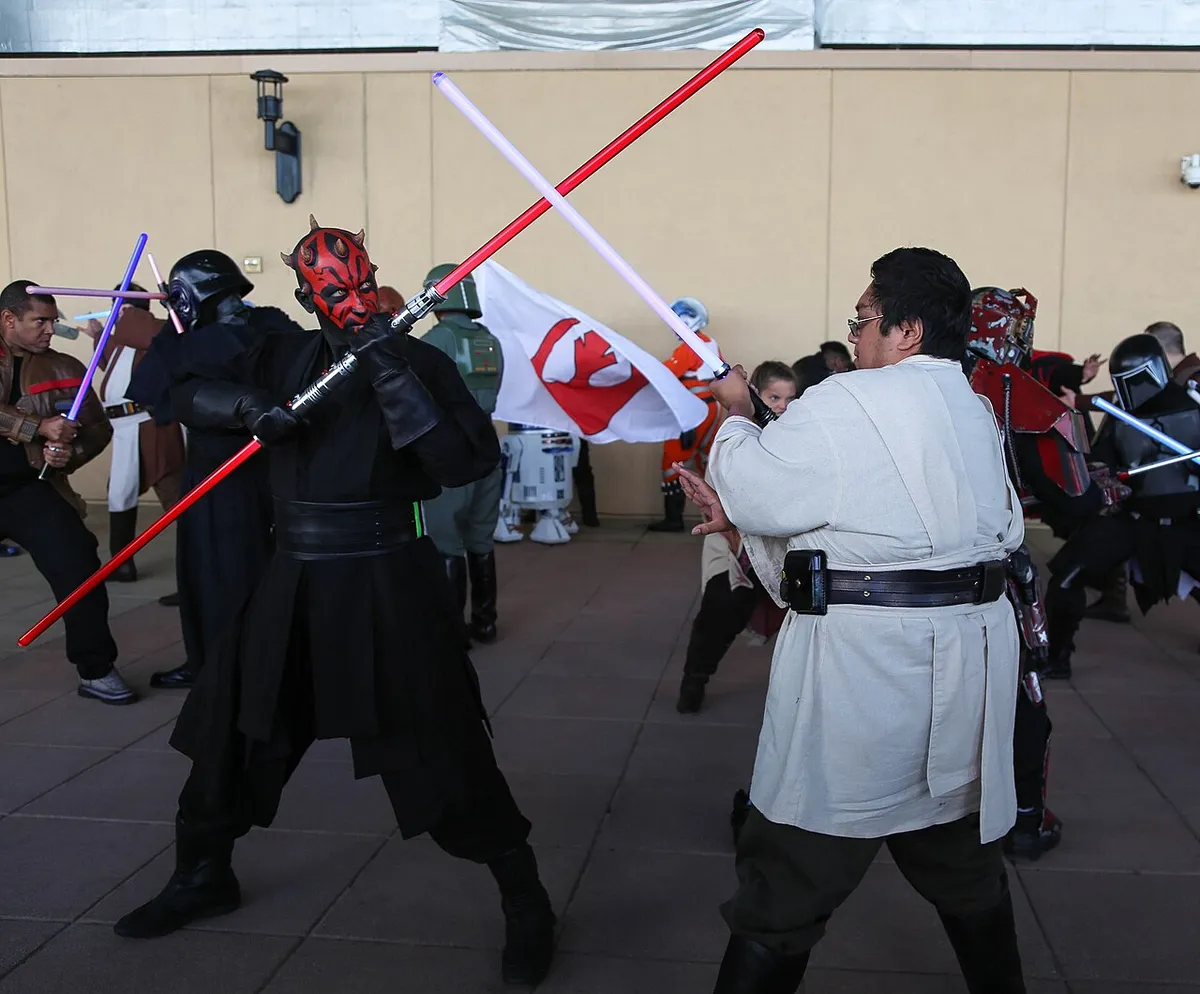
Moreover, this shift represents a radical re-evaluation of the post-Sith identity. Maul exists as a ghost in the machine, a man without a country who has been rejected by the Sith Order and the Jedi alike. His attempt to construct a new reality, fueled by an agonizing sense of spite rather than a blind devotion to the Dark Side, offers a level of nuance that the franchise historically sacrifices for binary moralism. In my view, Shadow Lord is the first piece of modern Star Wars media that treats the criminal underworld not as a neon-lit backdrop for a heist, but as a sophisticated political entity capable of challenging the Empire’s hegemony through economic attrition rather than just military force.
What Most People Are Missing
While the broader discourse is currently fixated on the visceral thrill of Maul’s double-bladed lightsaber returning to action, the true structural intrigue lies in the introduction of Devon Izara. Many analysts are already dismissing her as a "Dark Side Ahsoka" or a mere victim of corruption, but they are missing the profound thematic irony at play. One could argue that Maul is not merely seeking a soldier; he is desperately trying to replicate the only social architecture he has ever understood—the Master and Apprentice dynamic—while simultaneously attempting to dismantle the very Rule of Two established by Darth Bane and perfected by Emperor Palpatine.
This suggests that Izara represents Maul’s pathetic, unconscious desire for legitimacy. By claiming a Jedi Padawan, he isn't just "breaking" a hero; he is attempting to prove that his philosophy—a synthesis of trauma and survival—is intellectually superior to both the Jedi’s emotional detachment and Palpatine’s sterile cruelty. However, here is the contrarian reality: Maul isn't actually training a successor; he is creating a living repository for his own failures. He is so incapable of original thought that he is simply a broken man playing with the blood-stained toys of his former masters, hoping that if he mimics the Sith structure closely enough, he might finally feel whole. Furthermore, the strategic inclusion of the Pyke Syndicate and Black Sun serves as a masterclass in world-building. These aren't just cameos; they illustrate a sophisticated look at the Empire's parasitic economy. The Empire allows these syndicates to thrive because they provide the "extra-legal services" a formal government cannot acknowledge. Maul’s disruption of this delicate balance isn't just a crime spree; it is a surgical act of economic terrorism directed at the Empire’s foundational bottom line.
The Bigger Picture
The premiere of Maul - Shadow Lord signals an aggressive maturation of the Disney+ content strategy. We are witnessing a decisive move away from the episodic "adventure of the week" DNA of early Mandalorian seasons toward the dense, prestige territory occupied by Andor, effectively proving that animation can handle the weight of adult drama. This fits into a larger industry trend where animation is utilized as the primary laboratory for the franchise’s most daring, tonally dark risks—stories that might be deemed too niche for a $200 million theatrical budget.
Historically, Star Wars animation—under the creative stewardship of Dave Filoni—has functioned as the vanguard for the universe's most experimental swings, from the Siege of Mandalore to the metaphysical mysteries of the World Between Worlds. Shadow Lord honors this legacy by leaning into the moral gray areas of the galaxy’s fringes. This series also serves as vital connective tissue, turning the "Age of Empire" from a scattered collection of films into a fully realized, cohesive era. It is Lucasfilm playing the long game, ensuring that every centimeter of the timeline is saturated with enough narrative depth to maintain a loyal, intellectually engaged subscriber base.
What Happens Next
Looking at the trajectory of the first two episodes, the presence of Devon Izara creates an inevitable collision course with the Inquisitorius. It is highly probable that we will witness the Grand Inquisitor or perhaps a terrifyingly young Darth Vader enter the fray by the season’s end. The stakes are existential: if Maul successfully weaponizes a rogue Jedi, he becomes a variable that Palpatine’s calculated Order can no longer tolerate. I predict the season will conclude with the systematic destruction of Maul’s current power base, providing the definitive explanation for why he is later found as a "broken old master" on the desolate world of Malachor during the events of Star Wars Rebels.
More critically, Devon Izara’s fate will be the metric of the series' success. If she survives the season, she becomes the ultimate wildcard for future live-action expansion, potentially intersecting with the Ahsoka series or the New Jedi Order film starring Daisy Ridley. Lucasfilm is clearly seeding new icons in the animated fertile ground to harvest them for the big screen later. The "Shadow Lord" may not ultimately refer to Maul at all; it could be a title that Izara inherits, representing a new kind of Force-user who refuses to be defined by the Jedi or the Sith.
Final Take
Star Wars: Maul - Shadow Lord is exactly the kind of narrative surgery the franchise needs to stay relevant in a crowded prestige TV landscape. It takes a character who could have remained a one-dimensional avatar of cool design and gives him a Shakespearean weight, expanding the lore with an organic precision that never feels forced. Sam Witwer remains the undisputed MVP of the Star Wars vocal stable, delivering a performance that is simultaneously terrifying and profoundly pathetic. If the subsequent episodes maintain this level of grit and intellectual curiosity, Shadow Lord won't just be another animated spin-off—it will be the definitive autopsy of the Star Wars underworld. This is a cold, hard look at the survivors of a broken galaxy who have finally realized that when the system is rigged, the only way to win is to burn the board.


