 THE MARQUEE
The snare crack hits like a starter pistol, and then comes the shout—that jagged, ecstatic "Woo! Yeah!"—that has fueled a million sweat-soaked nights for nearly four decades. When Rob Base stepped into the booth, he didn’t just record songs; he bottled lightning and sold it back to us as pure, uncut joy. On May 22, 2026, the rhythm of the hip-hop world faltered as the Harlem titan, born Robert Ginyard, passed away at the age of 59. The news was shared by his family in a poignant Instagram post, revealing that the man who provided the soundtrack to our loudest celebrations had been fighting a quiet, courageous battle with cancer.
"It is with heavy hearts that we announce the passing of our beloved Robert Ginyard, professionally known as Rob Base," the statement read. "He was a devoted father, a loyal friend, and a creative force whose music moved the world. Rob fought a courageous battle with cancer with the same grace and strength he showed on stage. We ask for privacy as we celebrate his extraordinary life and legacy." The announcement triggered a visceral wave of grief across the industry, sparking tributes from the generation that grew up memorizing his every cadence and the peers who recognized him as the vital connective tissue between rap’s raw street origins and its inevitable conquest of global pop culture.
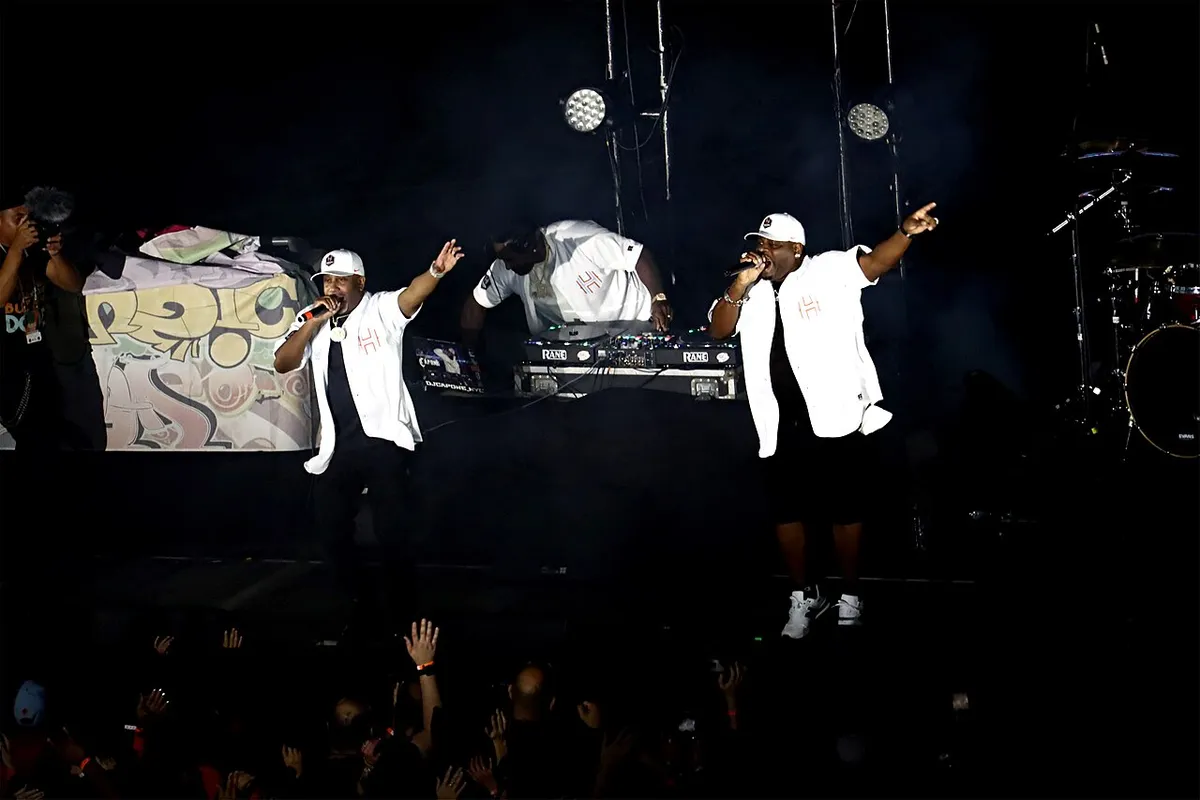
The Harlem Duo That Rewrote the BPM of the World
To measure the crater Rob Base leaves behind, you have to rewind to 1988. Hip-hop was a restless teenager, still testing its boundaries and trying on new identities, when Rob Base and his partner, DJ EZ Rock (Rodney Bryce), dropped a thermonuclear device in the form of "It Takes Two." Released via Profile Records and produced by the legendary Teddy Riley alongside the duo, the track didn’t just perform on the charts—it colonized them. By weaponizing the "Think (About It)" breakbeat from 1972, Rob Base transformed a vintage soul fragment into a high-octane hip-house hybrid that sounded just as lethal in a gritty basement club as it did at a suburban wedding reception.
Rob Base was more than a rapper; he was a master architect of the hook. In an era where many emcees were locked in an arms race of aggressive lyricism, Base possessed a preternatural sense of melody and swing. Growing up in Harlem’s Lincoln Projects, he absorbed the city’s frantic pulse and channeled it into the 1988 debut album that shared its name with his biggest hit. That record also birthed "Joy and Pain," a soulful masterpiece sampling Maze featuring Frankie Beverly. It was the definitive proof that Rob Base had a Midas touch, possessing the rare ability to retool classic R&B sensibilities for a younger, hungrier generation without losing an ounce of the original's heart.
The soul of the operation was the chemistry between Rob and DJ EZ Rock. They were childhood friends who traded Manhattan street corners for the bright lights of international stages. When EZ Rock passed away in 2014 due to complications from diabetes, the loss hit Rob with a staggering weight. Yet, he shouldered the legacy of their partnership with dignity, touring relentlessly as a cornerstone of the "I Love the '90s" circuit. Night after night, he proved that his hits were effectively immortal, sounding just as fresh to twenty-somethings in the 2020s as they did to the b-boys of the late eighties.
A Private Fight for a Public Icon
The revelation of his cancer diagnosis came as a profound shock because Rob remained a vibrant, upbeat fixture in the public eye until the very end. He chose to keep his health struggles within a tight-knit circle, refusing to let his illness dim the light he brought to his fans. Sources close to the artist suggest he spent his final months in New York, surrounded by his children and lifelong friends, basking in the memory of the era when a single twelve-inch single could shift the tectonic plates of the music world.
Social media transformed into a digital wake within minutes of the news. LL Cool J shared a vintage tour photo with a caption that felt like a coronation: "Rest in power to a true king of the stage. You gave us the anthem that will never die." Questlove of The Roots penned a technical appreciation of "It Takes Two," calling it "the perfect record" and noting that its DNA is spliced into the very foundation of modern production. From the Bronx to London, DJs spent the night spinning his catalog, a spontaneous, synchronized tribute to the man who made the whole world feel like they were invited to the same party.
BET and SiriusXM’s Rock the Bells Radio cleared their schedules to honor the man from Harlem. On-air, the phones lit up with listeners sharing the exact moment they first heard those iconic drums. One fan from Atlanta summed it up perfectly: "You could be anywhere—a grocery store, a funeral, a stadium—and if that 'Woo! Yeah!' starts, the air changes. Rob Base gave us the soundtrack to our happiest moments." The data backs up the sentiment; It Takes Two was certified platinum by the RIAA, and its title track remains one of the most sampled and licensed artifacts in music history, appearing in everything from Grand Theft Auto to global campaigns for Target and Walmart.
The Indestructible Echo of a Pioneer
While "It Takes Two" is the crown jewel, Rob Base’s influence pushed far past a single chart-topper. He was the vanguard of the "Hip-House" movement, a daring fusion of house music’s four-on-the-floor energy and traditional rap. This cross-pollination cleared the path for everyone from Heavy D to C+C Music Factory, proving to a skeptical industry that hip-hop could be commercially juggernaut-sized and dance-floor ready without sacrificing its New York soul. His 1989 smash "Get On the Dance Floor" hit number one on the Billboard Dance Club Songs chart, proving he was a force across multiple genres.
Throughout the final decades of his life, Rob remained a beloved elder statesman. Whether he was appearing at the BET Awards or mentoring the next generation of New York artists, he carried himself with a humility that was as legendary as his flow. He never operated with the prickly ego often found in the rap game; he viewed his music as a public utility, a gift that belonged to the people. He treated every stage like a reunion and every fan like an old friend.
As the sun sets on this legendary career, the silence is filled by the enduring echo of those platinum records. Robert Ginyard didn’t just write lyrics; he wrote the blueprint for how a celebration should feel. He leaves behind a legacy of rhythm and resilience, centered on a song that will likely be played as long as there are people left to dance. The man who told us it takes two to make a thing go right has moved on, but the spirit he poured into the culture remains indestructible. Tonight, in a club somewhere on the other side of the planet, those drums will kick in, and the crowd won’t just be dancing—they’ll be saluting a pioneer who truly knew how to move the crowd.


