 THE MARQUEE
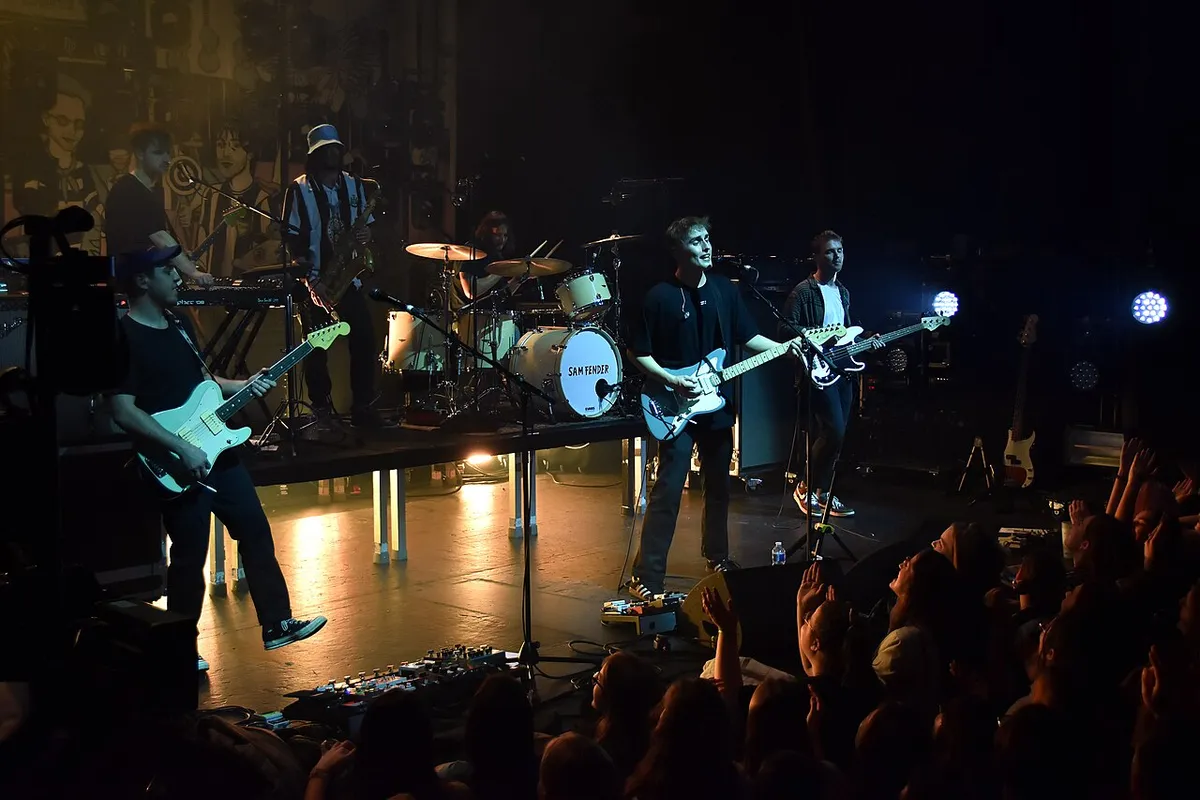
Forget the flash-in-the-pan viral hits; Sam Fender and Olivia Dean are currently building a monument at the top of the charts. For 12 non-consecutive weeks, their brass-blasted anthem ‘Rein Me In’ has acted as the undisputed pulse of the nation, and as of the week ending May 22, 2026, the history books have officially been pulped and rewritten. By locking in its 12th frame at the summit, the track has officially become the longest-running male/female duet in UK chart history, surpassing the titans of yesteryear and proving that the public’s hunger for raw, heart-on-sleeve storytelling hasn’t just survived—it’s thriving.
To walk through the streets of Newcastle or London this week is to live inside the song. It is everywhere. The track’s alchemy—fusing Fender’s signature blue-collar Geordie grit with the conversational, silk-spun soul of Dean—has transcended mere popularity to become a genuine cultural landmark. As the Official Charts Company finalized the tallies on Friday, the duo managed to beat back a late-week surge from a phalanx of heavy hitters to retain their crown. In an era where the top spot often feels like a high-speed revolving door, Fender and Dean haven't just visited the summit; they’ve built a fortress there.
The Anatomy of a Modern Standard
Twelve weeks at the top doesn't happen by accident, and it certainly doesn't happen through a catchy hook alone. “Rein Me In” has survived a gauntlet that would have crushed lesser singles: the arrival of summer blockbusters, surprise superstar drops, and the glitter-soaked chaos of the Eurovision season. The numbers, as parsed by K-Jewel 99.3 FM, reveal a near-perfect pincer movement on the market. The track is being propelled by a massive, sustained presence on Spotify and Apple Music, bolstered by a die-hard physical audience that scrambled to secure limited edition 7-inch vinyl pressings.
For Olivia Dean, whose journey from playing sets in the back of a brightly colored van to international stardom has been nothing short of cinematic, this collaboration marks her arrival as a permanent fixture of the pop firmament. Official Charts Company insiders credit the undeniable chemistry between the two for the song's endurance. “It’s the authenticity,” noted one fan on the BuzzJack music forums. “You can hear the actual friendship between Sam and Olivia in every note. It doesn’t feel like a label-engineered collab; it feels like a moment.” Industry critics agree, hailing the production—a lush, widescreen collision of Springsteen-esque horn sections and cutting-edge UK pop sensibilities—as the gold standard for 2026. Now, the conversation has shifted: it's no longer about when they will fall, but whether they can eclipse the record for the longest-running Number 1 of all time, duet or otherwise.
Drake’s Triple Threat and the Global Incursion
While the singles chart remains a playground for the UK’s homegrown heroes, the Official Albums Chart was witness to a different kind of flex. Drake, in a display of sheer gravitational pull, managed to occupy three separate spots in the Top 10 simultaneously this week. It is a feat that speaks to the Canadian superstar’s status not just as an artist, but as a self-sustaining ecosystem. By keeping three different eras of his career—from his latest opus back to mid-career classics—within the Top 10, Drake is demonstrating a masterclass in catalog longevity.
The “Drake Effect” remains the industry’s most reliable constant. Analysts at K-Jewel 99.3 FM point out that while he didn’t snag the Number 1 single this week, his cumulative consumption across the board remains the benchmark for dominance. He provides the floor of the industry, while everyone else is left fighting for the ceiling. Yet, even as the titans hold their ground, a new vanguard is beginning to tear up the middle of the Top 40.
Gracie Abrams has officially graduated from cult obsession to mainstream powerhouse as her latest single, “Hit the Wall,” made a thunderous debut at Number 18. A haunting, percussive departure from her bedroom-pop roots, the track has been fueled by a relentless viral campaign and a series of live sets that have left the so-called “Gracie-verse” in a fever pitch. Her lyrics, frequently described as surgical in their emotional honesty, are clearly resonating with a demographic raised on the vulnerability of Taylor Swift and Phoebe Bridgers. With the Bank Holiday weekend approaching, industry watchers expect “Hit the Wall” to make a serious run for the Top 10 by next Friday.
However, the most explosive disruption of the week comes from Bulgaria’s DARA. Riding the wave of her historic Eurovision Song Contest victory, her high-octane anthem “Bangaranga” crashed into the charts at Number 21. In the post-Sam Ryder landscape, the Eurovision stigma has evaporated, replaced by a TikTok-fueled appetite for international genre-bending. “Bangaranga” is a neon-streaked explosion of sound that has found a second life far beyond the contest stage, marking one of the highest UK debuts for a non-British Eurovision winner in recent memory.
As we head into the final stretch of May, the momentum is electric. Can Fender and Dean push the streak to 13, or will the sheer velocity of the Gracie-verse and the Eurovision hangover finally shake the foundations at the top? One thing is certain: the UK music scene hasn’t felt this vibrant, or this unpredictable, in a generation.


