 THE MARQUEE
The image is burned into the collective retina of global culture: a black fedora, a gold chain heavy enough to sink a ship, and those unlaced Adidas Superstars staring back at history. At the epicenter of this sonic blast stands Darryl McDaniels—the Devastating Mic Controller—whose gravelly, earth-shaking baritone didn't just define a genre; it built a world. Today, May 31, 2026, the man who taught the masses that rap could rock turns 62, and the world isn’t just honoring a birthday. We are celebrating the grit, the evolution, and the survival of a titan who outran his demons to become hip-hop’s ultimate elder statesman.
Born in 1964 in the Hollis neighborhood of Queens, McDaniels wasn’t merely a rapper; he was a tectonic shift in the American landscape. Alongside Joseph “Run” Simmons and the late, legendary Jam Master Jay, McDaniels dragged hip-hop out of the Bronx parks and thrusted it into the neon glare of Madison Square Garden. By his early twenties, he was already an icon carved in granite. As he enters his 62nd year, that legacy feels more vital than ever, particularly following the heavy, emotional closure of 2024. The conviction of Ronald “Tinard” Washington and Karl “Little D” Jordan Jr. for the murder of Jam Master Jay finally began to heal a wound that had stayed raw and open for over two decades. Today, D.M.C. stands as a guardian of that history, his voice as authoritative as ever.
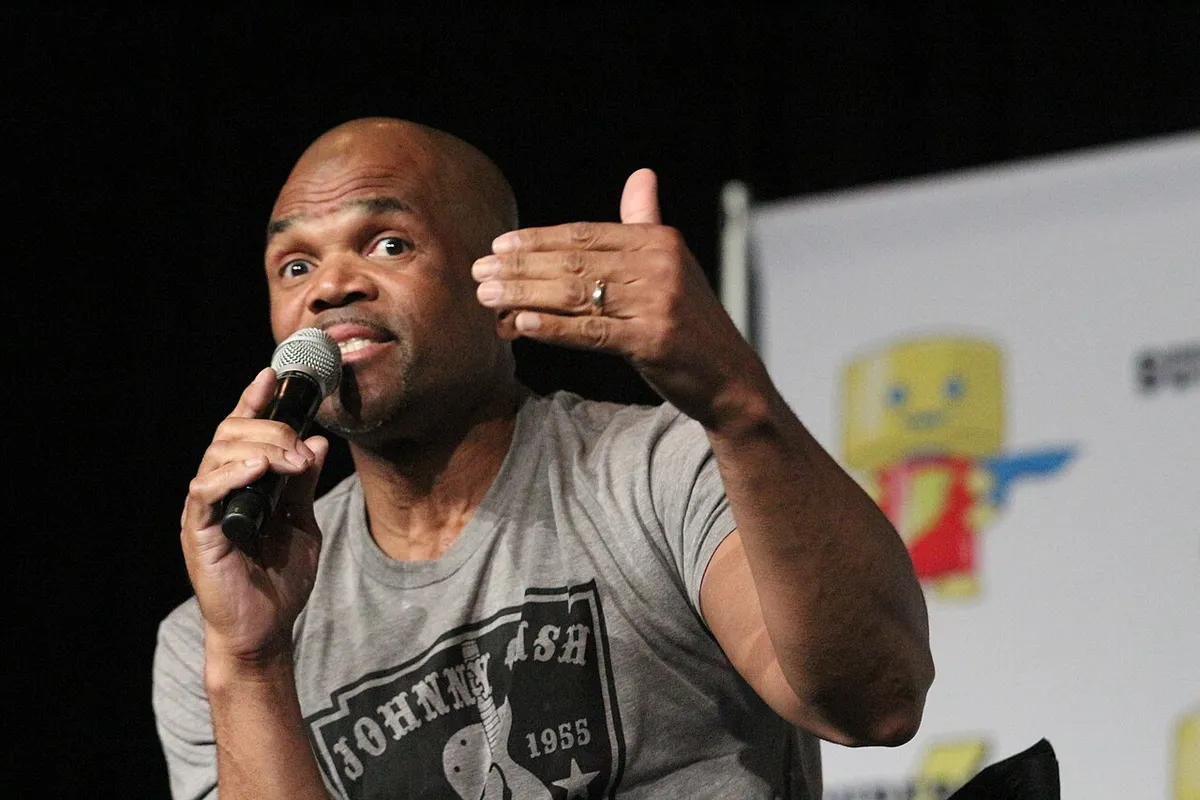
The Three-Man Riot That Broke the World
To grasp why the music industry is currently drowning social media in tributes, you have to remember the sheer, unadulterated audacity of Run-DMC in the mid-1980s. Before they arrived, the mainstream dismissed hip-hop as a fleeting street fad, a novelty destined to fizzle. Then came the 1984 self-titled debut, followed by King of Rock and the cultural supernova of Raising Hell. It wasn't just music; it was a rhythmic assault. When Rick Rubin brokered the 1986 collaboration with Aerosmith for “Walk This Way,” McDaniels and his crew didn't just cross over—they kicked the door off its hinges and repurposed the wood for their own stage.
The numbers from that golden era still border on the mythic. Raising Hell became the first multi-platinum rap album in history. They were the first rap group to grace the cover of Rolling Stone and the first to invade the squeaky-clean set of American Bandstand. But for McDaniels, the impact was always about the visceral connection between the street and the stage. He brought a lyrical toughness that felt like hot asphalt, delivered with a rhythmic precision that classically trained musicians envied. Whether he was spinning tales of Peter Piper or his beloved footwear, he spoke with a clarity that demanded the world’s attention.
The legendary “My Adidas” saga remains the greatest accidental marketing pivot in history. When the group commanded a sold-out Madison Square Garden crowd to thrust their sneakers into the air, they weren't chasing a check; they were asserting their identity. That singular moment ignited a $1.6 million endorsement deal with the German sportswear giant—the first of its kind for non-athletes—effectively birthing the modern sneakerhead culture that currently dictates the global fashion industry. At 62, McDaniels can walk any street on the planet and see his footprint in the very shoes people wear.
The Silence, the Struggle, and the Superhero
But the life of a legend isn't lived exclusively at maximum volume. The Darryl McDaniels story is equally defined by the suffocating silence that nearly ended it. In the late 1990s, the King of Rock began to lose his most powerful weapon: his voice. Diagnosed with spasmodic dysphonia, the physical loss of his speech mirrored a deeper personal collapse. At 35, McDaniels discovered he was adopted, a revelation that triggered a downward spiral into depression and suicidal ideation.
He has been unflinchingly honest about how Sarah McLachlan’s “Angel” served as a literal life raft during those dark years, providing a bridge back from the brink. This vulnerability is what has endeared him to a new generation of fans who value authenticity over artifice. He didn't just remain a “King of Rock”; he transformed into a champion for mental health and the foster care system. Through The Felix Organization and his tireless work with foster youth, he’s spent the last twenty years proving that his most resonant rhymes are the ones he uses to pull others out of the shadows.
In a pivot that surprised the industry but delighted his soul, McDaniels found a second act in the panels of graphic novels. His publishing house, Darryl Makes Comics, launched in 2014, allowed him to embrace the superheroes that sustained him as a kid in Queens. In these stories, D.M.C. is reimagined as a hooded vigilante in a 1985 version of NYC, a full-circle moment for a man who spent his life feeling like an outsider with a secret power. Fans today aren't just reminiscing about “It’s Tricky”; they’re lining up for copies of DMC #1 and #2, celebrating a creator who refused to be confined to a nostalgic box.
The Blueprint for the Next Fifty Years
This 62nd birthday celebration lands at a moment when Run-DMC’s history is finally being treated with the reverence of scripture. The 2024 Peacock docuseries Kings from Queens: The Run DMC Story offered a raw, intimate look at the group's ascent and the heavy toll of the crown, featuring high-praise testimonials from the likes of Ice-T, LL Cool J, and Questlove. Watching McDaniels on screen today, he remains a ball of kinetic energy, a frequent fixture at comic conventions and speaking tours where he greets the public with a warmth that belies his icon status.
The digital tributes today speak volumes about his enduring reach. “Happy Birthday to the man who gave us the blueprint,” one fan shared, while another noted, “62 years of D.M.C. and the glasses are still the hardest look in the game.” It is vanishingly rare for a pioneer to remain this relevant, but McDaniels achieved it by never standing still. Having recently teased new collaborative efforts and remaining a cornerstone of the ongoing celebrations following hip-hop's 50th anniversary in 2023, he is the living bridge between the park jams of the past and the digital frontier of the future.
As he blows out the candles today, McDaniels isn't just dwelling on the gold records or that 2009 Rock and Roll Hall of Fame induction. He is looking squarely at the next chapter. Whether he’s fighting for the rights of adopted children to access their birth records or scripting the next arc of his comic universe, he is the living embodiment of the Hollis spirit. The King of Rock is 62, and the crown still fits perfectly, showing the world that true legends don't just grow old—they evolve into something even more indestructible.
As the world reflects on his storied journey today, fans across the globe continue to honor his presence in the industry, and if we know Darryl, he’s not going to let this milestone pass without returning that legendary energy to the fans who have been down since 1983.


