 THE MARQUEE
The floral arrangements have wilted, the BookTok theories have moved on to the next spicy romance, and the legal thorns that defined the most chaotic press tour in recent memory have finally stopped drawing blood. On Monday, May 4, 2026, the entertainment industry’s collective breath—held for months in anticipation of a courthouse cage match—was finally released. Blake Lively and Justin Baldoni have reached a private settlement, effectively pulling the plug on a high-stakes trial that threatened to expose every ugly detail of a production cycle gone nuclear.
For months, the legal teams representing Lively and Baldoni have been engaged in a tactical, high-gloss chess match. They traded allegations that transformed an over $351 million box-office triumph into a sobering cautionary tale of what happens when creative visions collide at terminal velocity. While the financial specifics are currently locked away behind ironclad non-disclosure agreements, the sudden resolution marks a hard stop to a saga where the parties settled remaining retaliation and breach of contract claims, following the previous dismissal of Lively’s harassment allegations and Baldoni’s defamation claims.
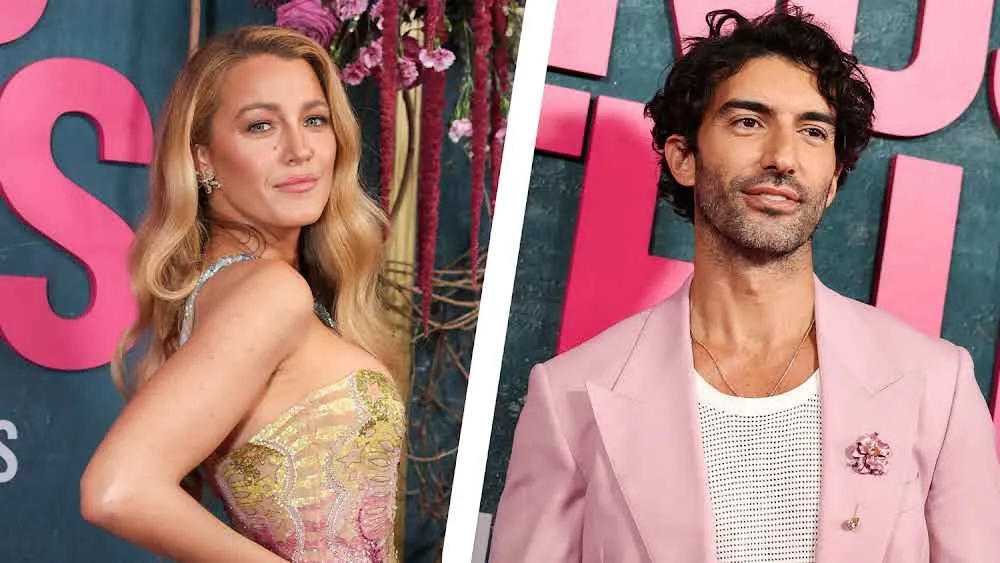
The Summer of Chilly Carpets and Competing Cuts
To understand the depth of this Monday morning ceasefire, you have to revisit the surreal, fever-dream atmosphere of the summer of 2024. What should have been a victory lap for the big-screen adaptation of Colleen Hoover’s literary juggernaut quickly morphed into a digital forensic investigation for fans. On the red carpet, the distance between the leading lady and her director-slash-costar was often measurable in miles. While Lively worked the rooms with Hoover and co-stars like Brandon Sklenar, Baldoni was frequently a ghost, appearing in solo interviews that felt less like movie promos and more like diplomatic briefings from a neutral zone.
The whispers of a fractured set reached a fever pitch when rumors emerged of two warring cuts of the film: the director’s version favored by Baldoni and a secondary edit commissioned by Lively, allegedly polished by Deadpool & Wolverine editor Shane Reid. TikTok sleuths and X users dissected every frame of junket footage, cataloging the "chilly energy" and the lack of joint appearances. But the drama eventually leaped from social media feeds to the legal record. Lively’s initial suit alleged that the filming environment was far from the safe, supportive space required to navigate a narrative centered on domestic violence.
Lively’s legal powerhouse argued that Baldoni’s conduct as a director fostered a hostile work environment, making specific claims regarding physical discomfort during filming and a culture of punishment for voicing creative dissent. The industry watched, stunned, as the Gossip Girl alum traded her "girl next door" image for that of a litigious warrior, taking on the Jane the Virgin veteran in a battle of reputations that risked swallowing the film's massive global earnings whole.
A-List Leverage and the Battle for the Brand
The legal filings revealed a set divided into two distinct, warring camps. Baldoni didn't just play defense; he launched an aggressive counter-offensive that caught many off guard. His defamation counterclaim alleged that Lively and her husband, Ryan Reynolds, utilized their massive media footprint to orchestrate a sophisticated "smear campaign" intended to cast Baldoni as the production's villain. Baldoni’s team contended that Lively’s quest for total creative dominance led to a calculated undermining of his authority, arguing that the "hostile set" narrative was a tactical fiction created to justify her eventual takeover of the post-production process.
The involvement of Reynolds was the most explosive revelation of the discovery phase. Baldoni’s attorneys highlighted the fact that Reynolds had openly admitted to writing a pivotal rooftop scene—a confession that reportedly blindsided the film's actual screenwriters and, per Baldoni, completely bypassed his directorial vision. The counterclaim suggested that the Reynolds-Lively duo used their A-list muscle to reshape the movie in their own image, leaving Baldoni as a director in title only.
Despite the vitriol in the filings, the court had already begun to trim the fat from the case. Several claims from both sides had been tossed in the lead-up to the settlement; a judge dismissed the defamation claims against Ryan Reynolds in June 2025, and Blake Lively's sexual harassment claims were dismissed in April 2026. Thus, the remaining retaliation and breach of contract issues were the final pieces resolved by this week's sudden white flag.
The Ghost of the Sequel and the PR Pivot
As the settlement hit the wires, the industry response was one of pragmatic, if quiet, relief. Insiders at Sony Pictures and Wayfarer Studios have maintained a disciplined silence, though the market rarely ignores the resolution of a headache this expensive. The film was a goldmine, but the legal toxicity made the prospect of a sequel, It Starts With Us, feel like a logistical and emotional impossibility. For the fans who turned the first film into a cultural phenomenon, the question is no longer about who was right, but whether this settlement clears a path for the franchise or marks a final, bitter severance.
Online communities have buzzed with hope that the resolution might allow the narrative to move forward without the shadow of legal intervention hanging over the production. Others took a more cynical view, suggesting the settlement was merely a way to bury the most damaging testimonies before they could be read into the public record under the harsh glare of courtroom lights.
The timing is no accident. By settling now, both Lively and Baldoni avoid the "trial by fire" that a public cross-examination would have guaranteed. In a landscape where every courtroom utterance is live-streamed and memed by armchair analysts, the cost of winning a trial often involves losing the much larger PR war. For Lively, who has meticulously built a brand of effortless chic and family-first charm, a messy trial was a massive liability. For Baldoni, whose career is built on his "Man Enough" brand of sensitive masculinity, the harassment allegations were a direct strike at his professional soul.
So, where does this leave the players? Lively remains an untouchable powerhouse, recently seen commanding the Met Gala with unbothered grace. Baldoni has pivoted his focus back toward his production work at Wayfarer. The settlement allows the legal machinery to grind to a halt, letting both parties walk away with their reputations—and their bank accounts—largely intact. Whether they can ever truly move on in the court of public opinion is the real mystery. The credits have rolled on the legal drama, but in Hollywood, the ending is rarely as tidy as it is on the page. For now, the flowers are back in the shop, the lawyers are heading home, and an over $351 million movie finally exists without a court date hanging over its head like a cloud.


