 THE MARQUEE

The October air outside AMC Lincoln Square didn’t just feel like autumn; it felt like a reckoning. Before the first light of dawn even touched the Manhattan skyline on October 23, 2026, a sea of Jenna Ortega disciples—donning the hushed, minimalist greys of the “Artificial Friend” (AF) units seen in the trailers—stood in a queue that looked less like a movie line and more like a pilgrimage. They weren’t just there for a screening; they were there to witness a miracle. They were there for Klara and the Sun.
Inside the theater, the atmosphere was a volatile cocktail of Nobel-level prestige and high-stakes Hollywood anxiety. Directed by Taika Waititi and produced under Elizabeth Gabler’s Sony 3000 Pictures banner, this adaptation of Kazuo Ishiguro’s 2021 novel has been the industry's most feverishly whispered-about secret since the day it was greenlit. But as the lights dimmed across the U.S. and the UK today, that whisper evolved into a roar—though perhaps one more divisive than the studio brass had envisioned. While Ortega’s turn as the solar-powered Klara is being hailed as a career-defining metamorphosis, the early critical returns have been startlingly icy, sparking a heated debate over whether Waititi’s irreverent DNA is fundamentally at odds with the quiet, devastating elegance of Ishiguro’s prose.
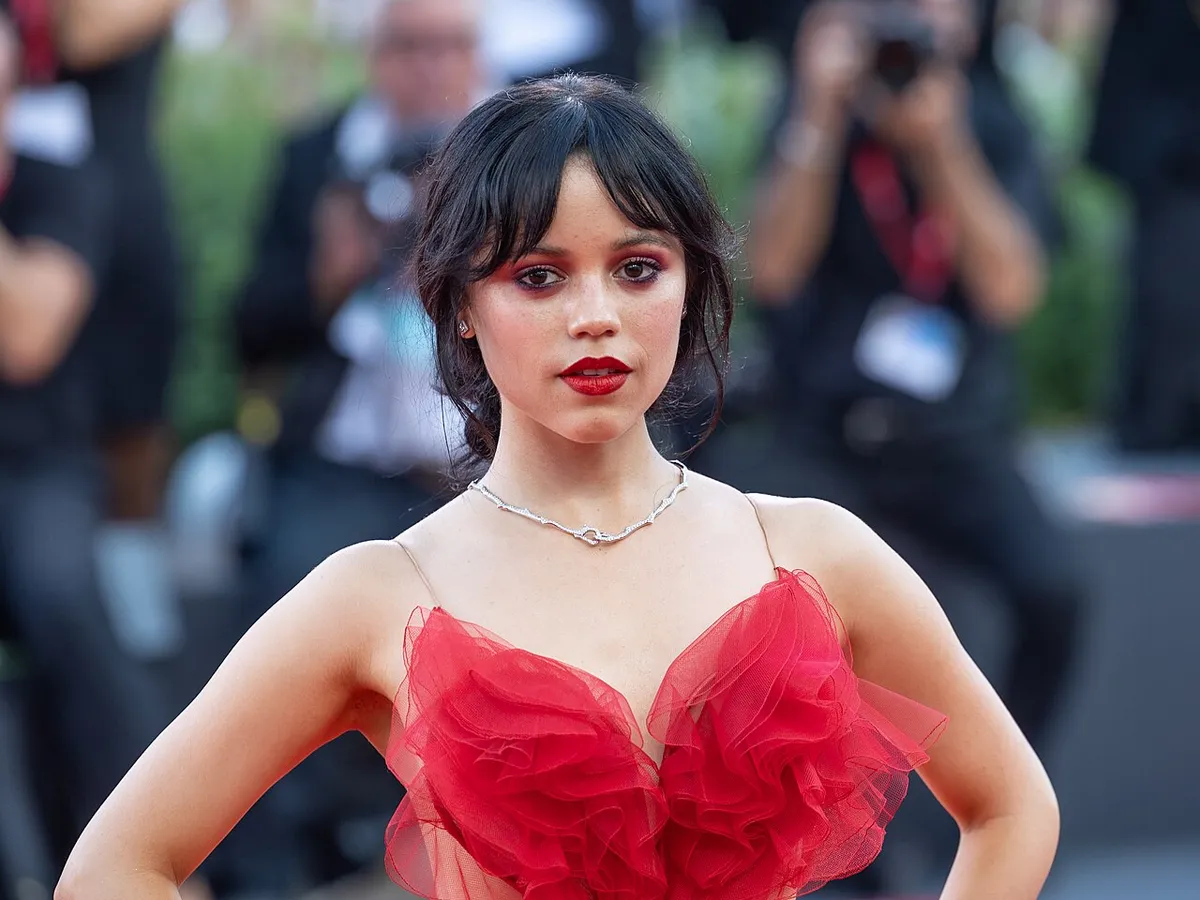
The Synthetic Heart of a Generational Superstar
From the first frame, where Ortega sits in a store window with a stillness that feels almost eerie, it is impossible to look away. She plays Klara with a calibrated, wide-eyed hunger that flickers between silicon processing and raw, bleeding-heart humanity. Ortega has spent the last few years mastering the macabre in Wednesday and Beetlejuice Beetlejuice, but here, she sheds the snark for a vulnerability that feels entirely new. Klara is an Artificial Friend designed to cure the plague of loneliness, and Ortega’s physicality—the bird-like tilt of her head as she processes the shifting light, the deliberate weight of her movements—suggests a machine trying desperately to solve the unsolvable equation of a soul.
The narrative engine ignites when Klara is purchased by Chrissie, portrayed with a frayed, desperate intensity by six-time Oscar nominee Amy Adams. Chrissie is a mother teetering on the edge of a breakdown, seeking a companion for her daughter, Josie (played by the magnetic newcomer Mia Tharia), who is fading under the weight of a mysterious illness caused by “lifting”—a high-stakes genetic enhancement process that defines this near-future dystopia. The chemistry between Ortega and Tharia is the film’s pulse; their bond feels achingly real, even as the specter of Josie’s mortality hangs over every frame. When Klara begins to develop a primitive, religious devotion to the Sun, convinced it can provide a “special nourishment” to save the girl she loves, the film leans heavily into the haunting magical realism that made the book a global phenomenon.
Already, the digital discourse is in overdrive. On the r/Movies Reddit thread, one user captured the mood: “Ortega’s eyes do more heavy lifting in the first twenty minutes than most actors do in an entire franchise. She makes you believe a robot can pray.” That sentiment is echoing across social media, where #KlaraAndTheSun is currently trending alongside breathtaking clips of New Zealand’s landscapes, which Waititi and cinematographer Mike Berlucchi have transformed into a lush, unsettling American pastoral.
The Waititi Paradox: Whimsy vs. Woe
If Ortega is the film's beating heart, the machine she’s trapped inside is causing a massive critical malfunction. The primary point of contention is the vision of Taika Waititi. Since his Oscar win for Jojo Rabbit, Waititi has been a polarizing force, with his signature blend of “sad-guy humor” often clashing with the gravity of his subjects. Critics are already sharpening their pens, arguing that his frantic, neon-streaked energy smothers the contemplative silence of Ishiguro’s world. Both Variety and The Hollywood Reporter have noted a jarring tonal whiplash, where moments of profound grief are suddenly interrupted by quirky visual gags or eccentric supporting turns.
Steve Buscemi arrives as Capaldi, and while his weathered performance provides a much-needed groundedness, some reviewers feel the script—co-written by Waititi and Mad Men alumna Dahvi Waller—struggles to marry the book’s philosophical depth with the demands of a big-budget studio drama. The “Cootings Machine,” the industrial polluter that Klara views as her nemesis, is rendered with a level of steampunk whimsy that some found more distracting than immersive. On X, one prominent critic didn't hold back: “Waititi tries to turn a funeral march into a parade. Ortega is a revelation, but she’s trapped in a movie that’s afraid to be as sad as the book is.”
Despite the critical drubbing, the film is pacing for a powerhouse opening weekend. Sony Pictures is leaning heavily into the “Ortega Factor,” betting that her massive Gen Z following will show up regardless of what the trades say. Elizabeth Gabler has built a career on shepherding literary darlings like Where the Crawdads Sing into box office gold, and she is clearly wagering that the emotional core of the story will resonate more with ticket-buyers than with cynical reviewers.
A New Vision of the End of the World
For those coming to the story for the first time, the film is a jarring, beautiful introduction to the ethics of AI. We witness the world through Klara’s “grid” vision—a stylized, pixelated perspective that emphasizes her status as an eternal outsider. It’s a bold choice that has split audiences: Is it a brilliant immersive tool or a gimmick that distances us from the heart of the characters? The film also introduces Aran Murphy, son of Cillian Murphy, who makes a quiet, remarkably effective debut as Rick, Josie’s neighbor and childhood sweetheart. His interactions with Klara highlight the film's most piercing question: Can a machine truly grasp the exclusivity of human love?
The production itself was a gargantuan undertaking, with filming spanning much of 2024 from the rolling green hills of Wānaka to the urban sprawl of Auckland. The scale of the world is undeniable, but the film is at its best in the quiet, intimate corners—the whispered secrets in Josie’s bedroom or the way Klara watches the sunset through the slats of a barn. The soundtrack, a melancholic, synth-heavy score, adds a layer of atmosphere that many are comparing to Never Let Me Go, the previous Ishiguro adaptation that similarly divided critics before becoming a modern cult classic.
As the box office receipts trickle in from the UK, the narrative is shifting from a critical autopsy to a fan-led celebration. The chasm between the professional reviews and the audience reaction is widening by the hour. While critics see a botched adaptation, fans see a heart-wrenching story of sacrifice. Jenna Ortega’s Klara isn't just a robot; she’s a mirror reflecting our own terrors of loneliness and the lengths we will go to for the people who anchor us. Whether or not Waititi’s vision survives the test of time, the image of Ortega standing in the golden hour, waiting for the Sun to answer her prayers, is likely to be the defining cinematic image of the season. The weekend will reveal if Klara and the Sun can weather the storm of its early reviews, but for now, the discourse is burning as bright as the star at the center of Klara’s faith.


