 THE MARQUEE
The math behind a modern Kanye West release is usually as volatile as the rollout itself, but the numbers trailing the arrival of Bully are providing a moment of crystalline clarity. When the clock struck midnight on March 28, 2026, the music industry braced for a seismic event, and the resulting shrapnel has coated the Billboard charts in a way few artists can manage thirty years into a career. Ye didn’t just return to the center of the cultural conversation; he effectively hijacked it, landing a staggering 16 out of 18 tracks from the new album onto the Billboard Hot 100. It is a brute-force display of streaming dominance that confirms his fan base hasn’t just stayed loyal—they’ve become more feral for his solo output than at any point since the Donda era.
This isn’t merely about volume; it’s about a specific, unavoidable kind of gravity. While Bully debuted at No. 2 on the Billboard 200—narrowly missing the top spot in a photo finish that has industry insiders at Showbiz411 and HipHopDX parsing every digital sale and weighted stream—the sheer saturation of the Hot 100 tells the real story. In an era where the attention economy is more fractured than ever, Ye managed to occupy nearly 20% of the most important singles chart in the country simultaneously. This feat puts him in the rarified air inhabited only by Taylor Swift and Drake, the only other titans capable of turning an album drop into a total geographic takeover of the American musical consciousness.
From the Mist of Haikou to the Top of the Charts
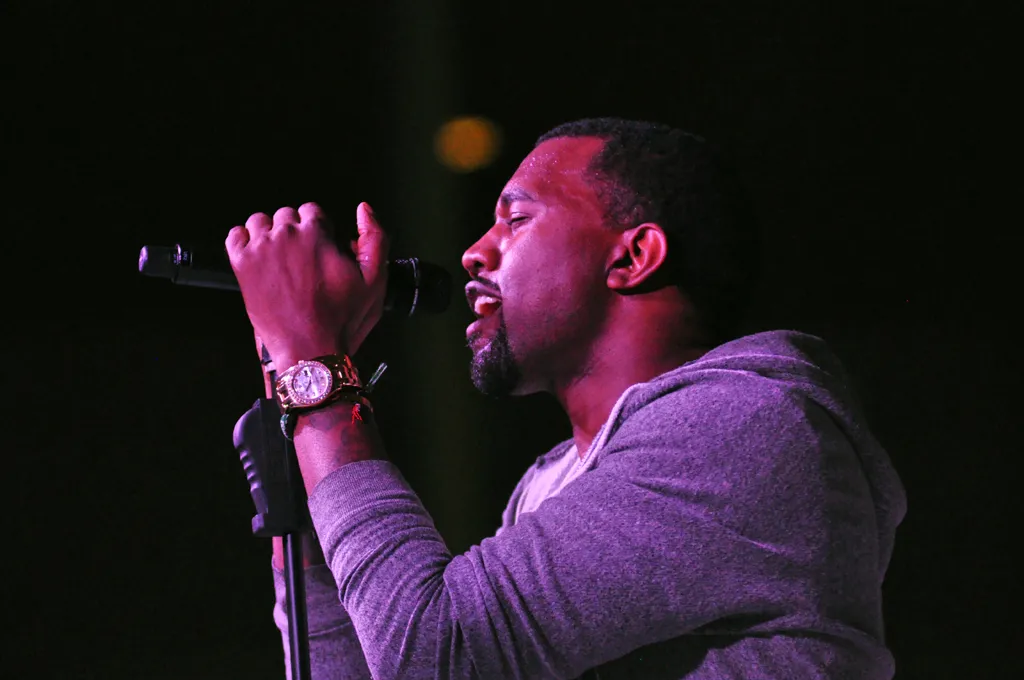
The journey to this chart-topping carnage didn’t begin in the polished labs of Los Angeles or the vastness of a Wyoming ranch, but rather in the humid, electric air of Haikou, China. Fans still have the vivid imagery burned into their retinas: Ye standing alone on a mist-covered stage during his massive listening parties, premiering tracks like "Preacher Man" to a crowd that seemed to have the lyrics memorized before the first verse even finished. That global momentum translated directly into the March 28 release. The lead single, "Preacher Man," has emerged as the clear flagship of the project, buoyed by a soul-sampling aesthetic that many fans on X (formerly Twitter) are hailing as the spiritual successor to The College Dropout.
Social media has been a pressure cooker of obsessive reactions since the drop. "He really took 16 spots on the Hot 100 without a single traditional radio interview," noted one popular hip-hop commentator on TikTok. The sentiment across Reddit’s r/GoodAssSub has been even more hyperbolic, with users tracking daily streaming numbers on Spotify and Apple Music like day traders watching the S&P 500. The consensus among the die-hards is that Bully represents a pivot away from the collaborative, often chaotic energy of the Vultures series with Ty Dolla $ign, moving instead toward a more focused, singular vision that allows Ye’s production fingerprints to take center stage.
Industry data provided by HotNewHipHop highlights that the streaming numbers for Bully were particularly dense in metropolitan hubs, suggesting the album is seeing heavy rotation in the places where culture is made—clubs, cars, and headphones alike. This wasn’t a slow burn; it was an explosion. The tracks that failed to crack the Hot 100—only two out of the eighteen—were largely shorter interludes, meaning that every full-length song on the record is effectively a national hit by Billboard’s standards. This level of consistency is rare for a solo artist who has navigated as many public cycles of controversy and reinvention as Ye has.
The Solo Renaissance: Why Bully is Connecting Where Vultures Divided
To understand why Bully is performing this way, you have to feel the texture of the music. Unlike the darker, industrial trap sounds that defined much of his work over the last three years, Bully feels like an intentional reach back into the crates. Tracks like "Beauty and the Beast" have been cited by critics for their melodic vulnerability, a trait that helped propel them into the top tier of the Hot 100. This is the "solo" factor—without the distraction of a collaborative partner, the narrative of the album belongs entirely to Ye, and the audience is clearly responding to that intimacy. It’s raw, it’s stripped back, and it’s undeniably him.
The No. 2 debut on the Billboard 200 is also a fascinating data point. While some might see the lack of a No. 1 debut as a slip, the reality is that the competition in the spring of 2026 has been fierce. Releasing on March 28 put Ye up against a crowded field of high-performance pop and country releases. Yet, his ability to maintain such high per-track streaming averages suggests a level of engagement that many No. 1 albums fail to achieve. Listeners aren't just playing the first three tracks and checking out; they are consuming the entire 18-track experience from top to bottom, which is the only way to land 16 tracks on the Hot 100 simultaneously. It’s a victory of depth over hype.
The production credits on the album have also sparked a wave of deep-dives from the production community. By leaning into a "lo-fi but high-stakes" sound, Ye has bypassed the polished, cookie-cutter production that currently clogs the airwaves. This raw quality has made the album a favorite for creators on Instagram Reels and YouTube, where the soulful loops of Bully provide the perfect backdrop for viral content. This organic spread has done the heavy lifting that a traditional marketing budget usually handles, proving once again that Ye’s greatest asset is his ability to create sounds that demand to be shared. The album doesn't ask for your attention; it commands it.
If we look at the historical context, Ye is currently chasing his own ghost. Each release is a battle against his own previous records, and Bully stands up remarkably well. By capturing 16 spots on the Hot 100, he has reinforced his position in the top five artists of all time for most total entries on the chart. Every song that enters the list adds to a legacy that began in the early 2000s, creating a bridge between the era of physical CDs and the current landscape of algorithmic playlists. Labels are closely watching how Bully performed with almost no traditional promotion—no late-night talk show appearances, no Spotify-funded billboards in Times Square, and no magazine covers. The album's success is a pure distillation of brand power and sonic curiosity.
As reported by Showbiz411, the physical sales component of the debut was also surprisingly robust, with fans flocking to buy limited edition vinyl and merchandise bundles that were teased during the China listening sessions. As the second week of tracking begins, all eyes are on the "legs" of these tracks. Usually, an album that floods the Hot 100 sees a massive drop-off in week two, but the early data suggests that "Preacher Man" and several other standouts are holding their positions in the top 40. This suggests that Bully isn't just a flash in the pan for the devotees, but is crossing over into the general public’s daily listening habits. With rumors already swirling about a potential stadium tour to support the record, the Bully era is only just beginning to show its true teeth.


