 THE MARQUEE
Out on the Pedernales River, the Texas mist doesn’t just burn off; it yields. Today, April 29, 2026, Willie Nelson turns 93, a milestone that feels less like a birthday and more like a victory lap for a man who outran time itself. He is the bridge between the hippie dream and the redneck reality, the man who penned the soundtrack to every lonely highway haul and every beer-soaked Saturday night in the history of the Republic. At an age where most legends have long since settled into the bronze of statues, Willie remains the undisputed, weed-smoking king of the hill.
To step onto the dirt of his Luck, Texas ranch today is to breathe in a living monument to survival. There is no retirement party on the books because, in the Nelson universe, the word doesn't exist. Instead, the Spicewood air is a heady cocktail of cedar smoke, slow-cooked brisket, and the thick, herbal perfume of Willie’s Reserve. A small army of family, road warriors, and world-class pickers has gathered to toast the Red-Headed Stranger. From his Depression-era roots in Abbott, Texas, to his status as a global icon, Nelson has outlasted the critics, outlived the peers who tried to keep pace, and somehow kept his voice as sweet and singular as a high-plains breeze.
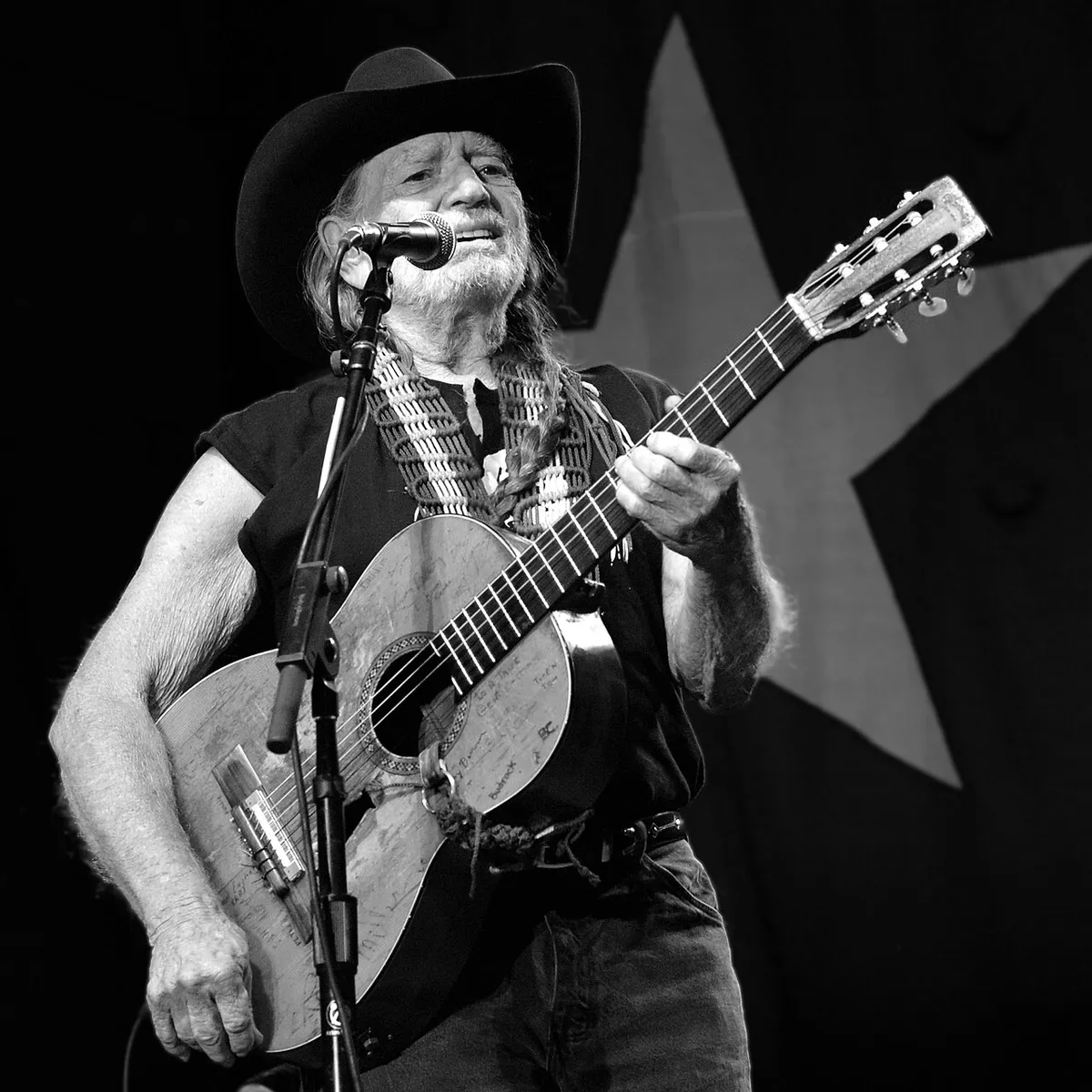
"He’s the only thing that all of America can agree on," says longtime friend and collaborator Sheryl Crow, who was among the first to drop a tribute this morning. "In a world that feels so jagged and divided, Willie is the north star. He’s 93, and he still carries more cool in his pinky finger than the rest of us will ever find in a lifetime."
The Great Escape from Music Row
The Willie Nelson saga is the ultimate story of American resilience. Born in 1933 and raised by his grandparents, he was a child prodigy of the dust, picking a guitar at six and writing songs at seven. By the time he hit Nashville in the 1960s, he was already a master architect of the heartbreak ballad, penning "Crazy" for Patsy Cline and "Hello Walls" for Faron Young. But the Nashville establishment was a town of starch and symmetry, and Willie—with his jazz-inflected phrasing and restless spirit—was the crooked line they couldn't straighten. They wanted him in a suit; he wanted the horizon.
The universe finally intervened in 1970 when his house burned to the ground. In a move of characteristic Zen, Willie didn't panic. He grabbed his guitar, Trigger, a bag of his favorite herb, and pointed the car toward Texas. That fire didn't just burn down a house; it ignited a revolution. By landing in Austin and taking the stage at the Armadillo World Headquarters, Willie unified the long-haired freaks and the Stetson-wearing traditionalists under one sweat-stained banner. Alongside Waylon Jennings, Kris Kristofferson, and Johnny Cash, he became the face of Outlaw Country, a movement that peaked with 1976’s Wanted! The Outlaws, the first country record to move a million units.
"He didn't change his music to fit the town; he changed the town to fit his music," says Mark Rothbaum, Nelson’s longtime manager who has seen decades of sold-out nights and hazy tour bus stories. "At 93, people ask me what the secret is. It’s simple: he never stops. He breathes, he writes, he picks that guitar. The moment he stops moving is the only moment he’ll ever grow old."
The Gospel According to Trigger
You cannot talk about Willie at 93 without talking about the battered wooden warhorse at his side. Trigger, his 1969 Martin N-20, is more than an instrument; it’s a limb. The cedar top is worn completely through, a gaping second sound hole carved by decades of rhythmic flat-picking. It’s a map of his life, scarred and signed by over a hundred friends, from Leon Russell to Gene Autry. On social media today, the #Trigger93 hashtag is flooded with fans celebrating the fact that both the man and the machine are still producing that haunting, jazz-inflected tone that defines the Nelson sound.
Mickey Raphael, who has played harmonica in the Family Band since 1973, says the stage chemistry hasn't aged a day. "Playing with Willie is like a conversation that started fifty years ago and never ended," Raphael shared recently. "He still surprises me. He’ll take a solo in 'Whiskey River' and find a note he hasn't touched since 1984. His timing is still that unique, behind-the-beat style that drives musicians crazy and makes the crowd sway like wheat in the wind."
That lineage is being carried forward by his sons, Lukas and Micah Nelson, who have become stars without ever leaving their father’s orbit. Lukas Nelson & Promise of the Real keep the rock-and-roll heart beating, while Micah’s experimental streaks mirror the same boundary-pushing DNA that led Willie to record Stardust in 1978. Back then, executives thought a record of pop standards would kill his career; instead, it stayed on the charts for over a decade. Willie doesn't follow trends; he waits for the world to catch up.
The Soil, the Soul, and the Road Ahead
Willie’s 93rd year isn't just a victory for music; it's a testament to his massive footprint on the American conscience. As the co-founder of Farm Aid, he’s helped haul in over $70 million for family farmers since 1985. His commitment to the dirt is as fierce now as it was forty years ago. "Willie understands that the soil is the soul of this country," says John Mellencamp, his longtime Farm Aid partner. "He’s never been a 'celebrity' activist. He’s a guy who actually gives a damn, and he’s used his 93 years to prove it every single day."
Then there is the green path. Once a cause that saw him in handcuffs, his advocacy for cannabis has transformed him into a mogul of the legal industry. Willie’s Reserve is a powerhouse brand, but for Nelson, it was always about personal liberty and the medicinal benefits he credits for his longevity. He traded whiskey and cigarettes for the herb years ago, and looking at him today, it’s hard to argue with the results.
The digital world is vibrating with love for the man today. On X and Instagram, the tributes are a mix of reverence and humor. "My grandfather saw Willie in '75, my dad saw him in '98, and I saw him last year. He is the constant in our family's life," wrote one fan. Another quipped: "Willie Nelson turning 93 is proof that if you stay hydrated and mind your own business, you can live forever."
As the sun dips below the horizon at the Luck ranch tonight, the guitars aren't stopping. With over 100 studio albums in the rearview—including 2024’s masterful The Border—Willie Nelson isn't staring at a finished legacy. He’s looking at the next chord, the next verse, and the next mile of blacktop. In a world of flashes in the pan, Willie is the slow burn that never goes out. The bus is gassed, Trigger is tuned, and the Red-Headed Stranger is exactly where he belongs: on the road again.


