 THE MARQUEE
The "Real American" was always a master of the mask, a neon-yellow titan who convinced an entire generation that prayers and vitamins could conquer any giant. But the man who famously slammed Andre the Giant couldn't outrun the ghost of Terry Bollea—or the mountain of prescription medication that nearly put him in the dirt sixteen years ago.
In his candid public reflections, the myth of the invincible superhero finally fractures, revealing a man who has spent time looking back at a life defined as much by agony as by accolades. Reflecting on his journey in recent years, Terry Bollea—the human being beneath the headband—pulls back the curtain on a period of his life so bleak it makes his legendary battles in the squared circle look like child's play. It is a raw, unflinching account of a career built on physical destruction and the chemical cost of staying on top.
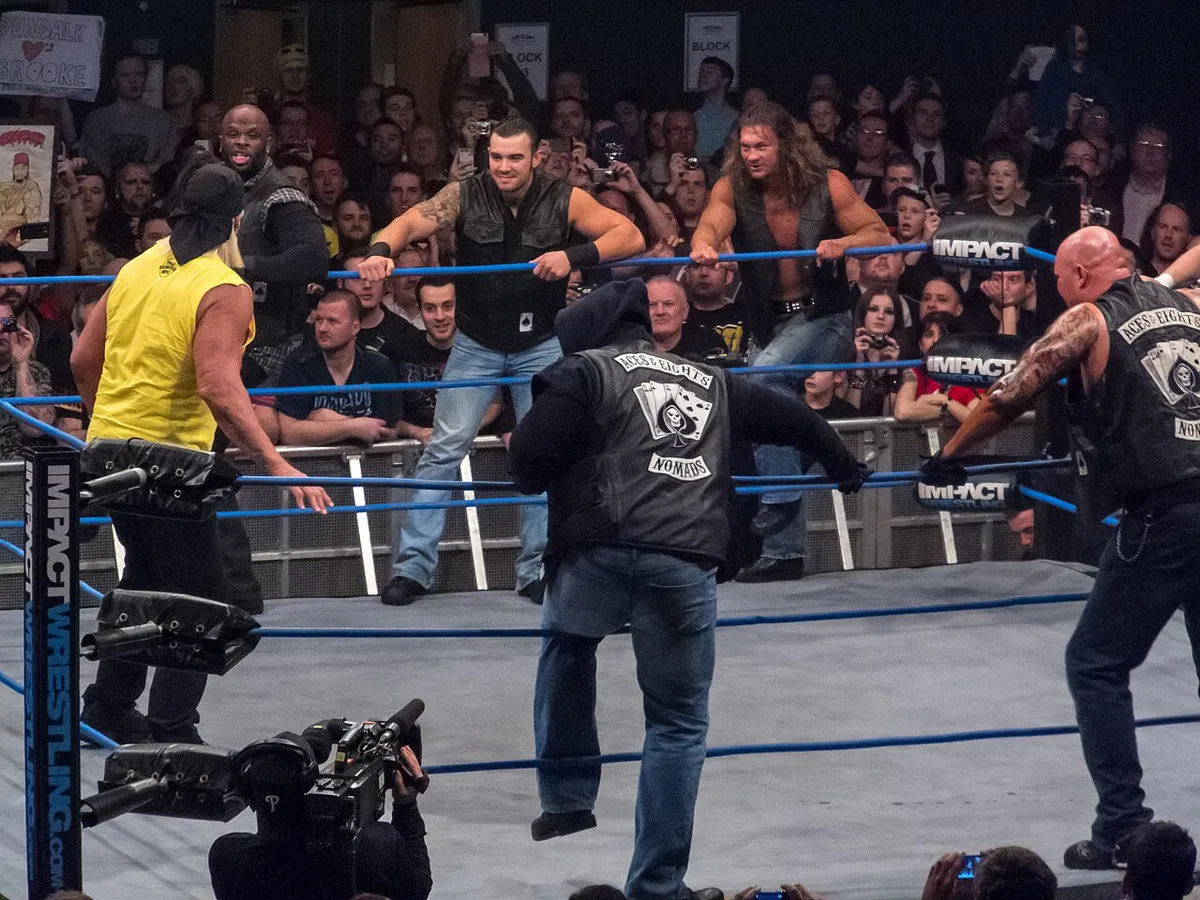
His story has long been a subject of public fascination, fueled by a history that recontextualizes Hogan’s public decline in the late 2000s. According to Hogan, he was locked in a struggle with prescription pain medication in 2009, a habit sparked by the cumulative wreckage of thirty years in the ring and the emotional shredding of a very public, very ugly divorce. Hogan, looking more reflective than we ever saw him in a WWE or WCW ring, has recounted the chilling moments that served as a terrifying ultimatum. "I was in a bad place," Hogan says, his voice gravelly and stripped of its usual bombast. "Given what I was taking, I realize now that no human being should have been standing there."
The Pharmacy Wake-Up Call and the Death of Kayfabe
The timeline of this spiral begins in the mid-2000s, an era when the Hogan family was presenting a polished, if chaotic, version of their lives on the VH1 hit Hogan Knows Best. While the cameras captured a quirky, overprotective father, the reality behind the scenes was a house of cards. By 2007, his wife Linda Hogan had filed for divorce, a move Hogan admits left him completely gutted and spiritually adrift. As the legal war dragged into 2009, Hogan found himself haunting the hallways of a massive, empty mansion in Clearwater, Florida, grappling with a body that was quite literally disintegrating. He had endured several major surgeries by then—knees, hips, and a spine that had been compressed by thousands of atomic leg drops on hard canvas.
Public accounts pull no punches in detailing how Hogan turned to pain medication to numb the physical fire in his joints and the psychological weight of his family’s disintegration. He wasn't just using; he was consuming quantities that medical experts have described as dangerous by any medical standard. The man who had been the face of professional wrestling for a generation was unable to function for sixty minutes without the haze of the medication. The story is brutal in its honesty, looking back at archival footage from that era where Hogan’s eyes are clouded and his speech carries a heavy, labored slur—signs that fans at the time chalked up to Father Time, but were actually the marks of a desperate chemical dependency.
The emotional gut-punch is Hogan’s admission that he didn't just want the pain to stop; he wanted the clock to run out. He recounts a specific, dark evening in 2009, sitting alone with a firearm, weighing the silence against the noise of his life. The divorce had stripped him of his identity, and the physical toll of his career had robbed him of his mobility. "I had lost my wife, I had lost my kids' daily presence, and I felt like I had lost the Hulkster," he says in interviews that are almost impossible to watch without a lump in your throat. It was only a chance phone call from Laila Ali—his co-host on American Gladiators—that shattered his isolation and pulled him back from the precipice.
Shattered Pythons: A Legacy of Grit and Survival
Over the years, the digital landscape has been a flood of concern and shock from the wrestling world. On X, long-time "Hulkamaniacs" have been forced to reconcile the hero of their youth with the broken man behind the scenes. One user noted: "Realizing the Hulk Hogan I grew up watching was struggling so much in 2009 is heartbreaking. We never knew the weight he was carrying while he was still trying to be the hero." This sentiment ripples through his story, which includes commentary from icons like Ric Flair and Eric Bischoff. Both legends admit they knew Terry was "hurting," but the sheer scale of the medication use was a secret he kept locked behind the red-and-yellow armor.
Reports also dive into the financial abyss that nearly swallowed him whole during his physical collapse. During that 2009 divorce, Hogan lost a staggering percentage of his assets, creating a "perform or perish" environment. He felt forced to keep laces tied and boots on just to stay solvent, even as his body screamed for mercy. This cycle only fed the drug use. The narrative frames the addiction not as a rock-star indulgence, but as a desperate survival mechanism for a man who didn't know how to exist if he wasn't the main event.
Observers have spent years stitching this narrative together, and examining it now gives his story a haunting, reflective atmosphere. The contrast between the public's perception of Hogan as an indestructible icon and the private reality of a man crumbling under his own myth is staggering. The "Real American" theme song, once a clarion call of triumph, now serves as a reminder of the tragedy of his hidden struggle.
While the journey through the darkness of 2009 was heavy, Hogan eventually found a path to recovery. He credits a spiritual awakening and the unwavering support of his wife, Sky Daily, for helping him move past the medication and rediscover a sense of self. However, the shadow of that era never truly left him. Observers suggest that the sheer volume of drugs he consumed during those years likely contributed to the ongoing health complications he has managed in his later years.
In recent interviews captured at his Florida home, Hogan reflects on the journey he has taken through both the wreckage and the glory. In these candid moments, he appears to be at peace with the man he has become. He wanted the world to know Terry Bollea—the man who failed, the man who suffered, and the man who survived—as much as they knew the Hulkster. It is the ultimate act of breaking kayfabe. The impact of his story will be felt for years; it is a stark, necessary reminder of the physical and mental health crisis that has haunted the wrestling business for decades. By coming clean about his addiction and his brush with the end, Hogan has shared a chapter of his life that is perhaps more heroic than any match he ever won. He isn't the invincible god of the 1980s anymore; he's a human being who survived the unthinkable, leaving us with a cautionary tale wrapped in a weathered bandana.


