 THE MARQUEE

The Emotional Siege of Damascus
The lights didn’t just dim in Damascus; they vanished, swallowed by a silence so heavy you could hear the collective intake of breath from a thousand souls. Within minutes, the familiar, delightfully neurotic energy of Ahmed Helmy flickered across the screen, and the room didn’t just clap—it erupted. This wasn’t merely another film debut; it was the cinematic resonance of a cultural titan. For the crowds gathered in Syria to witness the release of Hadouta, the experience was less about passive watching and more about a visceral, collective emotional purge. Reports from the ground describe a theater transformed into a sanctuary of shared vulnerability, where the hard line between the silver screen and the audience’s own jagged realities simply dissolved.
Helmy, long ago anointed “The Prince of Comedy” in the Arab world, has spent twenty years perfecting the role of the Everyman—the guy who trips over his own shadow but finds the secrets of the universe in the process. But with Hadouta (which translates to “Story” or “Fable”), he has tapped into a vein far more primal than his usual brand of slapstick or sharp social commentary. Syrian fans have hijacked social media feeds to describe a cinematic whiplash: one moment doubled over in the kind of gut-busting laughter only Helmy can draw out, the next, frantically wiping away tears as the film careens into the tender, often bruising territory of childhood ghosts and the ache of lost time.
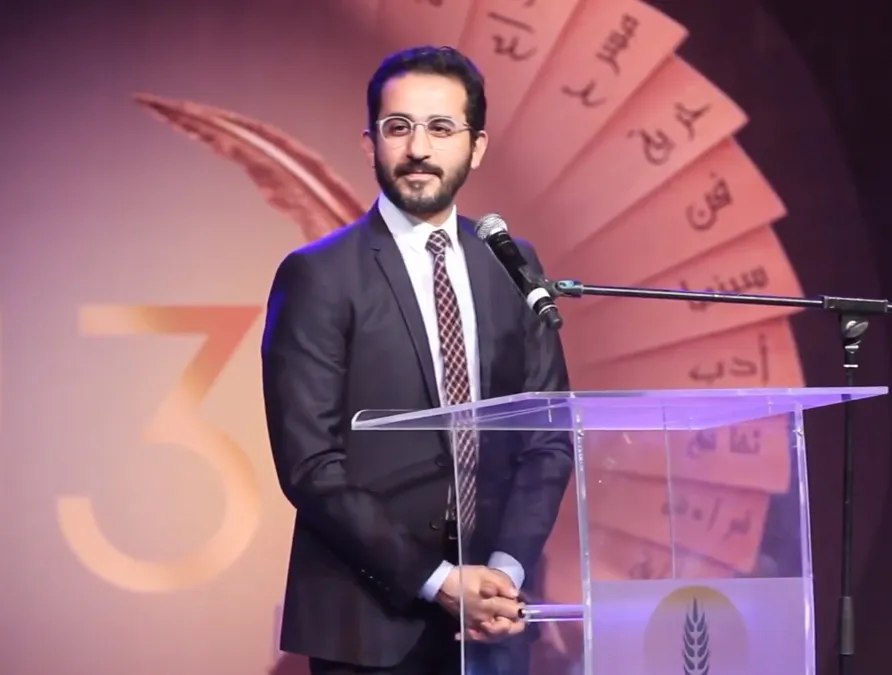
One attendee, whose raw reaction caught fire on TikTok before the credits had even finished rolling, summed up the room's energy: “I went in expecting to laugh at Ahmed's jokes, but I left feeling like I’d just had a long conversation with my younger self.” That sentiment is a wildfire spreading across the region. Lovin Syria reported that the film has triggered a massive, borderline-obsessive wave of nostalgia. Viewers are noting that Helmy has captured the specific, bittersweet sting of growing up in the Middle East, spinning a narrative that feels intensely private to him yet universal to anyone who has ever looked back at their childhood through a hazy lens of longing and ‘what if.’
The Architecture of a Masterclass
What elevates Hadouta into a landmark entry in Helmy’s storied filmography is the sheer, unvarnished maturity of the performance. We are miles away from the kinetic, high-octane antics of Zaki Chan or Aboud Ala El Hodoud. At 57, Helmy is reaching for a deeper toolkit. His performance here lives in the spaces between the lines—the heavy pauses, the weary, knowing glances, and the subtle shifts in posture that signal a man finally wrestling with his own legacy. It is a comeback that feels like an evolution, reminding every critic who thought they had him pegged that while he may have been quieter lately, his grip on the cultural pulse remains absolute.
The film’s DNA is beautifully surreal, dancing between the gritty present and stylized, dream-like sequences of the past. This isn't just a stylistic flourish; it's a major talking point among the cinephiles of Damascus. By anchoring these fantastical elements in the dirt and bone of human experience—the complex shadow of a father, the sharp sting of a first disappointment, the magic hidden in the corners of an old neighborhood—Helmy and the production powerhouse at Shadows Communications have crafted an immersive memory rather than a standard three-act play. The score, a haunting blend of traditional instrumentation and modern ambient soundscapes, wraps around the viewer like a thick fog, cementing the film's status as a total sensory overhaul.
Industry veterans are already dissecting this release as a blueprint for the “Veteran Era.” Helmy isn’t desperately chasing the ghost of the young romantic lead. Instead, he has stepped into the role of the master storyteller, the elder statesman of Egyptian cinema who can bridge the gap between the golden age of comedy and a new, more introspective era of film. The word on the streets of Damascus is that this movie doesn't just belong to Egypt; it belongs to every soul in the Levant who grew up watching Helmy and now finds themselves navigating the messy, beautiful complexities of adulthood alongside him.
A Bridge Built on the Universal 'Hug'
The profound impact of the film’s release in Syria underscores the enduring power of Egyptian cinema as the region’s true north. For decades, the voices of legends like Adel Emam and Mona Zaki (Helmy’s equally formidable wife) have served as the background music to life from Cairo to the Mediterranean. With Hadouta, Helmy has reinforced that bridge with steel. The outpouring from the Syrian public hasn't just been about plot points or character arcs; it’s been about the profound comfort of seeing a familiar face return with a message of resilience and reflection.
X and Instagram are currently flooded with screen-grabs of the film’s most poignant frames, usually accompanied by confessions that read like diary entries. One fan posted: “Ahmed Helmy has this gift where he makes you feel like he’s telling your secret. Hadouta is the hug we all needed.” Another observer pointed out that the film’s obsession with “childhood memories” hit home with particular force in a region that has endured seismic shifts, providing a 90-minute sanctuary where the audience could reconnect with a simpler, more innocent version of who they used to be.
The box office is already feeling the heat. While exact figures for the Syrian territory are often kept under lock and key, theater owners in Damascus are reporting a demand for tickets that borders on the unprecedented. Screenings are selling out within hours, with fans clamoring for a seat in a way that rivals the biggest Hollywood blockbuster imports. It proves a vital point: local stories, when told with the raw heart that Helmy brings to the table, still hold the ultimate power at the gate.
As the film prepares to conquer the GCC and North Africa, the momentum generated in Syria is a high-octane launchpad. This is more than a win for Helmy; it’s a victory for the “mid-budget” emotional drama, a genre that usually gets buried under the noise of high-concept action. By focusing on the Hadouta—the simple, heartbreaking, beautiful story of a life—Ahmed Helmy has reminded us why we sit in the dark with strangers: to see our own lives reflected, to laugh until we can't breathe, and to remember that we aren't alone in our memories.
With a slate of new projects rumored to be brewing under his Shadows Communications banner, the industry is buzzing with a single question: is this reflective, soulful storytelling Helmy’s new permanent signature? If the standing ovations in Damascus are any indicator, the world is more than ready for this chapter. The legend of Helmy is growing up, and as it turns out, the best stories are the ones he’s only just beginning to tell.

