 THE MARQUEE
There is a visceral, hair-raising hum that fills a room when a band finally steps out of the long shadows of the past and into the blinding light of a second chance. It’s the sound of a legacy shaking off the dust and rediscovering its teeth. On April 17th, that frequency hits the airwaves as The Ordinary Boys officially shatter an 11-year silence with their new single, “Peer Pressure.” For Samuel Preston—the man the world simply knows by his surname—this isn’t just another entry in the release calendar. It is the hard-won finale of a survival story that saw him transform from a shaggy-haired indie darling into a tabloid punching bag, then a ghost in the pop machine, and finally, a man quite literally piecing his body back together after a terrifying brush with the void.
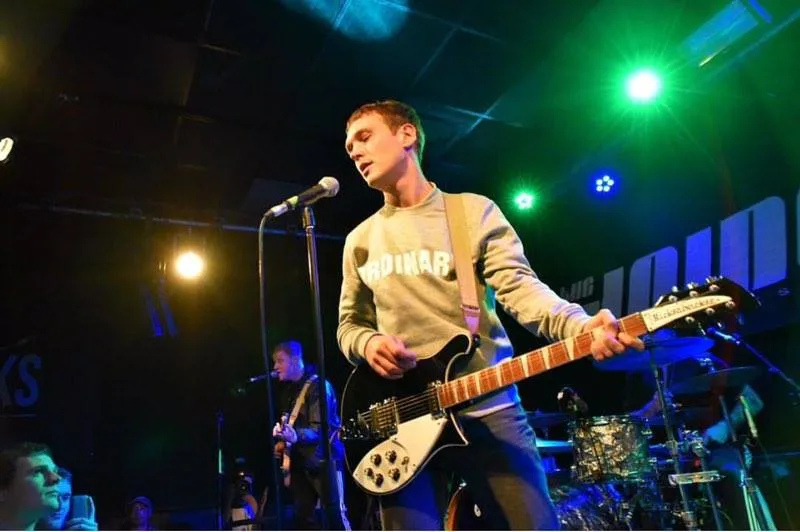
The new track doesn’t just arrive; it lunges. It’s a jagged, high-energy reminder of why the Brighton outfit became the definitive face of the UK’s mid-2000s mod-revival. But “Peer Pressure” isn’t a desperate attempt to bottle the frantic, ska-flecked lightning of their 2004 debut, Over the Counter Culture. Instead, it’s lean, sinewy, and sharp-edged—a rock-and-roll record that sounds like it’s been through the wars. As the first fresh material since their 2015 self-titled effort, it represents a total reclamation of identity. Fans who packed into the band’s recent secret comeback gig witnessed a Preston who looked more settled in his own skin than he ever did during the peak of the 2006 paparazzi fever dreams.
The Ghost of ‘Big Brother’ and the Balcony Fall
To grasp why “Peer Pressure” feels so heavy with significance, you have to revisit the wreckage Preston left in his rearview mirror. In a candid reflection with The Guardian, Preston didn't mince words about how his 2006 stint on Celebrity Big Brother mutated his life into a surreal, suffocating piece of performance art. Almost overnight, he was no longer a songwriter; he was a character in a national soap opera, defined by a whirlwind marriage to Chantelle Houghton and that infamous, storm-off moment on Never Mind the Buzzcocks when host Simon Amstell weaponized Houghton’s autobiography for laughs. “Fame quickly became a nightmare,” Preston confessed, looking back at a era where the music was systematically drowned out by the blinding flashbulbs of the red carpet.
That transition from artist to “personality” carried a heavy price tag. Preston spent years hiding in plain sight, pulling a masterful disappearing act by reinventing himself as one of the UK’s most prolific pop architects. If you’ve found yourself humming the hook to Olly Murs’ chart-topping “Heart Skips a Beat,” or dancing to tracks by Cher and Enrique Iglesias, you’ve been listening to Preston. He found a strange kind of peace in the dim light of the studio, crafting platinum-selling melodies for others while his own band gathered cobwebs. Then, in 2017, the universe decided to stop him in his tracks with brutal, literal force.
While in Denmark, Preston suffered a catastrophic accident, falling from a second-story balcony. The fallout was devastating: a broken leg, a shattered pelvis, and a punctured lung. He was relegated to a wheelchair for weeks, a period of forced, agonizing stillness that acted as a spiritual reset button. “I had a lot of time to think about what actually mattered,” he told The Guardian. In that silence, he found his way back to the people who knew him before the reality TV cameras arrived. The Ordinary Boys weren’t a brand to be revived; they were his roots. That recovery process didn't just mend his bones—it reignited the creative friction between Preston, James Gregory, Charlie Stanley, and Louis Jones.
No More Irony: The Unvarnished Truth of ‘Peer Pressure’
When the band took the stage for their recent warm-up show, the atmosphere was thick with nostalgia, but the music felt dangerously modern. “Peer Pressure” was the undeniable anchor of the set, a track that tackles the very beast that nearly dismantled Preston: the crushing weight of external expectations. The lyrics are pointed and direct, stripped of the defensive irony that coated much of the 2000s indie scene. It’s a song about the gritty struggle to remain authentic when the world is screaming for a version of you that doesn’t exist anymore. The digital reaction has been electric, with one fan on X (formerly Twitter) capturing the mood perfectly: “Preston sounds better at 44 than he did at 24. The Ordinary Boys are the comeback we actually needed.”
The production on the single is crisp and punchy, handled with the veteran touch of someone who has spent a decade studying why songs work on a molecular level. Preston’s years as a professional hitmaker have clearly sharpened his instincts—he knows exactly how to build a chorus that sticks in your throat—but with The Ordinary Boys, he’s finally writing for the man in the mirror. While the band has been working quietly in the shadows of the studio, “Peer Pressure” feels like the tip of a much larger spear. There is a sense that a full-length project is looming, but this time, the stakes are different. They aren’t chasing the charts or the cover of a gossip mag; they are chasing the lightning of being a unit again.
This April 17th release is more than a nostalgia trip for the fans who wore out their copies of “Boys Will Be Boys” in 2005. It’s a manifesto. The Ordinary Boys are no longer interested in being the “it” band of the week. They are survivors who have weathered the tabloid storms, survived the physical and mental fallout of a life lived at a breakneck pace, and emerged with something unvarnished to say. As the countdown to “Peer Pressure” begins, the narrative is finally shifting. He’s no longer the guy who walked off a panel show or the guy from the TV house. He’s a frontman standing on his own two feet again. The boys are back, and they’re doing it entirely on their own terms.


