 THE MARQUEE
A Nation Without Borders
The air inside The NOVO didn’t just crackle on Tuesday night; it felt heavy, thick with the kind of gravity that only settles in when a deity enters the room. There were no pyrotechnics, no 808s rattling the crystal chandeliers—just a woman in black, a podium, and a silence so profound you could hear the heartbeat of an industry she built with her own two hands. On May 21, 2024, Janet Jackson took the stage at the Grammy Hall of Fame Gala to accept an honor that feels less like a trophy and more like a long-overdue coronation: the formal induction of her 1986 album, Control, into the hallowed halls of music history, following the 2021 induction of her 1989 magnum opus, Rhythm Nation 1814.
As the opening industrial clatter of the Rhythm Nation title track echoed through the ballroom—a sound that still feels like a transmission from a gritty, utopian future—the crowd rose as one. It was a striking collision of the industry’s two poles: the Gen Z pop disruptors who study her every tilt of the head on TikTok, and the velvet-rope legends who paved the way alongside her. When Janet reached the mic, she didn't lead with the staggering statistics or the seven top-five Billboard Hot 100 hits from a single album. She led with the manifesto. "We are a nation with no geographic boundaries," she told the silent room, her voice steady but vibrating with the weight of the moment. She was echoing the iconic spoken-word intro of the 1989 record, reminding us that we are "bound together by our beliefs... like-minded individuals, sharing a common vision, pushing toward a world rid of color lines."
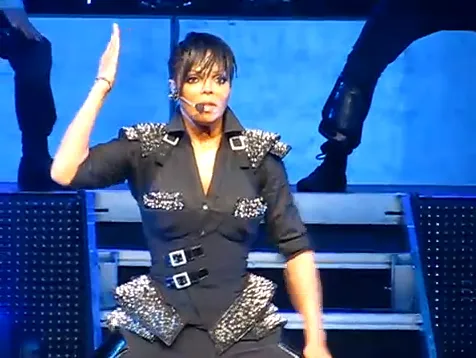
Standing there in 2024, Jackson looked out at a musical landscape that she fundamentally reshaped. She spoke candidly about the "heavy hearts" she, Jimmy Jam, and Terry Lewis carried while crafting the record in a Minneapolis studio nearly four decades ago. This wasn't a standard-issue victory lap. It was a sobering reminder that the ghosts she was hunting in 1989—homelessness, drug abuse, systemic racism, and a crumbling education system—are still haunting our doorsteps today. "When we sat in that studio, we weren't just trying to make dance music," Jackson said, her hand resting firmly on the Hall of Fame trophy. "We were trying to make a difference. To see that these songs still resonate in 2024 is both a testament to the power of music and a heartbreaking reminder of how much work we still have to do."
The Architect of the Highway
The evening kicked off with a moment of pure, unadulterated synergy. Jimmy Jam, Jackson’s longtime collaborator and the man who helped her forge the metallic, funk-infused soul of the late '80s, took the stage to introduce his "forever partner." Jam didn't just give a speech; he offered a peek behind the curtain of the global superstar facade. He took the audience back to Flyte Tyme Studios, to the pivotal moment when the trio decided to pivot from the personal liberation of Control to the global responsibility of Rhythm Nation. He described Jackson not merely as a pop star, but as the master architect of an entire movement.
"People told us back then that pop music wasn't the place for politics," Jam told the crowd, sparking a wave of knowing, cynical nods from the veterans in the room who remember the pushback. "They told Janet she should stay in her lane. But Janet doesn't have a lane—she builds the highway. She knew that if she could get people to dance, she could get them to listen. She turned the dance floor into a classroom and a protest line, all at the same time."
The digital world caught fire before she even finished her sentence. Within minutes of Jam’s introduction, #RhythmNation2024 began trending globally. Fans on X were quick to pair grainy clips of the 1989 music video—that legendary black-and-white short film directed by Dominic Sena—with snapshots of Janet’s 2024 gala appearance. The consensus was clear: the fire hasn't dimmed. As one fan noted, "She’s wearing the same strength she had in '89. Rhythm Nation isn't an album; it’s a lifestyle." Another simply wrote, "Janet Jackson speaking on bigotry at the Grammys in 2024 is exactly the energy we need. She never stopped fighting."
A Roadmap for the Next Generation
To truly grasp the weight of Tuesday’s induction, you have to look at the numbers that define the Rhythm Nation 1814 era—stats that still make modern chart-toppers dizzy. The album remains the only album in history to produce seven top-five hits on the Billboard Hot 100 from a single album. It was a total siege on the charts, but more importantly, it was a cultural pivot point. Hits like "Miss You Much," "Escapade," "Alright," and the rock-infused "Black Cat" dominated the airwaves, while the title track and "State of the World" provided a jagged, necessary social commentary.
During her address, Jackson reflected on the cryptic "1814" in the title—a reference to the year Francis Scott Key penned "The Star-Spangled Banner," and a clever nod to the alphabet (where R is 18 and N is 14). This obsessive attention to detail was born from a desire to reclaim the very concept of an anthem. "We wanted to reclaim the idea of what it means to be a nation," she said. "A nation not defined by where you live, but by how you love and how you stand up for one another."
The ceremony also served as a spotlight on the album’s massive shadow over choreography and fashion. The military-grade precision of the "Rhythm Nation" routine, choreographed by Anthony Thomas, remains the gold standard for every artist who has ever stepped onto a soundstage. Industry giants in the room, including Beyoncé and Janelle Monáe, have frequently pointed to Jackson’s 1989 era as the exact moment they realized pop music could be both a spectacle and a sermon.
As the gala wound down, the mood wasn't one of nostalgia, but of continuation. Jackson closed her speech with a direct challenge to the younger artists in the room, urging them to weaponize their platforms against the rising tide of division. Her words didn't sound like a retirement; they sounded like a passing of the torch. With Rhythm Nation 1814 now etched permanently into the Grammy Hall of Fame, the album’s message feels less like a relic of the past and more like a tactical roadmap for the future. The beat goes on, and Janet Jackson is still leading the march.


