 THE MARQUEE
Long before Angela Bassett was commanding the screen with a single, tectonic look, she was a young actress in a crisp nurse’s uniform trying to survive the breakneck pace of a fictional hospital in Henderson. We know her now as the gold standard of regal intensity—the woman who channeled the fierce, bone-deep grief of Queen Ramonda in Black Panther: Wakanda Forever and the lightning-strike electricity of Tina Turner in What’s Love Got to Do with It. But that effortless gravity, that sense that she doesn’t just play a role but colonizes it, was actually sharpened in the high-stakes, low-budget trenches of daytime television.
Before the honorary Oscars, the Golden Globes, and the storied halls of the Yale School of Drama became her standard descriptors, Bassett was a hungry talent in mid-80s New York City. She was navigating the grind, trying to keep her lines straight while the red light of a soap opera camera flickered to life. The foundation for her legendary discipline was laid right there, in a world where the scripts are thick and the rehearsal time is non-existent. Fans and television historians recently unearthed a fascinating relic from the archives: Bassett’s first major television gig, an eight-episode run on the venerable soap opera Search for Tomorrow back in 1985. Playing a nurse named Selina McCulla, she was light-years away from the billion-dollar franchises she dominates today, but the seeds of her greatness were already blooming in those hospital hallways.
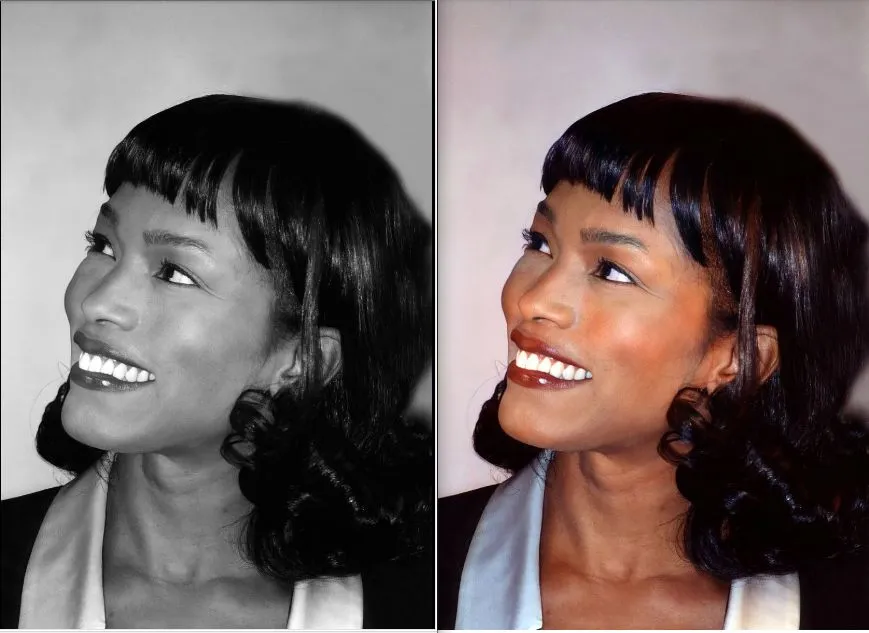
The High-Stakes Boot Camp of Daytime Drama
During a recent sit-down with Jimmy Fallon on The Tonight Show, Bassett’s face lit up with a knowing grin when her early days surfaced. She didn't look back at the role with the kind of wink-and-a-nod irony some stars use to distance themselves from their humble beginnings. Instead, she spoke with the quiet reverence of a veteran soldier who remembers exactly where her armor was forged. She described the soap opera circuit as the ultimate "training ground," a sentiment shared by an elite club of A-listers who cut their teeth in the daytime grind. In 1985, Search for Tomorrow was nearing the end of its massive 35-year run, but for a young Bassett, it was the absolute big leagues.
The role of Selina McCulla demanded the kind of technical precision that would break a lesser performer. Soap actors are tasked with memorizing dozens of pages of dialogue on the fly and hitting emotional crescendos with almost no lead-up. "You have to be quick, you have to be on it," she told Fallon, recalling the dizzying speed of the production. For eight episodes, she shared the screen with daytime icons like Mary Stuart and Larry Haines, thriving where others might have stumbled. This was where she mastered the invisible art of the set—finding her light instinctively, navigating camera angles without breaking character, and injecting a soul into a role that might only exist on screen for a handful of minutes.
Social media recently rediscovered this era, with clips of a 20-something Bassett in her nurse’s whites racking up millions of views on X and TikTok. The consensus among fans was immediate: the legendary "Bassett Gaze" was already fully operational in 1985. "She’s had that screen presence since day one," one fan noted in a viral thread. "You can see her out-acting the script even then." Her voice—that rich, resonant contralto that can silence a room—was already her secret weapon, lending Selina McCulla a weight and a history that the writers likely hadn't even conceived.
The Hustle: From Yale to Henderson
To appreciate how Bassett ended up in the fictional town of Henderson, you have to look at the relentless hustle of a New York actor in the Reagan era. Even with a B.A. in African American studies and an M.F.A. from the prestigious Yale School of Drama, she didn't just walk into stardom. She paid her dues as a photo researcher and a receptionist, auditioning for anything that would get her a SAG card. That 1985 stint as Nurse Selina wasn't just a paycheck; it was the physical proof that her years of study were paying off.
The mid-80s served as a fertile, frantic period for her development. Around the same time she was scrubbing in on Search for Tomorrow, she surfaced on The Cosby Show as Mrs. Mitchell and took another soap turn in Ryan's Hope. She was building her career brick by grueling brick. By the time she packed her bags for Los Angeles in 1988, she had the thick skin of a professional veteran. She knew how to process rejection, how to handle the technical chaos of a major set, and how to deliver under pressure. When she finally broke through in Boyz n the Hood in 1991, she wasn't some lucky discovery—she was a finished product, polished to a high shine by years of daytime drama and off-Broadway theater.
The industry landscape was a different beast back then, with soap operas serving as the primary employer for the city's best young talent. A glance at the casting sheets for daytime dramas in the mid-80s reveals a shocking roster of future icons: Julianne Moore on As the World Turns and Bryan Cranston on Loving were both part of this unofficial graduate program. Bassett and her cohort treated daytime TV with immense respect, knowing that the discipline learned in those studios would translate directly to the silver screen.
The Enduring Power of the Bassett Discipline
Decades later, that "training ground" mentality is the heartbeat of every frame Bassett filmed. Whether she is delivering a monologue that rattles the foundations of the Marvel Cinematic Universe or navigating the high-octane emergencies of 9-1-1 on Fox, the efficiency she learned in 1985 remains her North Star. 9-1-1, which recently pivoted to ABC for its seventh season, demands the same rapid-fire delivery and emotional flexibility that soaps are famous for. Bassett, who also carries the mantle of executive producer, reportedly earns over $450,000 per episode, a record for a Black actress in network drama. It is a staggering leap from the scale wages of a recurring nurse in the 80s, yet the work ethic hasn't shifted an inch.
The collective fascination with Selina McCulla isn't just a play for nostalgia; it’s a celebration of a career built on merit and pure, unadulterated stamina. In a modern landscape of overnight viral sensations, Bassett’s path is a masterclass in the long game. When she stood on stage to receive her Honorary Academy Award in early 2024, her speech resonated with the truth of the journey—the "countless hours" and the "refusal to give up."
Rewatching the old footage of Selina McCulla today, the continuity is breathtaking. You see the same sharp set of the jaw, the same attentive listening, and the same undeniable spark that would eventually breathe life into icons like Betty Shabazz, Coretta Scott King, and Katherine Jackson. Every time she steps onto a multi-million dollar soundstage today, she carries the ghost of that 1985 nurse with her. It was the role that taught her how to be a professional, how to be a storyteller, and how to capture the hearts of millions. Angela Bassett proved early on that every tomorrow was worth searching for, provided you have the talent and the grit to claim it.