 THE MARQUEE
Michael Tilson Thomas didn’t just lead an orchestra; he plugged it into a high-voltage amp and invited the rest of us to feel the surge. For five decades, the man known globally as MTT treated the symphony not as a fragile museum piece, but as a visceral, vital, and occasionally dangerous force of nature. On Wednesday, April 22, 2026, the music finally reached its double bar. Thomas passed away at his home in San Francisco at 81, following a relentless battle with glioblastoma—the aggressive brain cancer he had faced with the same grit and public transparency that defined his career since he first disclosed a brain tumor in 2021 and the formal diagnosis in March 2022.
His departure carries a heavy, heartbreaking symmetry that feels scripted for the stage: it was only two months ago that his husband and longtime professional anchor, Joshua Robison, also passed away. For those who followed their half-century partnership, there is a profound sense that the maestro simply didn't want to keep time without his most trusted collaborator. MTT leaves a hole in the cultural landscape that no single baton can fill.
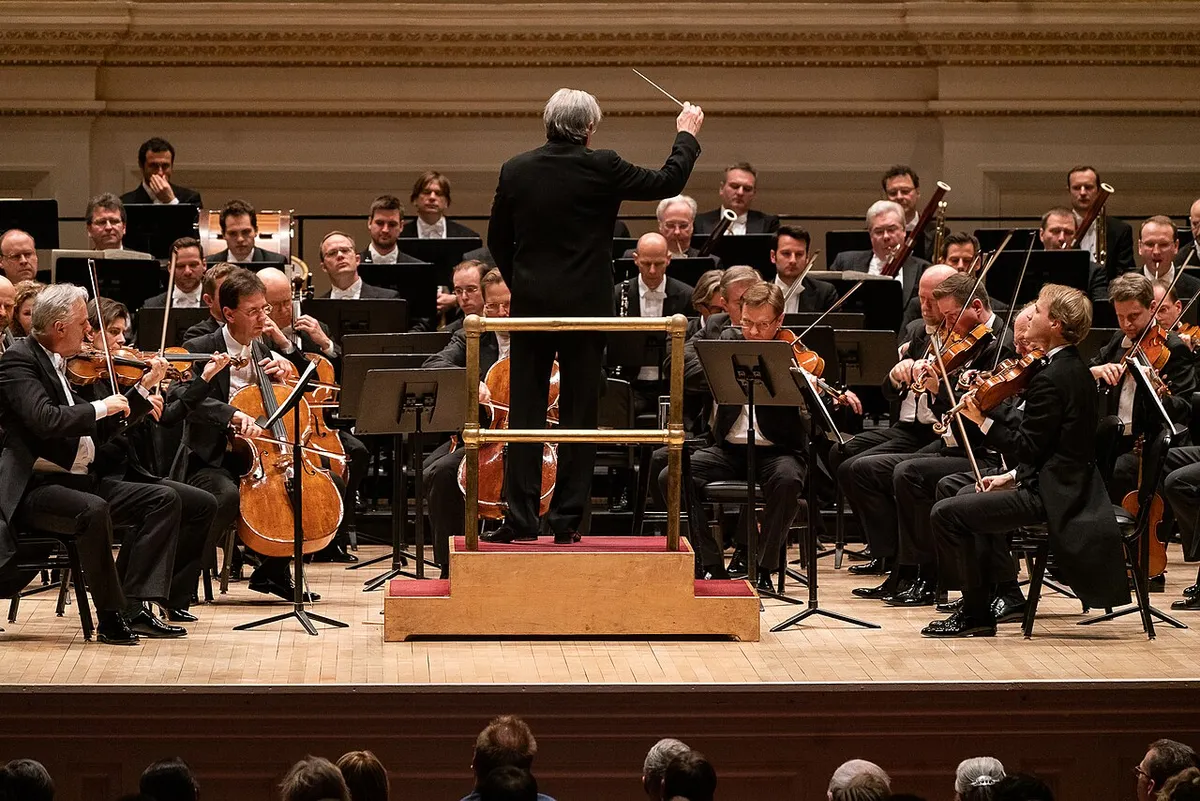
To understand the magnetic pull of MTT, you had to see him on the podium. He famously eschewed the stiff, 19th-century mold of the distant conductor. Instead, he was the storyteller in the denim jacket, a sophisticated bridge between the old-world grandeur of his mentor Leonard Bernstein and the high-tech, high-octane future of the San Francisco Symphony. During his 25-year reign as Music Director in the City by the Bay, he didn’t just play the classics; he interrogated them. He celebrated them. Occasionally, he set them on fire with modern interpretations that brought tech-era youth into Davies Symphony Hall in numbers the industry had never seen.
The San Francisco Sound: A Cultural Revolution
When MTT first took the podium at the San Francisco Symphony (SFS) in 1995, the organization was respected but arguably playing it safe. By the time he stepped down as Music Director Laureate in 2020, he had forged it into a global powerhouse of sonic innovation. He launched the American Mavericks festivals, a middle finger to the stuffy European canon that celebrated the weird, the wild, and the wonderful in homegrown music. He championed composers like Lou Harrison and John Adams back when other conductors were still terrified of the 21st century. As the San Francisco Chronicle noted, his arrival fundamentally shifted the city's DNA, making the orchestra a central pillar of the Silicon Valley cultural boom.
His greatest recorded legacy remains the monumental, multi-year project to capture all of Gustav Mahler’s symphonies. That cycle was more than just a collection of albums; it was a manifesto. It won 7 Grammys and redefined the American orchestral sound—transparent, lush, and unapologetically emotional. Fans on social media still trade clips from his Keeping Score series on PBS, where he deconstructed the complexities of Tchaikovsky or Copland with the infectious energy of a professor who also happened to be a rockstar. He had a singular gift for looking into the camera and making you feel like the music belonged to you, whether you were in the front row or the cheap seats.
"He was the beating heart of the Symphony and part of the cultural fabric of San Francisco," said Priscilla Geeslin, President of the San Francisco Symphony, in a statement following the news. That sentiment was echoed in the streets, as fans began piling bouquets of flowers and handwritten lyrics at the doors of Davies Symphony Hall shortly after the LA Times and The Guardian confirmed his passing. MTT’s impact is measured in more than just gold-plated trophies; it’s seen in a concert experience that integrated multimedia long before it was trendy.
The Laboratory of Miami and the Global Stage
While San Francisco was his artistic sanctuary, MTT’s heart was equally invested in the next generation. In 1987, he co-founded the New World Symphony (NWS) in Miami Beach—a high-concept "laboratory" for young musicians. He didn't just want to teach them how to hit the notes; he wanted to teach them how to lead. Working alongside architect Frank Gehry, he helped design the New World Center, a stunning, futuristic campus that feels more like a creative tech hub than a conservatory. It was here that he mentored generations of players who now sit in the first chairs of the world's most prestigious orchestras.
The Boston Classical Review often pointed to MTT’s energy and charm as his greatest assets. Born into a lineage of Yiddish theater royalty—his grandparents were the legendary Boris and Bessie Thomashefsky—he understood that performance was, at its core, about reaching the person in the back of the house. He brought that theatricality to Miami, encouraging young musicians to play with lighting, stage presence, and video. For MTT, the show began the second the audience crossed the threshold, not just when he raised the stick.
His tenure with the London Symphony Orchestra as Principal Conductor from 1988 to 1995 further cemented his status as a global titan. He was the rare American who could command the respect of the European elite while remaining unrepentantly devoted to American sounds. Whether he was conducting Gershwin at the Hollywood Bowl or Stravinsky in London, the joy was palpable. He spoke of music as "time travel," a way to inhabit the minds of geniuses from centuries past while keeping both feet firmly in the present.
A Masterclass in Grace and a Final Bow
The final years of MTT’s life were a masterclass in grace under unimaginable pressure. After the glioblastoma diagnosis, he didn't retreat. He wrote an open letter to his fans, stating, "I intend to continue to make music for as long as I can." He kept that promise. He guest conducted with the New York Philharmonic and the Cleveland Orchestra, receiving ten-minute standing ovations that felt more like religious experiences than curtain calls. His movements on the podium became more economical, more focused, but the intensity of the sound never wavered. Every performance felt like a final transmission from a man who knew his time was running out.
The loss of Joshua Robison in February 2026 was a blow that many in his inner circle feared would be the end. Robison was more than a spouse; he was MTT’s manager, his sounding board, and the logistical genius who handled the world so MTT could live in the clouds of musical theory. Their 50-year relationship was one of the great love stories of the modern era, a partnership that navigated the legal battles of LGBTQ+ rights and the evolution of a cutthroat industry. Friends described them as two halves of a single soul; there is a quiet comfort in the San Francisco community knowing that MTT has finally followed Joshua home.
Even as his physical strength waned, MTT remained obsessed with the future—the preservation of his archives and the continued health of the institutions he built. He leaves behind a massive discography and a legacy of education that will dictate the pace of classical music for the next century. As the world mourns, we also celebrate a man who lived 81 years at full volume. His final bows were not just for us, but for the music itself—a lifelong devotion to the idea that a few notes on a page could, in the right hands, change the world. The music doesn't stop here; whenever a Mahler symphony swells in a concert hall, MTT’s spirit will be right there in the rafters, urging the strings to play just a little more soulfully.


