 THE MARQUEE
Ted Turner once famously promised that his news network wouldn’t sign off until the end of the world—and even then, he’d play ‘Nearer, My God, to Thee’ before the screen went black. On Wednesday, May 6, 2026, the world grew a little quieter, but the 24-hour hum of the information age he birthed continued to pulse. Turner, the swashbuckling media tycoon, yachtsman, and professional provocateur, passed away at the age of 87. Surrounded by family at his home, the man long celebrated as the “Mouth of the South” finally succumbed to a long-documented battle with Lewy body dementia, a condition he first revealed with startling vulnerability during a 2018 interview with Ted Koppel on CBS Sunday Morning.
Turner wasn’t merely a businessman; he was a tectonic force of nature who operated on a frequency most people couldn't even hear. Whether he was white-knuckling the America’s Cup in 1977, dragging a struggling UHF station into the future as the first national “superstation,” or casually pledging a staggering $1 billion to the United Nations, Turner lived at a breakneck speed that mirrored the relentless news cycle he pioneered. His death marks the final curtain for a specific brand of American titan—loud, brash, and unapologetically ambitious personalities who could reshape the global landscape through sheer, unadulterated force of will.
The ‘Chicken Noodle’ Revolution: Wiring the Global Village
When Turner announced the launch of CNN in 1980, the media establishment didn't just doubt him—they laughed. The “Big Three” networks—ABC, CBS, and NBC—viewed news as a loss leader, a prestigious half-hour service to the public performed by men in suits with gravelly voices. The notion that the public craved news 24 hours a day was dismissed as pure lunacy. Skeptics derisively branded it the “Chicken Noodle Network,” suggesting it was thin, cheap, and lacked any real nutritional value for the American mind. Turner, never one to retreat from a dogfight, sank $20 million of his own fortune into the venture. On June 1, 1980, he told his inaugural staff, “We’re going to take the news and relate it to the 24-hour-a-day world.”
That gamble didn’t just pay off; it fundamentally rewired how humanity consumes reality. From the gut-wrenching live coverage of the Challenger disaster to the eerie, green-tinted night-vision footage of the Gulf War, CNN became the world’s shared campfire. Christiane Amanpour, whose legendary career was forged in the fires of Turner’s global vision, often recalled how Ted’s obsession with international reporting changed the diplomatic stakes of every modern conflict. If Ted Turner was in the room, the world was watching. He didn't just report history; he forced world leaders to react to it in real-time, effectively ending the era of secret diplomacy behind closed doors.
The success of CNN was built on the back of his brilliant transformation of WTCG, a small Atlanta station he pivoted into TBS. By beaming the channel to cable systems via satellite, he created a national audience for the Atlanta Braves and silver-screen classics. He doubled down with TNT in 1988 and TCM in 1994, constructing a portfolio that made Turner Broadcasting System the crown jewel of the media industry. When he merged his empire with Time Warner in 1996 in a deal valued at approximately $7.5 billion, he became the largest individual shareholder of the combined entity, though his tenure there was famously marked by friction with corporate-minded executives like Gerald Levin, who lacked Turner’s gut-level instincts.
Captain Outrageous: From the America's Cup to Monday Night Wars
To understand Ted Turner, you had to understand his competitive streak, which was less a personality trait and more a biological compulsion. Long before he was a media mogul, he was a world-class sailor. In 1977, he captained the Courageous to a victory in the America’s Cup, earning the nickname “Captain Outrageous” for his hard-partying, filter-free victory celebrations. He brought that same manic energy to the world of sports. When he bought the Atlanta Braves in 1976, they were a cellar-dwelling team with abysmal attendance. Turner didn't just own them; he once attempted to manage them for a single game before the league intervened, pushed for the “America's Team” branding on TBS, and eventually presided over their 1995 World Series victory.
His influence extended into the squared circle with equal ferocity. In 1988, Turner purchased Jim Crockett Promotions and rebranded it as World Championship Wrestling (WCW). For a brief, shining moment in the late 1990s, Turner’s Monday Nitro on TNT actually dethroned Vince McMahon’s WWE in the ratings, proving that Ted could take on any established titan and win. “I’m in the 'wrasslin' business!” he famously told McMahon, a quote that has lived in combat sports lore for decades. Fans took to social media today to remember those wars, with one fan tweeting, “Without Ted Turner, wrestling would never have reached the heights it did. He forced everyone to get better through sheer competition.”
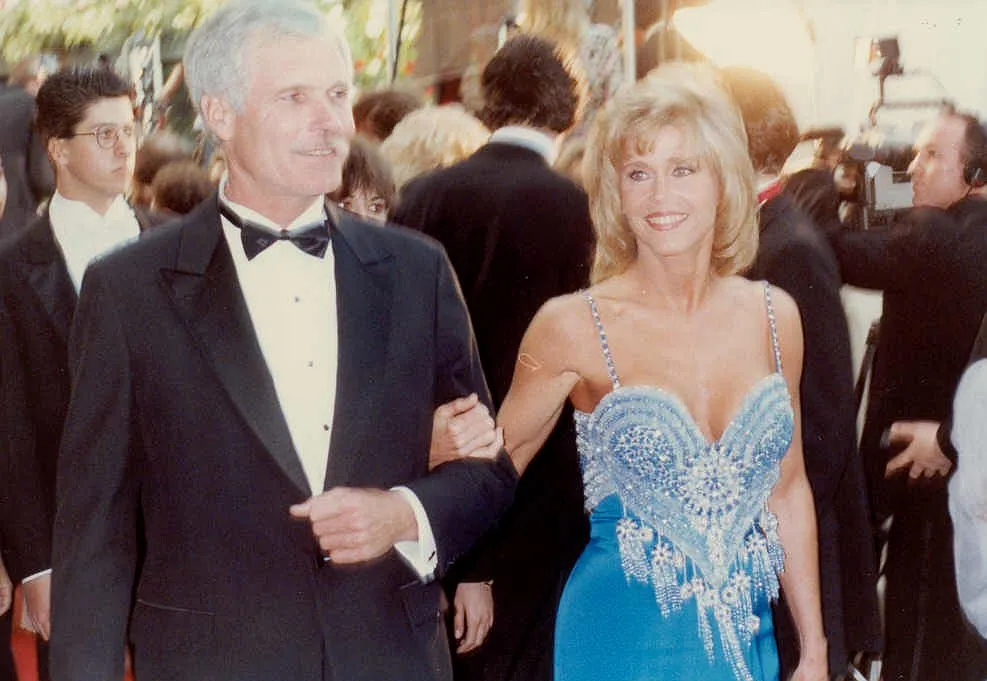
Even his personal life felt cinematic. His decade-long marriage to actress and activist Jane Fonda from 1991 to 2001 was the ultimate power-couple pairing, a collision of Hollywood royalty and media dominance. Despite their divorce, the two remained close, with Fonda often praising his environmental efforts and his restless, brilliant mind. Turner was also, at one point, the second-largest individual landowner in North America, presiding over roughly 2 million acres and the world's largest private herd of bison. This passion for the American West led to the founding of Ted’s Montana Grill, a restaurant chain dedicated to making bison a sustainable part of the American diet.
The Philanthropist's Final Act: A Legacy Beyond the Screen
Perhaps the most shocking moment of Turner’s career came in 1997. During a gala dinner, he casually announced a $1 billion donation to the United Nations—a move that was practically unheard of in an era before the Giving Pledge. It wasn't just about the money; it was a gauntlet thrown at his fellow billionaires. He criticized the “miserly” nature of the ultra-wealthy, famously calling out Bill Gates and Warren Buffett to do more for the planet. This gift led to the creation of the United Nations Foundation, which continues to tackle global issues from climate change to childhood vaccinations.
In his final years, Turner’s battle with Lewy body dementia forced a retreat from the public eye he once dominated. The disease, which causes a progressive decline in mental abilities, was a cruel irony for a man whose mind always raced five steps ahead of the curve. Yet, even in his 2018 interview, Turner showed flashes of the old fire. When asked how he was doing, he replied with his trademark, unfiltered honesty: “I’m still here, and I’m doing the best I can.”
The outpouring of grief across the industry today reflects the staggering scope of his impact. From the halls of the CNN Center in Atlanta to the sprawling ranches of Montana, colleagues and fans are mourning a man who was never afraid to be wrong as long as he was being bold. He leaves behind five children—Laura, Robert Edward IV, Rhett, Beau, and Jennie—and a world that is inextricably linked by the satellite signals he first dared to beam across the globe. As the sun sets on the life of Ted Turner, the 24-hour news cycle he created continues to hum, a permanent, flickering monument to a man who refused to believe the conversation should ever end.
The Braves will honor Turner with a special tribute during their next home game at Truist Park, and the United Nations Foundation has announced a memorial fund in his name to continue his work in environmental conservation. In an age of sterile algorithms and curated feeds, we may never see another mogul quite like Ted Turner—a man who lived out loud and made sure the rest of us were watching.


